Selçuk
"Storks nested in the ruins of the Basilica of St. John. I watched them for an hour and didn't once think about history."
I arrived in Selçuk on a Tuesday morning, which turned out to be the best possible accident. The market had taken over the town center — not the souvenir-and-carpet operation aimed at Ephesus-bound tourists, but a genuine farmers’ market in the old tradition: women in headscarves with trays of dried herbs, a man selling olives from aluminum pots, two stalls competing on tomato quality with the focused intensity of people for whom this is a serious matter. I bought a kilo of figs, a bag of dried thyme, and a small jar of mulberry jam from a woman who spoke no French or English and communicated the price by writing it on her hand in felt-tip pen. We understood each other completely.
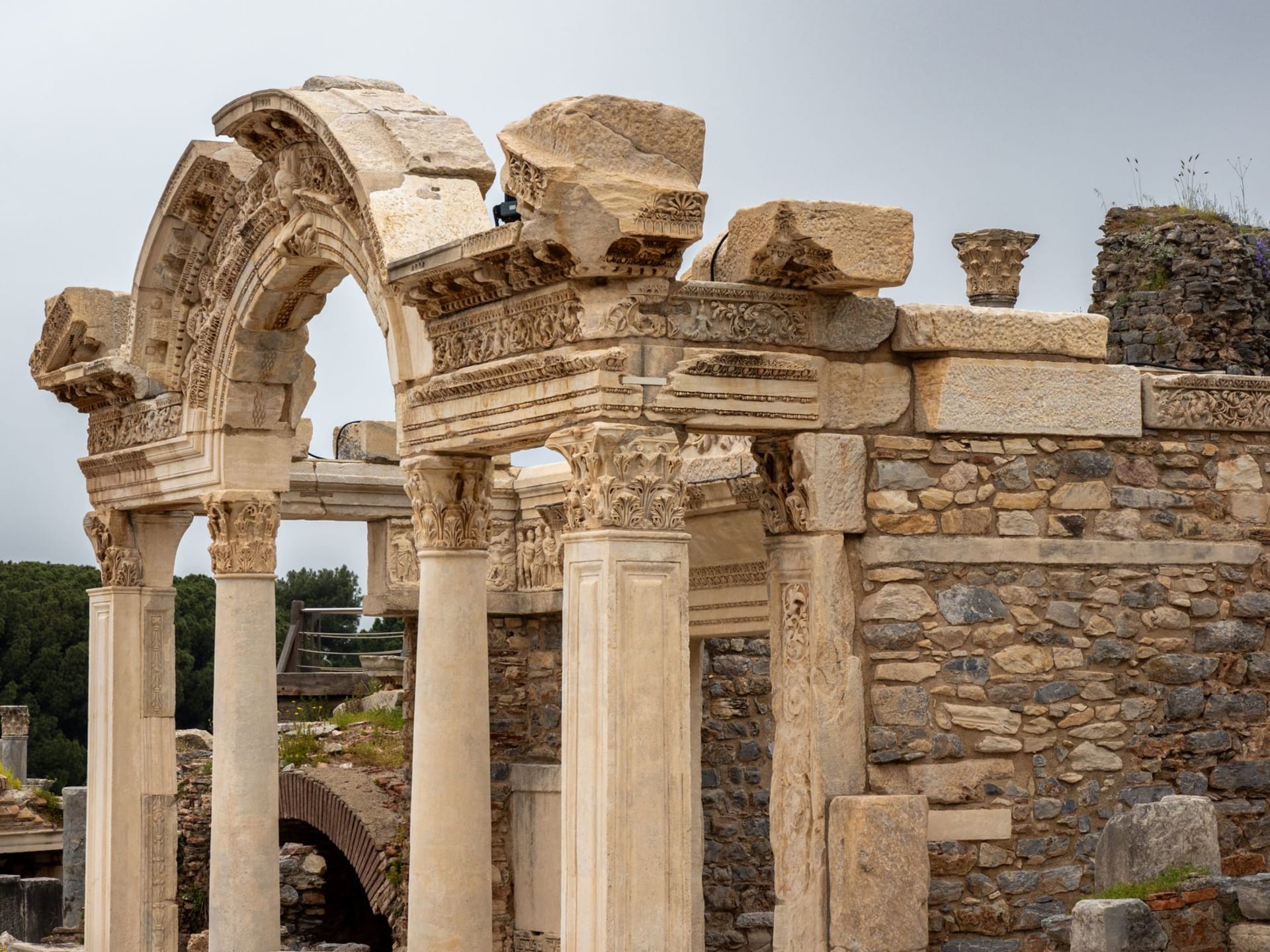
The town itself sits at the base of a hill topped by a Byzantine fortified citadel, and between the hill and the main street stands what remains of the Basilica of St. John — the sixth-century church built over the supposed tomb of the evangelist, now a substantial ruin of columns and arches and carved capitals. The storks that nest here are the town’s most famous residents: white storks, enormous birds that build platform nests on top of the column capitals and stand in them with an air of absolute entitlement. I watched a pair from a low wall for an hour. The birds were completely indifferent to me. The ruins beneath them were completely indifferent to the birds.

The single remaining column of the Temple of Artemis stands in a field ten minutes’ walk from the center — the original structure was one of the Seven Wonders of the Ancient World, built and burned and rebuilt three times. What remains is a single rebuilt column rising from a field that floods in winter, populated in summer by a frog and several nesting birds. The contrast between what was (127 columns, each eighteen meters tall, considered the most magnificent temple in the Greek world) and what is (one column, one frog) generates a philosophical sensation I have not found in more complete ancient sites. It is precisely the absence that makes it interesting.
Şirince, a village eight kilometers up into the hills from Selçuk, has been colonized by weekend tourism but retains beneath it something genuine: old Greek stone houses, narrow cobbled streets, an apple wine production that predates the tourism and will outlast it. I went on a weekday morning and found it almost empty, the proprietors of the wine and preserve shops sitting in their doorways with the unhurried patience of people who know the weekenders will come.

The pensions in Selçuk are run with the hospitality that western Turkey does at its best — families who have been taking in travelers since the 1980s and have developed a breakfast spread that functions as both meal and tourism information service. Mine arrived at eight: white cheese, black olives, sliced cucumber and tomato, a boiled egg, honey, bread still warm, and the owner sitting down uninvited to tell me which ruins were worth visiting and in what order. The advice was better than anything in the guidebooks.
When to go: April through June is best — market vendors at full capacity, storks in residence, Ephesus manageable in the morning hours before the tour buses take over. The town is genuinely pleasant year-round, as it has a life independent of the ruins that makes it livable in any season.