Kuşadası
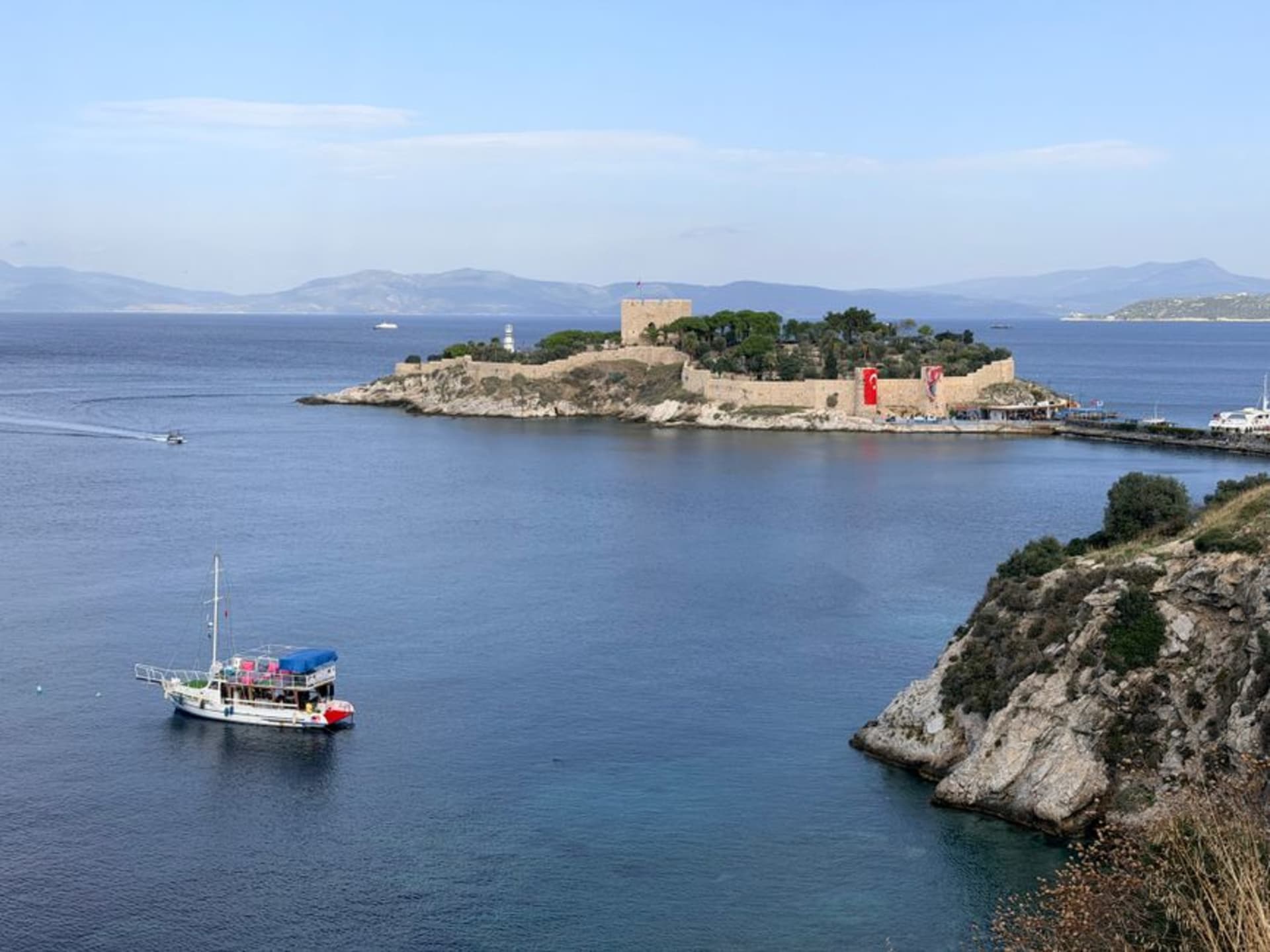
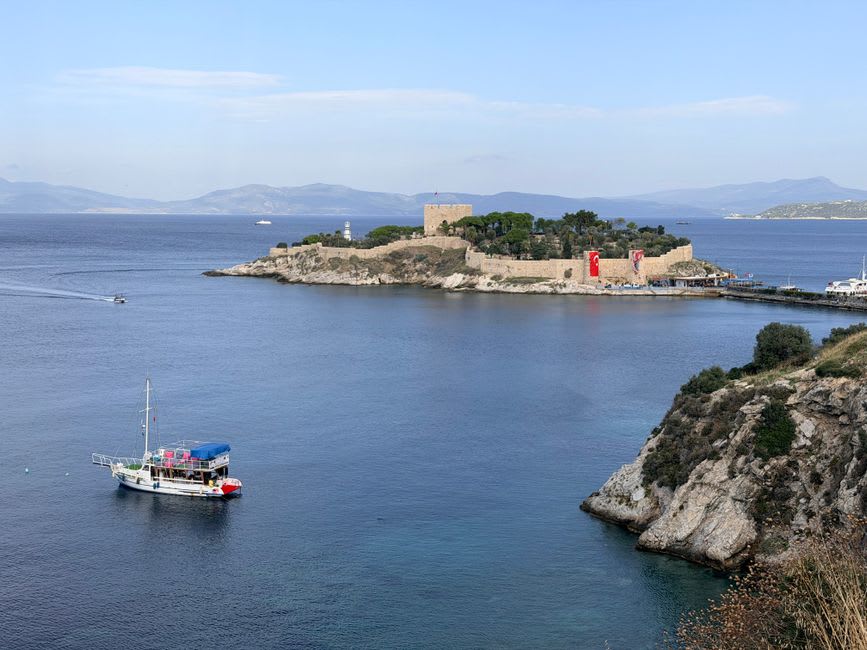
"The island is called Pigeon Island. It has a fortress. It is roughly the size of a large parking lot."
A cruise-ship port town built around a tiny fortified island connected to the mainland by a stone causeway, with a national park of pine-covered ridges and wild boar just south of the marina crowds.
Kuşadası works hard for its reputation as a cruise-ship town, and on the days when two or three ships are docked simultaneously, the old quarter fills with a particular kind of crowd energy — tour groups moving in formation behind raised umbrellas, jewelry shops with aggressively friendly touts, everyone somehow shopping for the exact same carpet. I will admit my first afternoon there left me unconvinced. Then I walked out along the stone causeway to Güvercinada — Pigeon Island — a tiny fortified islet barely a few hundred meters around, with a squat Byzantine-Genoese-Ottoman fortress on top that has been patched and repurposed by every power that held this coast, and found it almost entirely empty. I sat on the fortress wall for an hour watching the harbor traffic and reconsidered the town.
The real reason to give Kuşadası more than a transit-day’s attention is what lies just south of it: Dilek Peninsula National Park, a rugged, pine-forested ridge of coastline that ends at the point where the Aegean meets the Turkish mainland’s western edge, close enough to Samos that you can see the Greek island clearly from the park’s western beaches. I drove down for a day and hiked a short trail above a beach called İçmeler, disturbing nothing more alarming than a family of wild boar rooting through the undergrowth about twenty meters off the path, who regarded me with what I can only describe as profound indifference before returning to their digging.
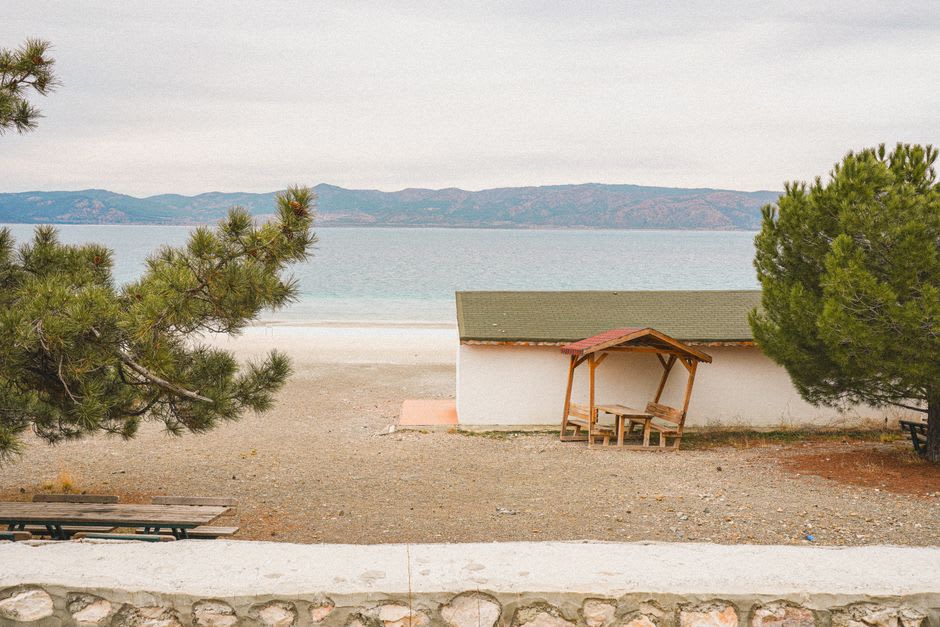
The beaches inside the national park are genuinely some of the best on this stretch of coast — clean, fine gravel-sand, backed by pine forest instead of hotel developments, with the water a clean, cold turquoise that made the swim worth every mosquito bite I collected on the walk down. I packed a simple lunch from a Kuşadası bakery — sesame simit, white cheese, tomatoes still warm from the sun — and ate it on a flat rock at the edge of the water, which felt like a much better use of the coast than anything on offer back at the cruise terminal.
Back in town in the evening, once the day’s cruise ships had pulled anchor and left, the waterfront settled into something calmer and more locally paced — families out for an evening walk, ice cream stands doing steady business, fishermen mending nets along the quay. It is a town of two very different moods depending entirely on the hour and the tide of ships, and it rewards staying past the point when the tour groups leave.
When to go: Late spring or early autumn for hiking Dilek Peninsula in comfortable temperatures. If cruise crowds bother you, check the port schedule and plan your old-town wandering for a day with no ships in.