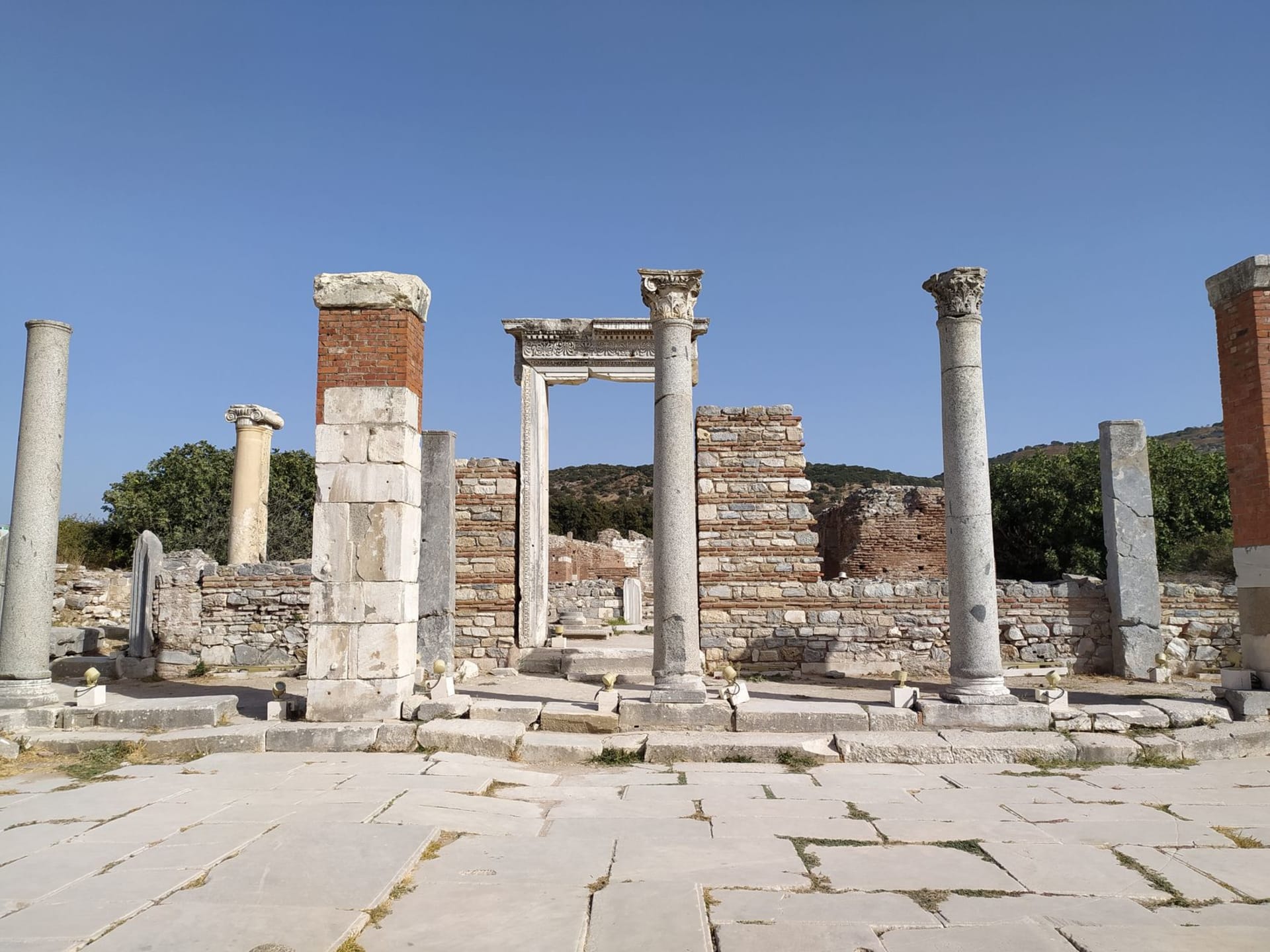
I arrived at the lower gate at half past seven, which meant I was among the first dozen people through. The tour buses were already parked in the lot outside — the drivers drinking tea from paper cups, phones out, waiting for their groups to gather — but inside the site itself, on the wide marble pavement of Curetes Street, there was still a cool silence that felt almost archaeological in itself. The stones here are not reconstructed imagination; they are genuinely what Roman citizens walked. The ruts left by cart wheels in the marble are real. The drain channels cut into the edges of the road still direct rainwater after two millennia. I stood in the middle of the street with no one else in sight and felt something I rarely feel in famous places: that I might be seeing it rather than consuming it.

The Library of Celsus is the image everyone carries home, and it earns its fame. Built in the second century AD as a tomb and library for the Roman consul Gaius Julius Celsus, its two-story façade is a masterpiece of architectural theater — four niches holding allegorical statues of Wisdom, Knowledge, Intelligence, and Valor. By 8:30am the selfie poles were out in force, and yet somehow the building’s scale absorbed them. It is simply too large to be diminished. Inside, twelve thousand scrolls were once stored in the walls, insulated from humidity by a cavity between the inner and outer structure. The library held the third-largest collection in the ancient world. I kept thinking about the heat, the dust, the specific smell of that many papyrus rolls in a Mediterranean summer.
What the guidebooks underplay are the Terrace Houses — the wealthy private residences carved into the hillside above Curetes Street, now covered by a modern protective roof and accessed by boardwalk. These are the rooms where Ephesian merchant families actually lived, and the mosaics and frescoes are extraordinary in their ordinariness: hunting scenes, philosophical portraits, geometric floors that suggest the owner had been to Alexandria and wanted everyone to know it. The colors are still vivid. Someone spilled wine in one of these rooms two thousand years ago; the stain is gone but the floor is still there.

By ten o’clock the crowds had arrived in full force and the magic had changed into something noisier. I walked out the upper gate and into the village of Selçuk for a plate of gözleme — thin-pastry parcels stuffed with spinach and white cheese that a woman made to order on a griddle the size of a table — and ate them in the shade with a glass of cold ayran. Ephesus works best when it is seen at its edges, before and after the center of the day.
When to go: April and May, or October. The site bakes at 40°C in July and August, and the marble amplifies the heat. An early morning visit in spring, when wildflowers push up between the stones, is the thing I would go back for.