Dalyan
"Flat-bottomed boat, mud bath, rock tombs, sea turtles — Dalyan doesn't believe in doing one thing at a time."
The boat left the dock at eight in the morning with six passengers and a captain who steered with one hand and held a tea glass in the other. The river was almost perfectly still at that hour, the reeds on either side rising two meters above the waterline, the occasional egret lifting from the bank with a slow, considered elegance. This is the Dalyan River, running from Lake Köyceğiz down through a delta maze before reaching the sea — and everything in Dalyan begins and ends on this water.
The Lycian tombs appeared around a bend in the river with a suddenness I was not prepared for. Carved directly into the face of a sheer red-rock cliff, temple-fronted with Ionic columns and pediments rendered in the living stone, some of them thirty meters above the waterline. The Lycians believed the dead were carried to the afterlife by winged creatures, which explains the height: you want to be close to the departure point. Seen from the river at low morning light, with the cliff face glowing orange and the water reflecting it back, the tombs have a quality photographs cannot adequately convey — something both ancient and strangely domestic, as if someone has carved rooms into a wall they fully intended to return to.

The mud baths at Lake Köyceğiz, which the boat visits en route, are one of those experiences that sounds questionable in description and proves itself in practice. The sulphuric mud is warm, waist-deep, and so dense that you half-float in it — you emerge looking like a terracotta figure, then wade into the adjacent thermal spring pool to wash off. My skin felt absurdly good for two days afterward. The lake itself, a brackish mix of freshwater and sea connected to the river by channels, is fringed with reed beds and overlooked by the small city of Köyceğiz, where families come from the inland towns for weekend boat trips and the restaurants along the promenade serve a lamb chop I dream about regularly.
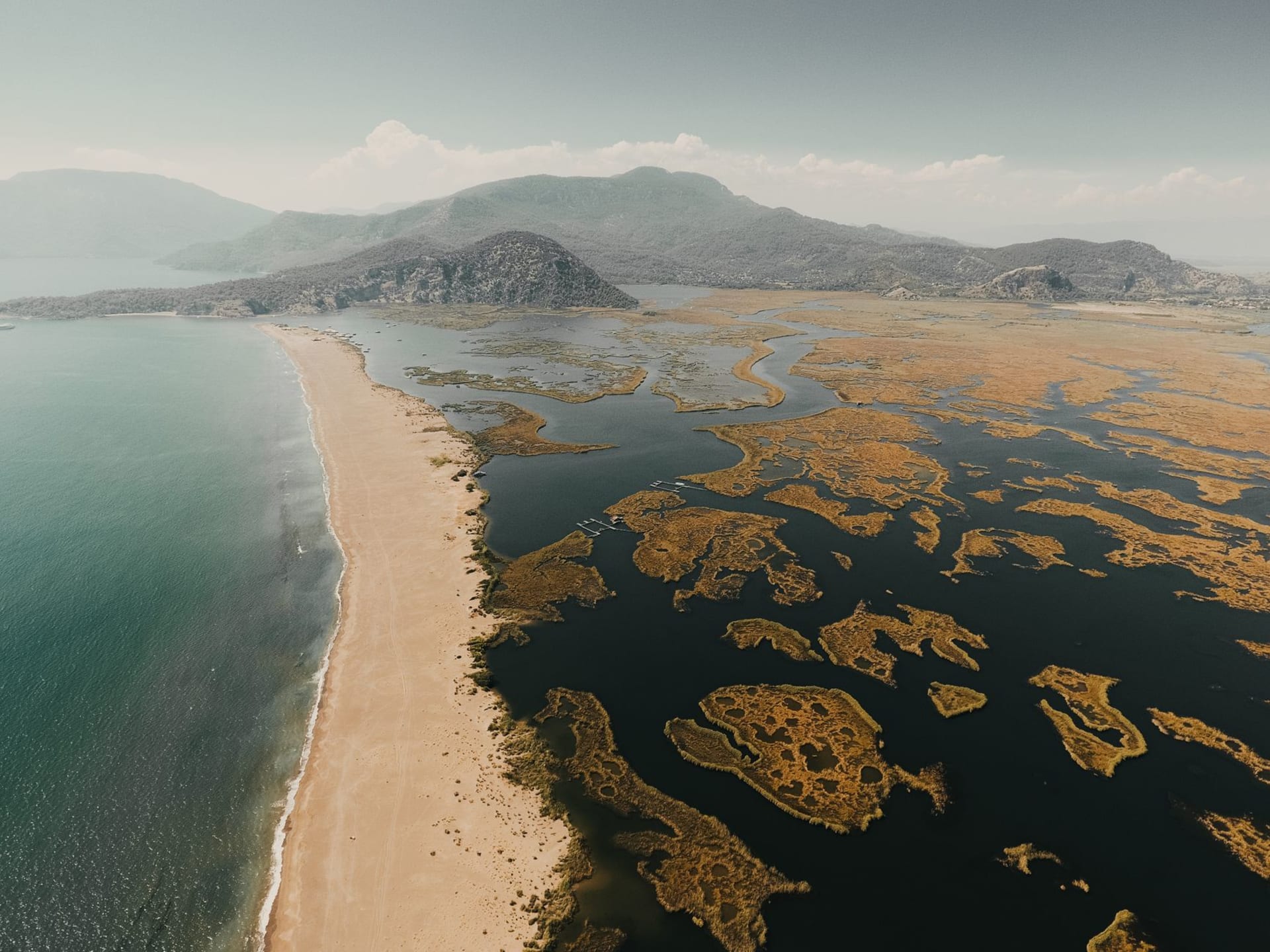
Iztuzu Beach — at the river’s mouth where the delta meets the open Mediterranean — is a protected loggerhead sea turtle nesting ground, one of the most important in the eastern Mediterranean. The beach is closed at night from June through September to protect the nests, and in the hours before it closes there is a quality of light over the sand and the surrounding pine hills that is almost theatrical. I walked its four-kilometer length one evening with the Taurus Mountains turning purple in the distance and the waves arriving in measured sets and thought: this is exactly what a coastline looks like before it decides to be famous.

The town of Dalyan itself is modest and manageable — a single main street running along the river, boat-hire operators and small pensions and restaurants whose menus lean heavily on whatever the morning’s catch produced. I stayed three nights and ate balık three times. There is a particular joy in eating grilled sea bass twenty meters from the river it came from.
When to go: May through June, or September and October. July and August see the turtle nesting season peak and beach restrictions in full force, which is worth experiencing once — but the crowds on the boats multiply considerably. The mud baths are open year-round.