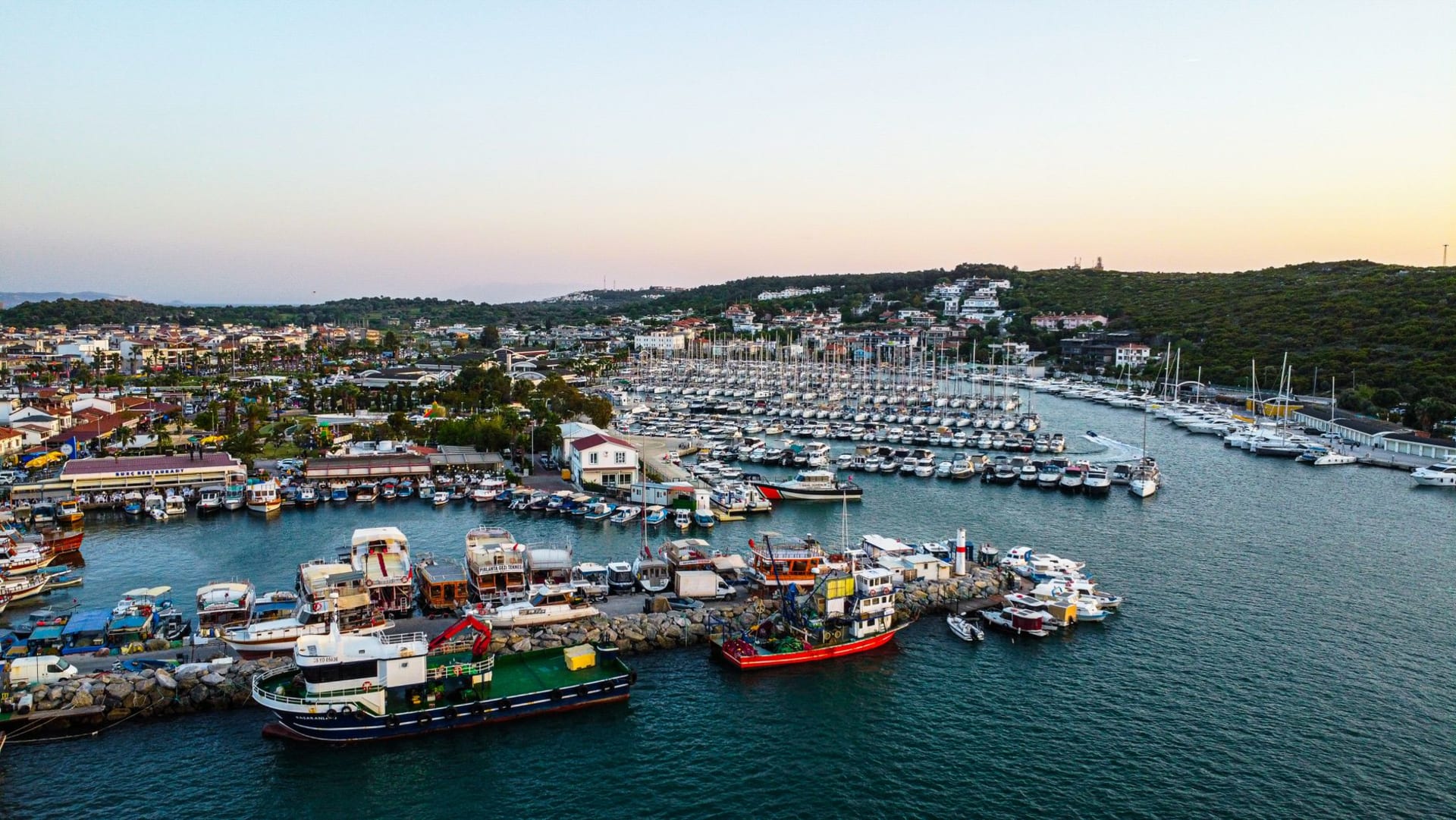
Alaçatı
"I went for the windsurfing and stayed for the breakfast. Three days of the most elaborate morning meal I have ever eaten."
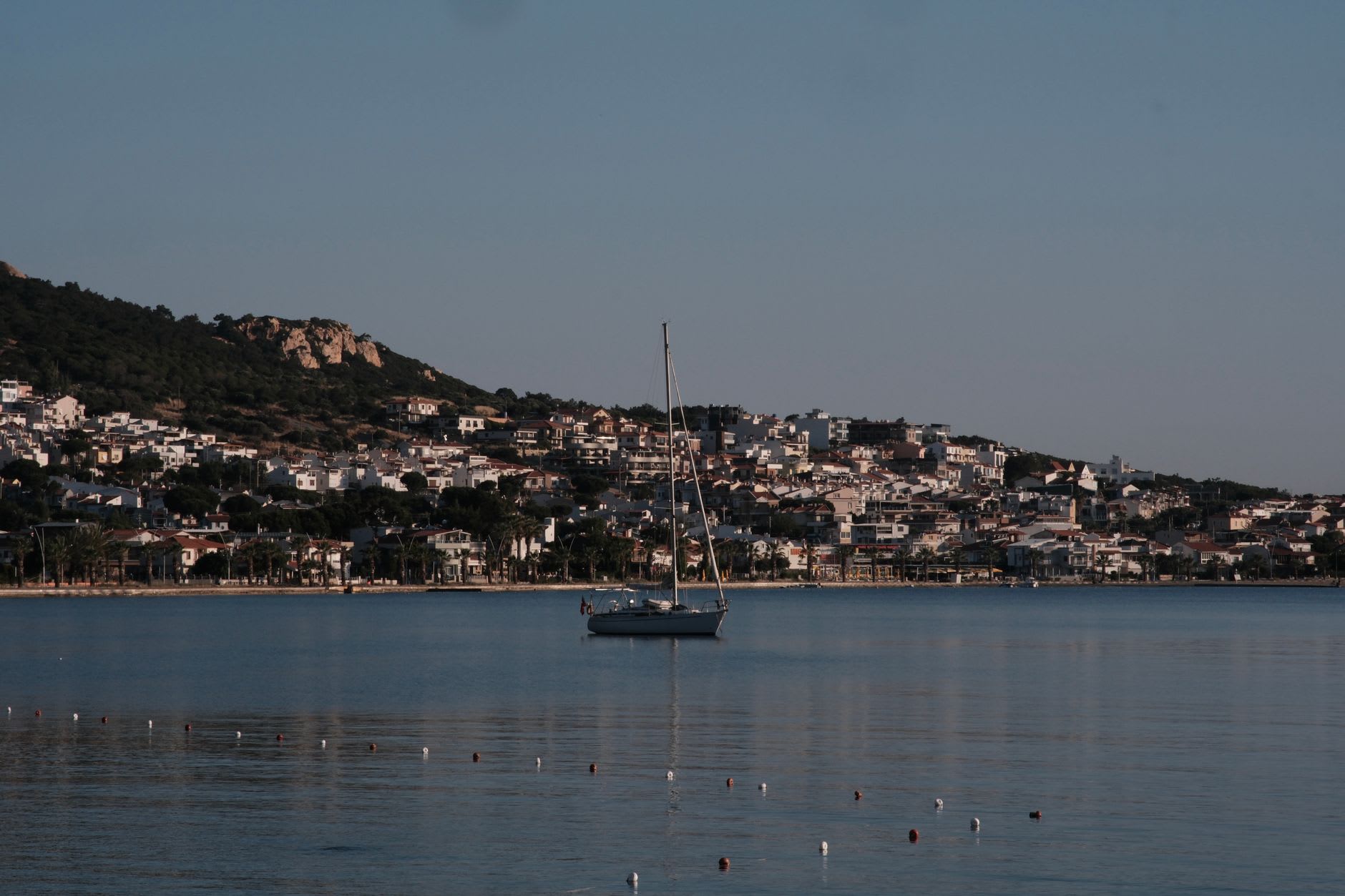
Alaçatı sneaked up on me in the way that places do when you arrive with low expectations. I knew it as the windsurfing town — famous for the Imbat wind that funnels reliably off the Aegean between May and October, drawing serious riders from across Europe who stay for weeks in a state of wind-induced contentment. What I didn’t know was the stone. The town was built by Greek merchants in the nineteenth century, and its architecture is a particular Ottoman-Greek hybrid: grid streets of narrow lanes, houses of volcanic-cut stone with carved doorways, wooden windows with iron grilles, everything proportioned for human scale. The Greeks left in 1923 in the population exchange, and Turks from Salonika moved in. The stone remained.
The windmills on the ridge above the town — seven of them, restored to working condition — are the image that gets used in the travel magazines, and they earn it: stone towers in a line, their wooden sails catching the afternoon wind, the Aegean visible in the gap between them. I walked up at dusk and stood between two of them while the sails rotated past my face with a low wooden groan, the light turning orange on the stone, the town spread out below. It is one of those purely accidental compositions that a place occasionally presents.
But the thing that kept me in Alaçatı for three days when I had planned for one was the breakfast. Turkish breakfast is always a serious proposition — white cheese, olives, tomatoes, cucumber, eggs, honey, bread — but Alaçatı has elevated this into something that can legitimately be called an event. The breakfast places in the stone-street district begin filling at nine and continue until noon, each table covered in small plates that accumulate over the course of an hour: herb cheeses, five varieties of olive, fresh honeycomb with the wax still in it, menemen (eggs scrambled soft with tomato and green pepper) still bubbling from the pan, simit with sesame seeds that shatter when you bite them, a bowl of kaymak cream so thick it holds the spoon upright. Eating this slowly, over two hours, at a table in a stone courtyard with bougainvillea overhead, is the experience I recommend unconditionally.
The windsurfing beach is four kilometers from the village center by a road through the salt flats, and the sport here is serious — freestyle and slalom competition events are held annually, and the afternoon winds are reliable enough that intermediate riders can be out for four hours without a lull. I am not a windsurfer, but there is genuine pleasure in watching people who are very good at something physical in a beautiful setting. I rented a paddleboard instead and managed not to disgrace myself.
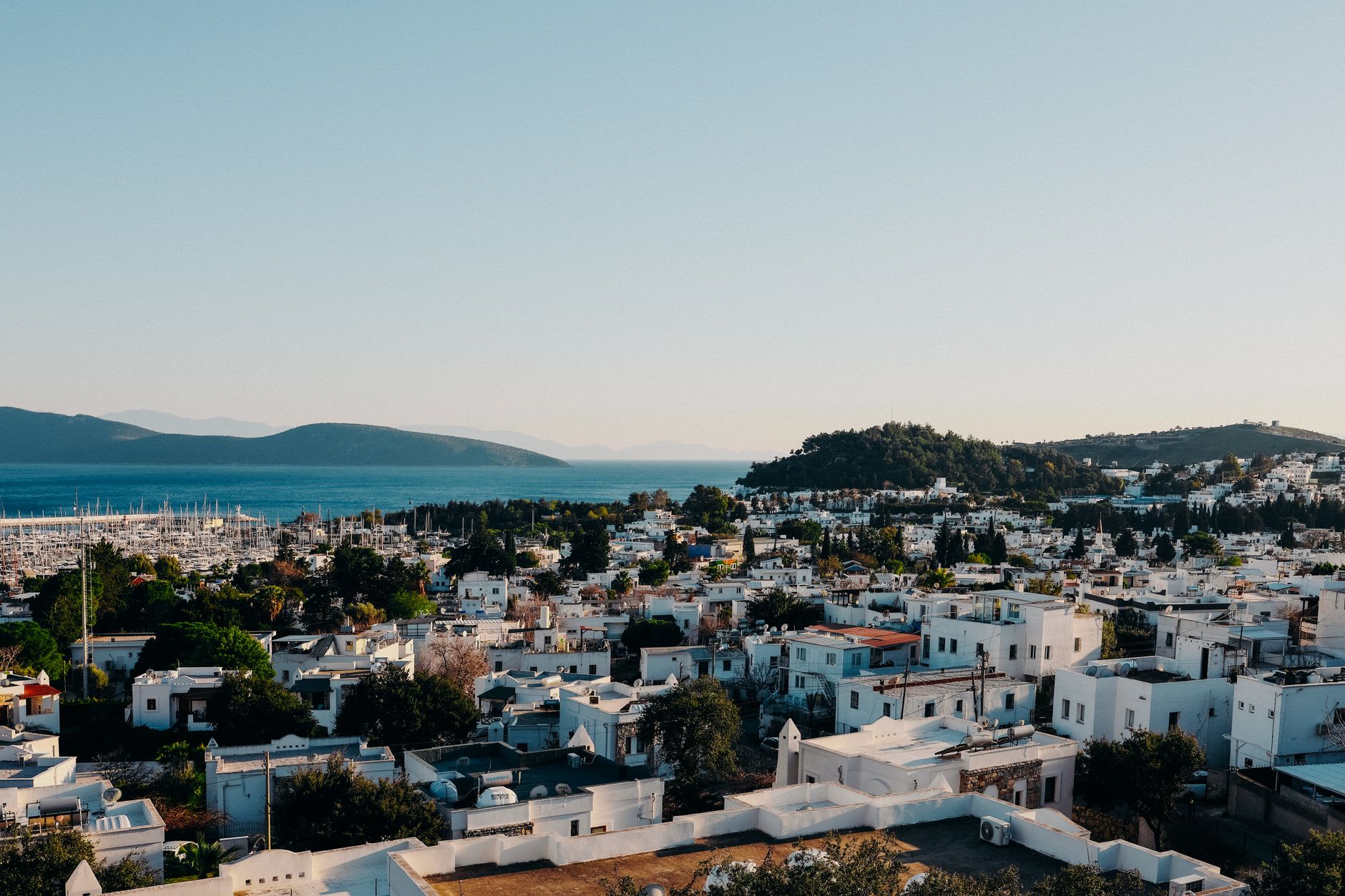
The town’s main shopping street has been colonized by boutiques and design shops that are unabashedly urban in their sensibility — carefully curated ceramics, linen, handmade sandals, the kind of objects that suggest an İzmir architect has a holiday house nearby. They are fine. But the charm of Alaçatı is in the side streets, where the stones are uneven and the cats are numerous and the sound of the wind through the windmill sails is audible if you are quiet enough to listen for it.
When to go: May through June and September through October. The wind is reliable from late May, the stone lanes are at their best before July heat turns them oppressive. Avoid August if you can: it is the premium season and the breakfast queues are long. April is a lovely shoulder month — quieter, with the flowering plants at their peak.