Akyaka
"The river water is cold enough to make you gasp. The tea at the riverside café is hot enough to forgive it."
I had been told about Akyaka by a man I met in Marmaris who described it as “the village that refused.” He was referring to its architecture — Akyaka was shaped by Nail Çakırhan, an architect who won the Aga Khan Prize in 1980 for his interpretation of traditional Ottoman vernacular building, and who spent decades working to ensure that the village grew according to a single coherent aesthetic: wooden bracketed eaves, carved window screens, gently sloped roofs, everything in harmony with the surrounding pine forest. The result is a settlement that looks like it has been here forever and was, in fact, carefully designed, which is a rarer combination than it sounds.
The Azmak river is the heart of it. A spring-fed channel that begins in the mountains and enters Gökova Bay through a delta of reeds, the Azmak is cold enough even in August that wading in it produces an audible intake of breath. The water is gin-clear — you can see the bottom at three meters depth and the weeds trailing like hair in the current — and the trout that live in it are visible as dark shapes moving against the pull of the flow. There are restaurants along the bank that catch these trout and serve them grilled within the hour; I ate one that came on a plate with nothing but a lemon wedge and a small salad and needed nothing more.

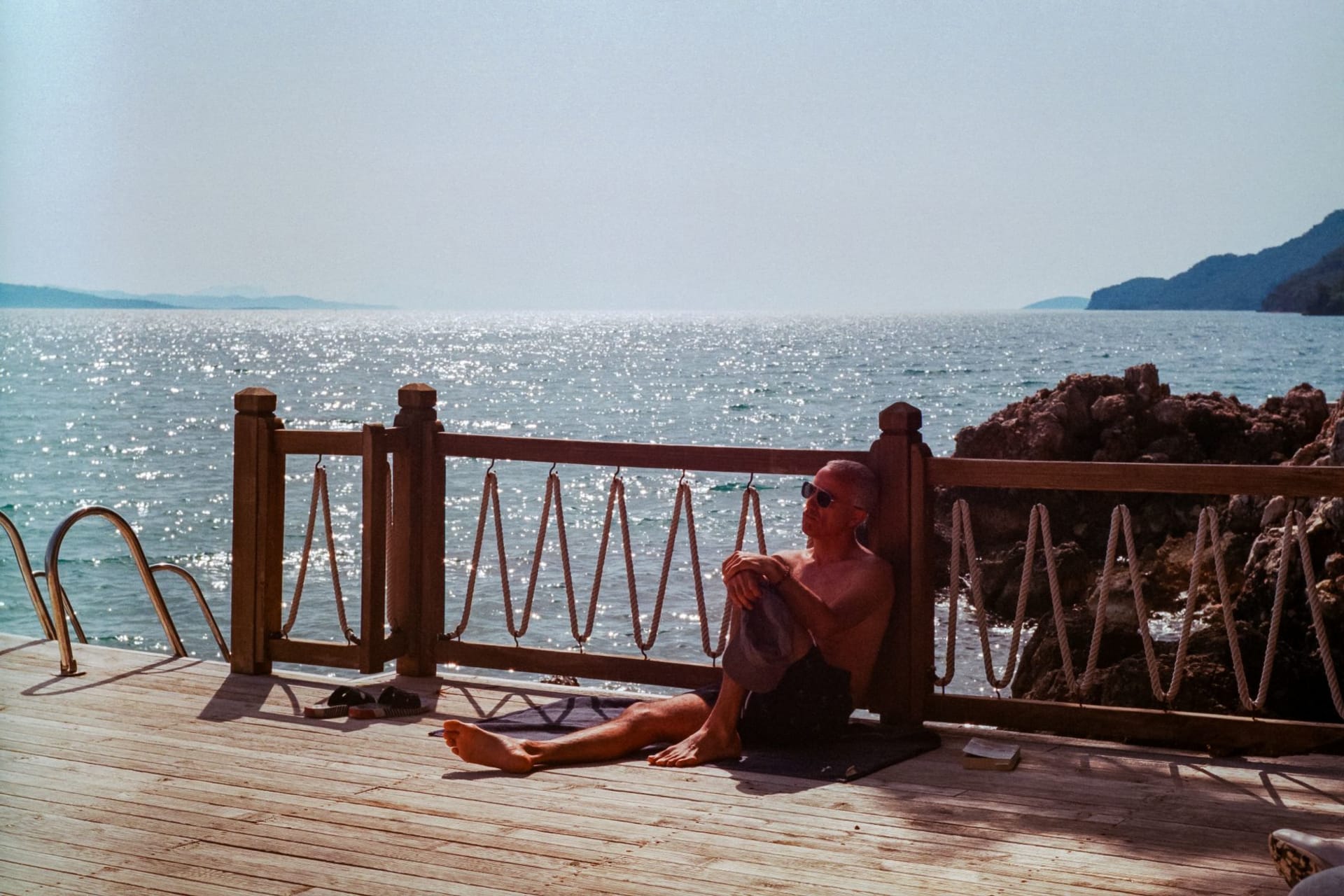
Gökova Bay, which Akyaka sits at the head of, is a deep gulf extending sixty kilometers southeast — protected on both sides by mountain ranges that create a particular microclimate, warmer than the surrounding coast, with winds that sweep down from the Taurus in the afternoon in a pattern that has made it one of the best windsurfing locations in the eastern Mediterranean. The beach at Akyaka is long and sandy, and by two in the afternoon the windsurfers are out in numbers, colored sails catching the Imbat wind that arrives with the regularity of a schedule. There is something genuinely pleasurable about watching people do something technically difficult with apparent ease; I sat on the beach until the light turned.
The village behind the beach operates at a pace that is unusual even for this coast. The restaurants open when they are ready; the wooden balconies of the old houses are occupied by people reading or drinking tea with no particular sense that anything urgent is being missed. I walked the back streets for an hour and found a carpenter’s workshop open to the street, a man working on a window screen with hand tools, the smell of cedar shavings in the air. He nodded at me. I watched for a few minutes. This seemed completely normal to both of us.

The evenings here gather at the waterfront, where the restaurants extend their tables toward the river delta and the light on the bay turns colors that feel exaggerated until you realize they are simply the Aegean doing what it does at dusk. I ate köfte one evening — small dense lamb meatballs with a charred exterior and a center still pink — with a glass of raki and a meze of white bean salad and felt, genuinely, that everything was in its correct position.
When to go: May and June are perfect — the river is still running high from mountain snow, the bay is warm enough to swim, and the windsurfers haven’t yet arrived in full force. September is also excellent. Avoid July through August if you can: the village fills quickly and the road from Marmaris becomes congested.