Hanoi on a Plastic Stool — A Street Food Education
The Initiation
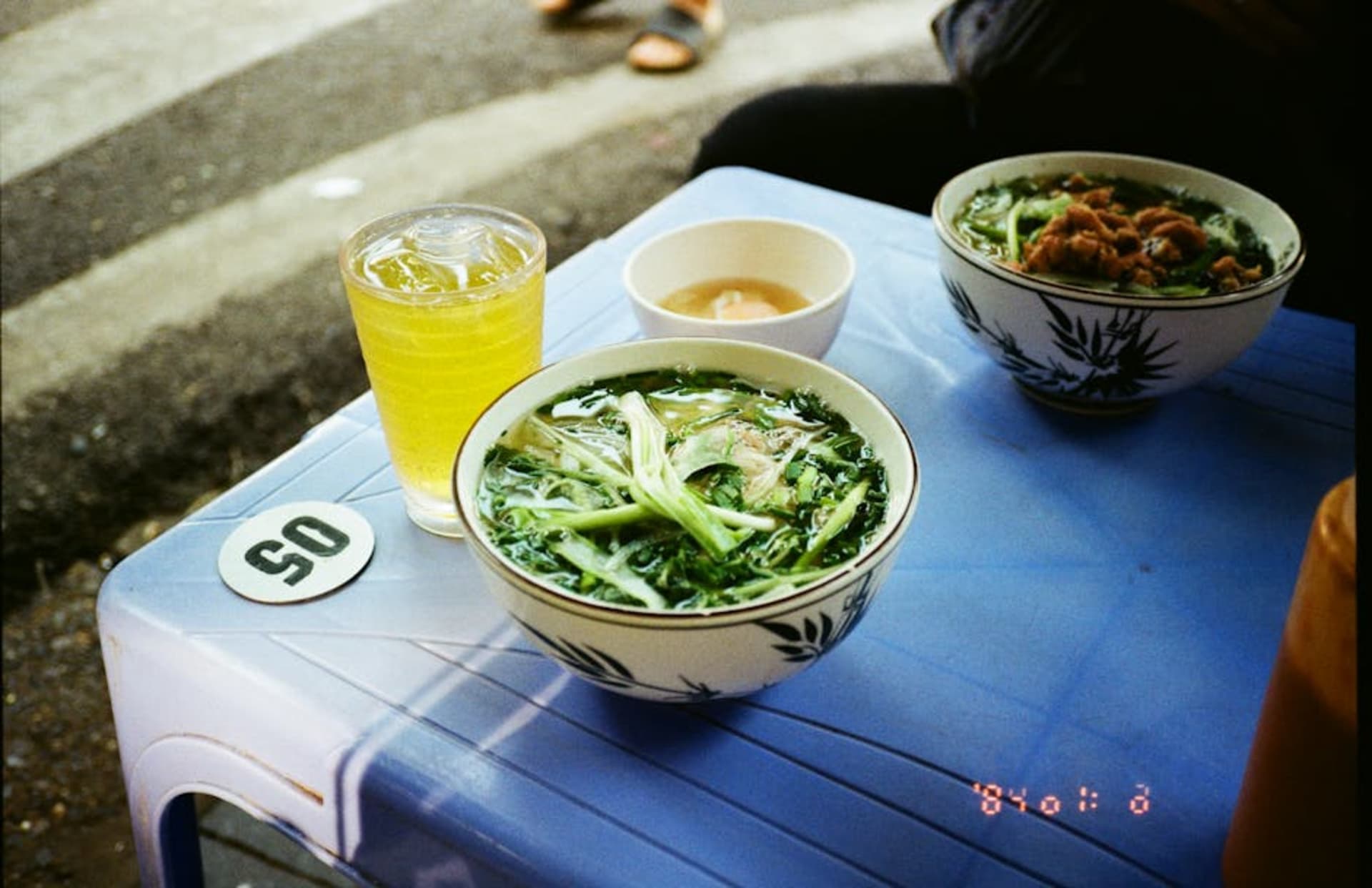
I arrived in Hanoi at eleven at night, checked into a guesthouse in the Old Quarter, and stepped outside to find the city still eating. Not winding down, not clearing tables, not reaching the end of dinner service — still eating, at full volume, with the same commitment that other cities reserve for their morning rush hour. A woman on Hang Buom Street was grilling something over charcoal that smelled like caramelized heaven. I sat down on a plastic stool that placed my knees roughly at the level of my ears, pointed at what the man next to me was having, and received a plate of nem cua be — crab spring rolls, crispy and golden, served with a dipping sauce that balanced sweet, sour, salty, and spicy with the precision of a Swiss watch. The beer was cold. The stool was uncomfortable. The street was loud. I knew, within ten minutes, that this was going to be the best food city I had ever visited.
What makes Hanoi’s street food different from, say, Bangkok’s or Mexico City’s — two cities I love and eat in regularly — is the focus. Each stall does one thing. Not a menu of twenty items with varying degrees of commitment, but a single dish, perfected over decades and sometimes generations, served from dawn until the pot is empty and then not again until tomorrow. This monomaniacal devotion to a single recipe produces results that no restaurant kitchen, however talented, can replicate. When you have been making the same broth for forty years, adjusting it each morning based on the humidity, the quality of the bones, and some intuition that cannot be taught, you are not cooking anymore. You are conducting a conversation with an ingredient that you know better than you know most people.
The Pho Question
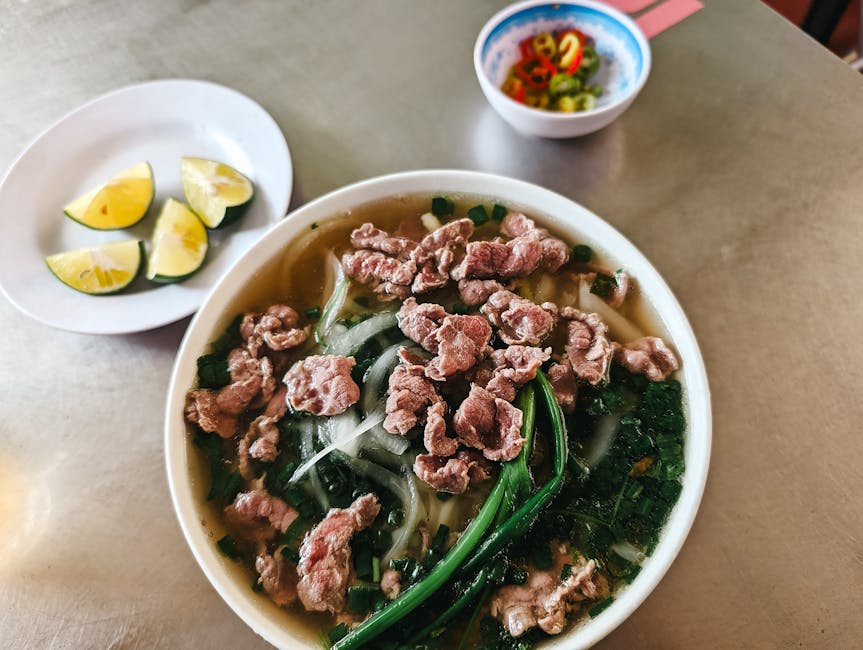
Everyone asks: where is the best pho in Hanoi? It is the wrong question. The right question is: what kind of pho do you want this morning? Pho Thin on Lo Duc Street serves pho bo with stir-fried beef — the meat seared fast and hot before being laid over the noodles, adding a smoky char to the broth that is technically heretical and practically transcendent. Pho Gia Truyen on Bat Dan Street is the purist’s choice — clear beef broth that has been simmering since before dawn, rice noodles as thin as thread, sliced beef so tender it dissolves on contact. Pho Cuon on Ngu Xa Street takes the same ingredients and rolls them into fresh rice-paper rolls that you dip into a fish sauce so perfectly balanced that I spent five minutes trying to reverse-engineer it and gave up.
I ate pho every morning for five days. It never bored me. The variations were subtle but consequential — a different hand with the star anise here, a charred ginger note there, a broth that was lighter or darker or richer depending on who was standing behind the pot and what their grandmother had taught them. By the third day, I understood that pho is not a dish. It is a tradition, a daily practice, a way of starting the day that is as ritualistic as prayer and considerably more delicious.
Bun Cha and the Obama Effect
Bun cha is the dish that Barack Obama ate with Anthony Bourdain at a place called Bun Cha Huong Lien in 2016. The restaurant has since encased their table in glass and raised its prices, and the locals have since redirected to other stalls, which is exactly how Hanoi’s food ecosystem works — fame is the enemy of quality, and the best bun cha is always at the place that has not yet been discovered by anyone with a television camera.
I found mine on a side street off Hang Than, at a stall run by a couple in their sixties who set up six tables on the pavement each morning at ten and pack them away by two, not because they are tired but because the meat is finished. The bun cha arrives in three components: a bowl of sweet-sour broth with charcoal-grilled pork patties and sliced pork belly, a plate of cold rice noodles, and a basket of fresh herbs — perilla, mint, coriander, lettuce — that you add to the bowl in whatever proportion your instincts suggest. The pork has been marinated in fish sauce, sugar, and garlic, and the charcoal gives it an edge that the broth’s sweetness rounds off perfectly. You dunk the noodles, you add the herbs, you eat, and somewhere between the second and third mouthful you understand why this city has organized its entire culinary identity around the principle that less is more, provided the less is perfect.
Egg Coffee and the Art of Sitting Still
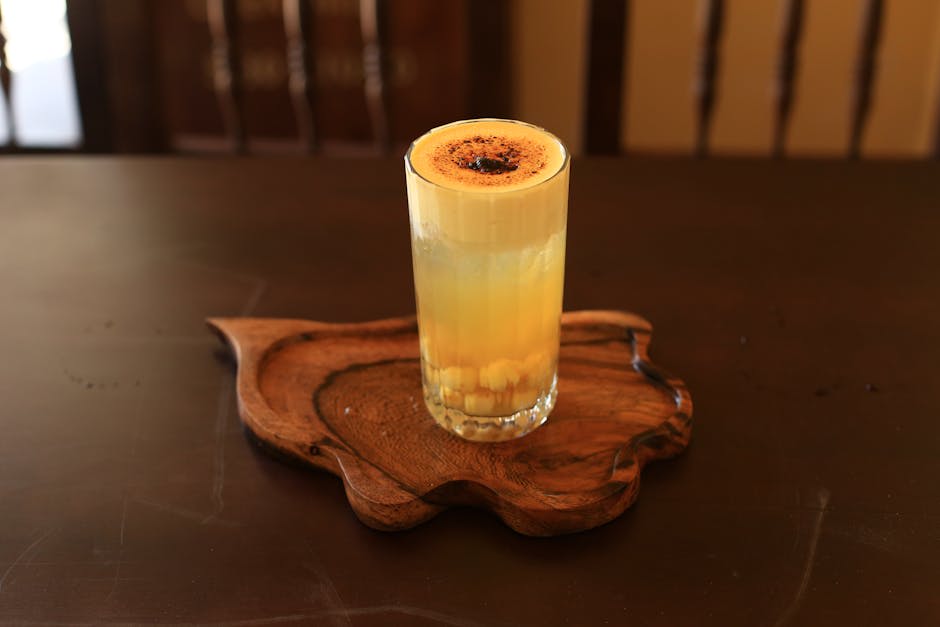
Ca phe trung — egg coffee — is Hanoi’s gift to the world’s caffeine addicts, and like most great inventions, it was born of necessity. In the 1940s, when fresh milk was scarce, a bartender named Nguyen Van Giang whisked egg yolk with sugar and condensed milk and spooned it over strong Vietnamese coffee, creating a drink that tastes like liquid tiramisu and looks like a tiny cup of velvet. His grandson now runs Cafe Giang on Nguyen Huu Huan Street, and the recipe has not changed.
I drank my egg coffee on the second floor, at a window table overlooking the street, and spent an hour watching Hanoi do what Hanoi does — motorbikes threading between pedestrians, vendors carrying baskets on shoulder poles, a man sleeping on a bench beside a bonsai tree, two women laughing over iced tea at the stall below. The coffee was strong, bitter, and dark. The egg foam was sweet, airy, and impossibly smooth. Together they formed something that no barista in Brooklyn or Melbourne has figured out how to replicate, despite years of trying, because the secret is not in the recipe. The secret is in the stool, the window, the street below, and the particular quality of Hanoi morning light that makes everything look like a memory even while it is happening.
What the Pavement Teaches You
On my last night in Hanoi, I sat at a bun rieu stall near Dong Xuan Market — crab noodle soup, tomatoey and sour, served in a bowl large enough to swim in — and thought about what five days of pavement-level eating had taught me. Not about food, exactly, although the food had been extraordinary. About attention. About the difference between eating and dining, between consuming and participating. In Hanoi, eating is a public act, performed at street level, in full view of the neighbourhood, with your knees at your chin and your elbows in your neighbour’s space. There is no pretension because there is no distance — no tablecloth, no reservation, no separation between the person cooking and the person eating. The grandmother makes the broth. You eat the broth. She watches your face. You nod. She nods back. That is the entire transaction, and it contains everything that matters about hospitality.
I have eaten in three-star restaurants in France. I have had omakase in Tokyo. I have sat at counters in Mexico City where the tacos were transcendent and the mezcal was infinite. Hanoi’s plastic stools rank alongside all of them — not because the food is technically superior, but because the act of eating here is so stripped of artifice, so nakedly about flavour and generosity and the simple human pleasure of feeding someone well, that it makes you reconsider every meal you have ever eaten in a room with air conditioning and a wine list. The pavement is the table. The city is the dining room. And the bill, when it comes, is always less than you expected and more than you deserved.
Travel with intention
Curated guides, quiet destinations, and stories worth reading — delivered when we have something worth sharing.
No spam. Unsubscribe anytime.