The Rockies Rearranged Me — Banff, Jasper, and the Colour That Should Not Exist
The Colour Problem
I need to talk about the colour of the water, because nothing else will make sense until I do. I have seen glacial lakes in the Alps — the Lac de Gaube in the Pyrenees, the mountain tarns of the Haute-Savoie — and they are beautiful, certainly, in that restrained, European way where beauty is expected to behave itself. The lakes in the Canadian Rockies do not behave. They are a shade of turquoise so aggressive, so unreasonable, so thoroughly uninterested in subtlety that your first instinct is to check your sunglasses for a tint you forgot about.
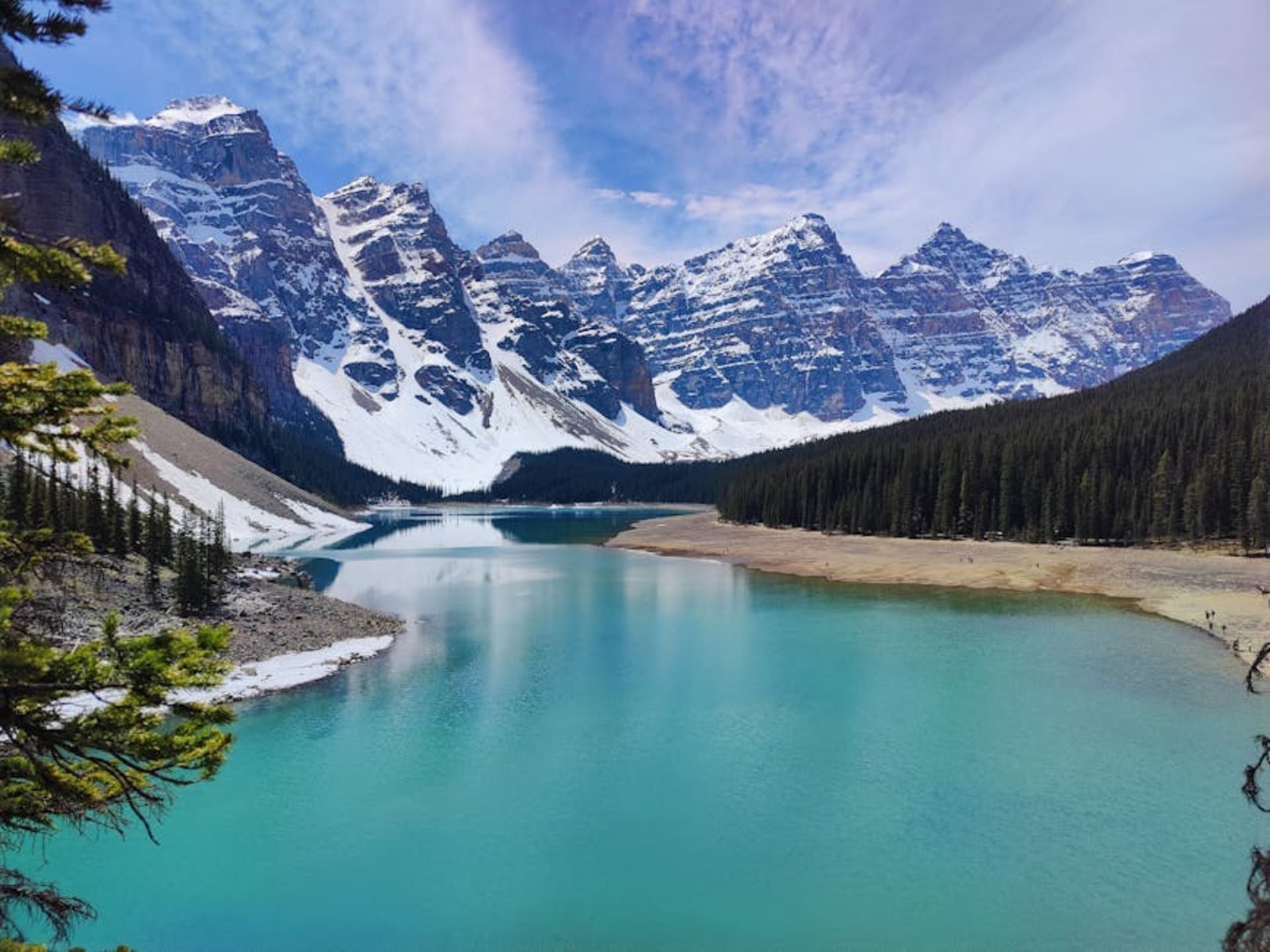
Lake Louise was the first one I saw, and I stood at the shoreline for ten minutes doing nothing but recalibrating. The Victoria Glacier sits at the far end, grey-white and ancient, calving imperceptibly into water that is the temperature of regret. The colour comes from rock flour — glacial silt ground so fine that it suspends in the water and refracts sunlight in the blue-green spectrum. The science is straightforward. The effect is not. It is the kind of beauty that makes you suspect the simulation has a rendering bug, and nobody has filed a ticket because everyone is too busy taking photographs.
Moraine Lake was worse. Smaller, more intimate, tucked into the Valley of the Ten Peaks where the mountains crowd together with the casual grandeur of a family that knows it looks good in photos. I arrived at six in the morning — the shuttle is required now, the road closed to private vehicles to manage the crowds, which tells you everything about what Instagram has done to this place — and had the lakeshore nearly to myself. The water was perfectly still. The reflections were so sharp they looked more real than the mountains themselves, and I had the disorienting sensation of not knowing which way was up.
The Drive
The Icefields Parkway runs 230 kilometres from Lake Louise to Jasper, and calling it a “drive” is like calling a cathedral a “building” — technically accurate and completely insufficient. This is not a road you drive for transport. This is a road that exists because the landscape demanded a way to be witnessed, and someone had the good sense to build one that follows the grain of the mountains rather than fighting it.
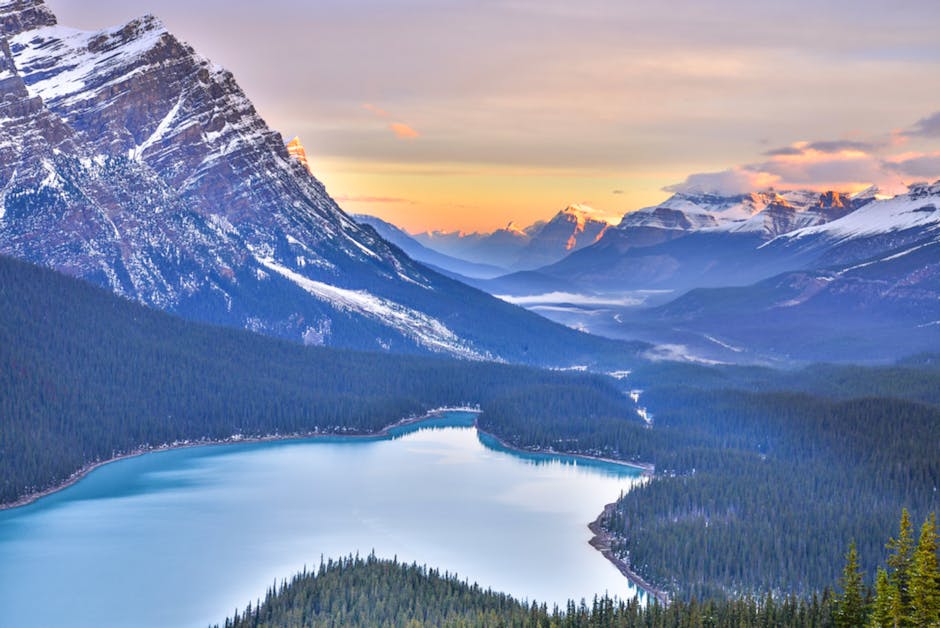
I left Lake Louise at eight in the morning with a loose plan to reach Jasper by evening. The plan dissolved within the first hour. Every bend in the road revealed another glacier, another waterfall, another viewpoint where pulling over felt not optional but morally obligatory. Peyto Lake appeared from a short trail above the highway — a turquoise abstraction seen from above, shaped like a fox head or a wolf, depending on who is telling you, poured into a valley between peaks that had been accumulating snow since before the concept of Canada existed.
The Columbia Icefield stopped me entirely. This is one of the largest ice masses south of the Arctic Circle, a hydrological apex that feeds rivers flowing to three separate oceans — the Pacific, the Atlantic, the Arctic. Standing on the Athabasca Glacier, walking on ice that is three hundred metres deep in places, I thought about time in a way I rarely do. This ice fell as snow centuries ago. It has been moving, a few centimetres a day, through a landscape that was here long before the Rockefellers and the railway barons decided these mountains were worth preserving. Markers along the access road show where the glacier’s toe stood in 1900, 1950, 1980 — each sign further from the current edge, a timeline that requires no caption.
I did not reach Jasper until after dark. I regret nothing about the delay.
The Silence
What I was not prepared for — what no photograph or travel article had communicated — was the silence. I have lived in Mexico City for four years, a city of twenty-two million people where silence is not a state but a rumour. I grew up in France, where even the countryside hums with autoroute traffic and church bells and the distant argument of neighbours who have been disagreeing since the Revolution. The Canadian Rockies are quiet in a way that felt, at first, like something was broken.
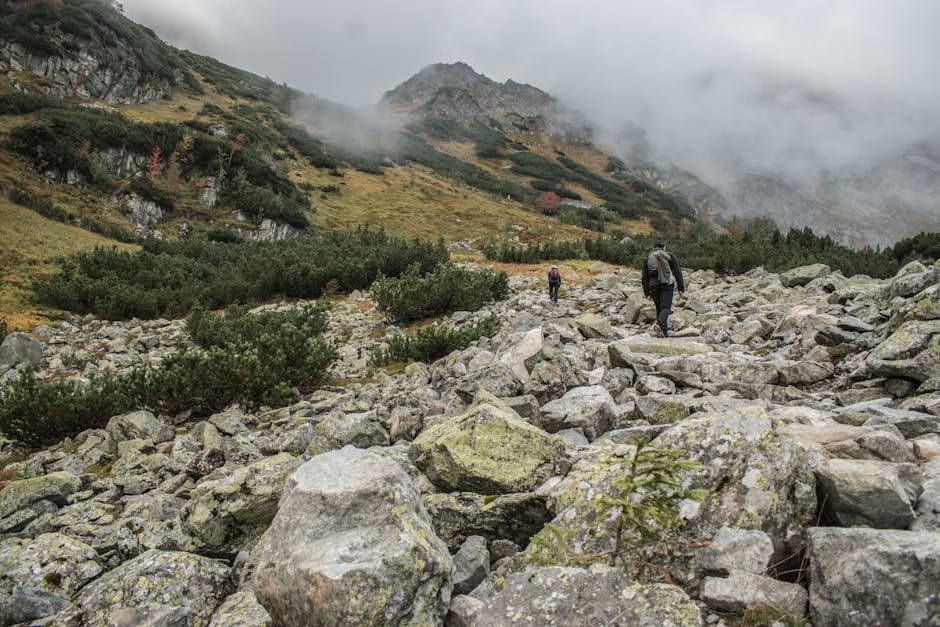
I hiked the Sentinel Pass trail from Moraine Lake — a steep, punishing ascent that gains 800 metres of elevation through a landscape that shifts from larch forest to alpine scree to a high pass between two peaks where the wind is the only sound. At the top, sitting on a rock with the Valley of the Ten Peaks below me and nothing above but sky, I experienced a silence so complete that I could hear my own heartbeat. Not poetically. Literally. The blood in my ears was the loudest thing in the environment.
This is what wilderness means in Canada, and it is different from wilderness in Europe in a way that is difficult to explain until you feel it. In the Alps, wilderness is curated. There are refuges and marked trails and you are never more than a few hours from a village where someone will sell you cheese and wine. In the Rockies, the wilderness extends beyond the trail in every direction, for hundreds of kilometres, into territory where bears and elk and mountain goats live their lives without reference to yours. The scale is inhuman, and I mean that as a compliment.
Jasper After Dark
Jasper holds the largest dark sky preserve in the world, and I had planned to see the stars from the moment I learned this fact. What I had not planned for was the emotional effect. I drove to Pyramid Lake on a clear September night, parked at the shore, turned off my headlights, and waited for my eyes to adjust. The Milky Way appeared gradually, then all at once — not the faint smudge I had seen from rural France but a river of light so dense it cast shadows on the water. The galaxy was not above me. It was around me. I was inside it, which of course I always am, but the Rockies are one of the few places left where you can actually see this fact.
I sat there for two hours. I did not take a photograph, because I have learned that some experiences resist the camera and are diminished by the attempt. The northern lights appeared briefly — a green shimmer along the northern horizon, pulsing with the rhythm of solar wind hitting atmosphere — and then faded, as if the universe had decided that the Milky Way was sufficient and additional spectacle would be showing off.
What the Rockies Teach You
I have spent four years in Mexico learning to slow down — learning that time is a suggestion, that the best meals happen when nobody is watching the clock, that a city can be chaotic and beautiful and completely indifferent to your schedule. The Canadian Rockies teach a different lesson. They teach you that you are small. Not in the diminishing, anxious way that cities make you feel small — lost in the crowd, irrelevant to the machine — but in the liberating way that only very large landscapes can manage. You are small, and the mountains are old, and the glaciers are patient, and the water is that colour because of physics that has been operating since before your species existed, and none of this requires your opinion or your Instagram caption or your five-star review.
The French have a concept — dépaysement — that means the disorientation of being in a foreign place, the productive confusion of finding yourself somewhere that does not operate by your rules. The Rockies gave me a version of this that I did not expect. Not cultural dépaysement — Canadians are easy, polite, comprehensible in ways that make a Frenchman slightly suspicious — but geological dépaysement. The feeling of being in a landscape that operates on a timescale so different from yours that “foreign” does not begin to cover it.
I drove back to Calgary the next morning, caught a flight east, and re-entered the world of traffic and schedules and phone notifications. But the silence stayed. It is still there, in the back of my mind, like a room I can return to whenever the noise gets to be too much. The Rockies did not change my life — I am suspicious of travel writing that claims transformation from a week of hiking — but they rearranged something. A sense of proportion, maybe. A recalibration of what counts as large, as old, as beautiful. I will take it.
Travel with intention
Curated guides, quiet destinations, and stories worth reading — delivered when we have something worth sharing.
No spam. Unsubscribe anytime.