Buenos Aires After Midnight — Tango, Steak, and the City That Never Sleeps
The Clock
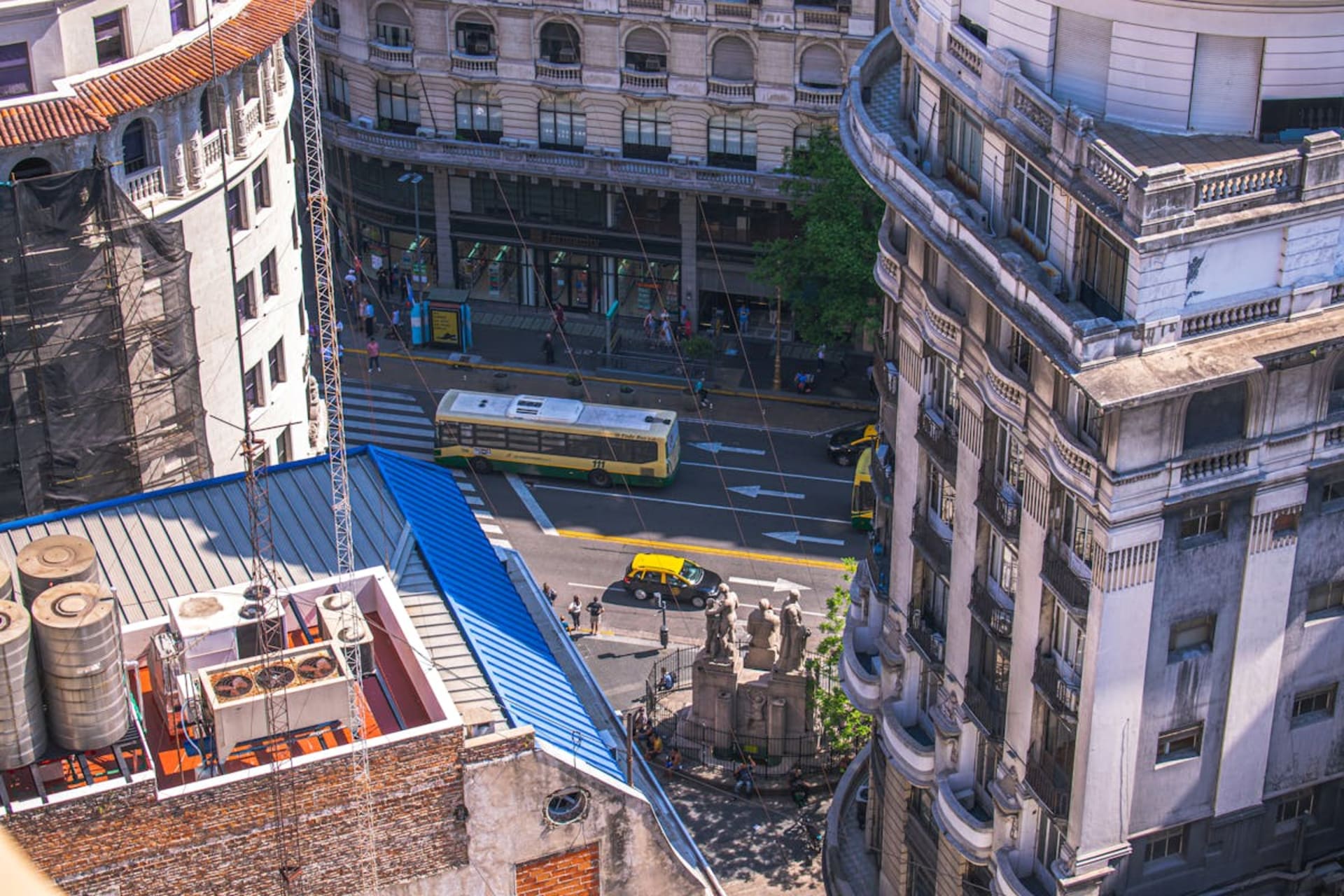
Buenos Aires operates on a schedule that would give a German efficiency consultant a nervous breakdown. Dinner at eight is a tourist confession. Locals sit down at ten, sometimes later. The restaurants are designed for this — nobody is rushing you, nobody is flipping your table, the waiter will not bring the check until you ask for it and even then he might take his time. The city has decided, collectively and without apology, that the evening is long and the night is longer and there is no reason to compress any of it.
I have spent time in cities that stay up late. Mexico City has its after-hours cantinas, Paris its cave bars that pour until the Métro restarts. But Buenos Aires is different. The lateness is not rebellious or bohemian — it is structural. Bakeries open at midnight because people want medialunas at midnight. The pharmacies are 24-hour because why would they not be. Children are in restaurants at eleven on a Tuesday. The entire social contract has been renegotiated around the principle that the best hours are the ones after dark, and everyone has simply agreed.
This takes adjustment. My first two days I fought it — waking early, eating at seven, wondering why every restaurant was empty and every street felt half-asleep at nine in the evening. By day three, I understood. You sleep late. You take a long afternoon. You shower at nine. And then the city opens like a flower that only blooms in artificial light.
The Parrilla
The steak culture in Buenos Aires is not a scene or a trend. It is a religion with its own temples, rituals, and orthodoxies. The parrilla — the grill, the restaurant built around the grill, the entire philosophy of cooking meat over wood embers — is to Buenos Aires what the bistro is to Paris: so fundamental that you stop noticing it until you pay attention.
The first thing to understand is that Argentine beef tastes different. It is grass-fed on the Pampas, and the flavor is cleaner, more mineral, less fatty than the grain-finished beef that dominates in North America. The second thing is that the cooking method is patient. A proper asado is not grilling — it is slow-roasting over embers at a distance, sometimes for hours. The parrillero, the grill master, is an artist of temperature and time. He does not touch the meat more than necessary. He does not rush.
I went to Don Julio on a Thursday night, arriving at ten-thirty, which is apparently early. The wait was an hour. They handed me a glass of Malbec from the bodega wall — an entire wall of wine, floor to ceiling, thousands of bottles — and told me to be patient. The patience was rewarded. A tira de asado, the short ribs cut across the bone, arrived with a crust that shattered and a pink interior that tasted like what beef is supposed to taste like before the industrial food chain got involved. Entraña — skirt steak — came next, charred and tender and dressed with nothing but salt and chimichurri. A carafe of Malbec from Luján de Cuyo. Provoleta, the grilled provolone that arrives bubbling and slightly caramelized. I ate for two hours and spent less than I would at a mid-range steakhouse in any European capital.
The asado is not just food in Argentina. It is how friendships are maintained, arguments are settled, Sundays are justified. Every family has its parrillero. Every apartment building has its grill on the roof. To eat asado is to participate in the central ritual of Argentine life, and to understand that this country has arranged its priorities with a clarity that most cultures only pretend to.
San Telmo on Sunday
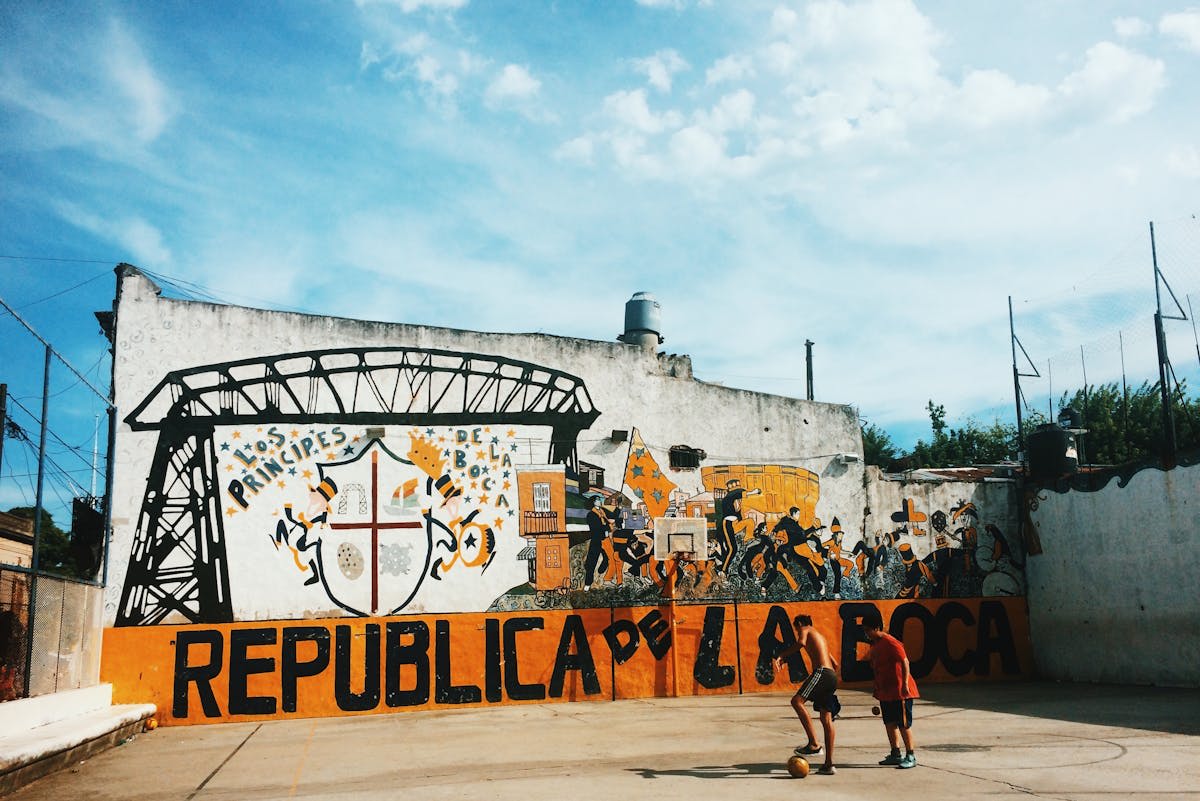
Sunday in Buenos Aires means San Telmo. The neighborhood — cobblestoned, crumbling in the most beautiful way, full of tango bars and antique shops — transforms every Sunday into a street market that stretches for blocks along Defensa. It is crowded. It is chaotic. It is absolutely essential.
The market itself is a mixture of antiques, leather goods, mate cups, silverwork, and handmade jewelry. The quality varies — there is tourist junk alongside genuinely beautiful objects. The trick is to go slowly, duck into the indoor passages that branch off the main street, and look for the stalls run by old men who clearly have opinions about the objects they are selling. I found a silver mate bombilla — the metal straw used for drinking mate — from what the vendor claimed was the 1940s. Whether that was true, I cannot verify. It was beautiful, and the negotiation was conducted with the theatrical seriousness that Argentines bring to all transactions.
But the real draw of San Telmo on Sunday is the street tango. At the intersection of Defensa and Carlos Calvo, and in the small plazas along the route, couples dance in the street. Some are professionals performing for tips. Some are old milongueros who have been dancing in this neighborhood for forty years. The music comes from portable speakers or, if you are lucky, a live bandoneon player whose instrument sounds like it is breathing. You stand and watch because you cannot not watch. The embrace, the footwork, the communication between two bodies — it is one of those art forms that is immediately legible even if you know nothing about it.
The Bookshops
Buenos Aires has more bookshops per capita than any city in the world. This is a statistic I encountered before arriving and assumed was one of those charming but meaningless claims. It is not meaningless. You feel it in the streets. Every neighborhood has its bookshops — not chains, but small independent stores where the shelves are organized according to the owner’s personal cosmology and the cat sleeping on the philosophy section has been there longer than most of the inventory.
The famous one, and rightly so, is El Ateneo Grand Splendid. It is a converted theater from the 1920s — the frescoed ceiling, the gilded balconies, the stage, all preserved, with bookshelves where the seats used to be. It is staggering. It should feel gimmicky, a bookshop designed for Instagram. It does not. It feels like a civilization that decided books mattered enough to house them in a palace. I spent an afternoon there, reading Borges in the old theater boxes that have been converted into reading nooks, looking up occasionally at the painted ceiling and thinking about the kind of city that produces a place like this.
Borges is everywhere in Buenos Aires. Not in a kitschy, tourist-board way — though there is some of that — but in the fabric of the city itself. The streets of Palermo that he wrote about, the libraries he directed, the cafés where he held court. Buenos Aires is a literary city in the way that Paris was literary in the twenties, except that it never stopped. The café culture, the bookshops, the newspapers, the arguments about poetry that happen over dinner at midnight — it is a city that reads and writes and considers both activities essential rather than decorative.
The Tango
I went to a milonga on a Wednesday night in the Almagro neighborhood. A milonga is not a tango show — it is a social dance, a gathering where people come to dance tango with each other. The distinction matters. The tango shows in San Telmo and La Boca — sequined dresses, dramatic lifts, roses between teeth — are entertainment. A milonga is the real thing, and it operates by codes that have been refined over a century.
The room was a community hall with a wooden floor, folding chairs along the walls, and a DJ playing tandas — sets of three or four songs by the same orchestra. The dancers were mostly over fifty. They were extraordinary. The men wore suits or pressed trousers. The women wore heeled shoes that they changed into at the door, carrying them in small bags. Nobody was performing. They were conversing — tango as conversation, as negotiation, as a four-minute relationship conducted entirely through the body.
The cabeceo is how you ask someone to dance: a look across the room, a slight nod, an acceptance or a turned head. No words. No walking across the floor to ask and risk rejection. It is elegant and terrifying and completely logical once you understand it. The embrace, once you are dancing, is close — chest to chest, the lead communicated through the torso, the feet doing complicated things that the upper body never reveals. From the outside, a good tango couple looks like two people walking slowly and intimately across a room. From the inside, I am told, it is one of the most demanding and rewarding forms of movement a human body can engage in.
I did not dance. I sat, I watched, I drank terrible wine from a plastic cup, and I understood something about Buenos Aires that I had not grasped before. This city has maintained an art form — kept it alive not in museums or cultural programs but in neighborhood halls on Wednesday nights, danced by accountants and bus drivers and retired schoolteachers — because the art form says something true about how humans can connect with each other. That is not nostalgia. That is civilization.
What Buenos Aires Teaches You
I have lived in Mexico for four years, and Mexico has taught me that time is a suggestion and that the best meals happen when nobody is watching the clock. Buenos Aires takes this further. Buenos Aires has decided that pleasure is not a reward for productivity — it is the point. The long dinner is not indulgent. The midnight walk is not irresponsible. The three-hour Sunday lunch with family is not wasted time. These are the activities around which a life should be organized, and everything else — the work, the commute, the obligations — is what you endure in order to get back to them.
This is not laziness. Porteños work hard. The economy is complicated, the peso is perpetually in crisis, and life here requires a resilience and improvisation that would exhaust most Europeans. But the response to difficulty has not been to optimize and hustle and treat every hour as a unit of production. The response has been to protect the things that make life worth the trouble. The asado on Sunday. The milonga on Wednesday. The bookshop at any hour. The cafe where your espresso takes exactly as long as it takes.
I have not been to Buenos Aires yet. I am writing this from Mexico City, from conversations and books and bottles of Malbec shared with Argentines who made me understand their city through the intensity of their descriptions. Every porteño I have met talks about Buenos Aires the way the French talk about Paris — with complaint and criticism and an unmistakable, bone-deep love that surfaces the moment anyone else dares to say a word against it. I will go. Soon. And I suspect I will not come back on time.
Travel with intention
Curated guides, quiet destinations, and stories worth reading — delivered when we have something worth sharing.
No spam. Unsubscribe anytime.