Red Rock Vertigo — Two Weeks Through the American Southwest
The Scale Problem
Nothing in Europe prepares you for the American Southwest. I grew up in a country where you can drive from the Atlantic to the Mediterranean in eight hours and pass through three distinct wine regions, two mountain ranges, and enough medieval villages to fill a calendar. France is dense. France is layered. France rewards the short detour.
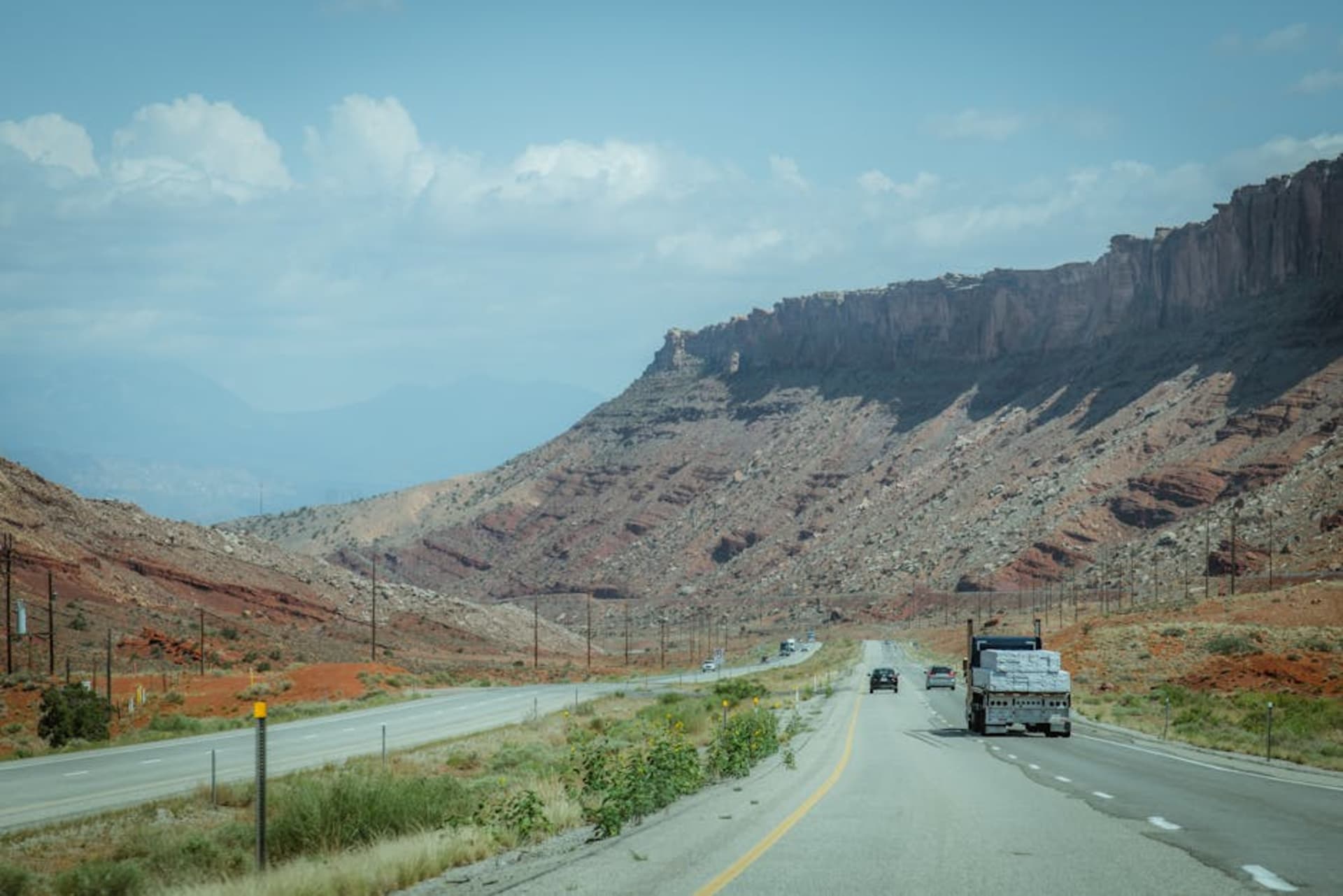
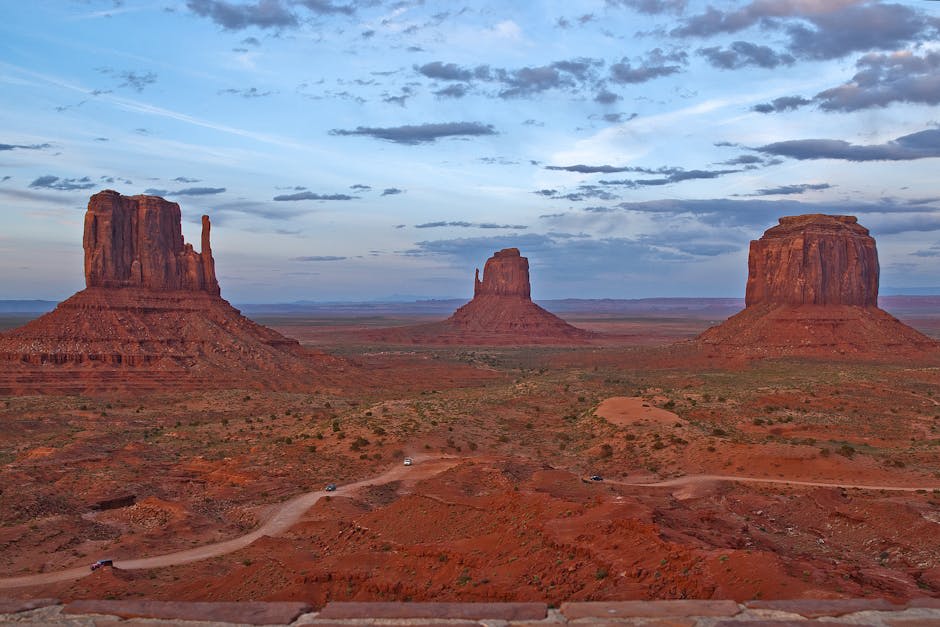
The Southwest rewards endurance. I drove four hours from Flagstaff to Monument Valley and saw perhaps six other vehicles. The road was straight — not French straight, which means gently curved with a roundabout every kilometer, but American straight: a line drawn with a ruler across the surface of the Earth, vanishing into a point on the horizon that never seems to get closer. The landscape on either side was red desert, flat and infinite, punctuated by mesas that rose from the plain like abandoned construction projects of some ancient civilization.
I pulled over at a rest stop that was nothing more than a gravel pullout with a trash can. No cafe, no WC, no attendant selling newspapers. Just the desert, a warm wind, and silence so complete I could hear my own heartbeat. In France, solitude is a luxury you arrange — a cabin in the Cevennes, a beach in Brittany in November. In the Southwest, solitude is the default condition. You have to drive to a town to escape it.
The Canyon
I arrived at the Grand Canyon’s South Rim at six in the morning because the guidebook said to, and because I am French and therefore constitutionally incapable of not following instructions when they are well-written. The parking lot was already half full. Americans, I have learned, are early risers when a national park is involved — the same people who will eat dinner at six o’clock and go to bed at ten will set an alarm for four-thirty to watch a sunrise over a canyon.
The first view is the one that changes you. I stepped to the edge, looked down, and my brain refused to process what it was seeing. The canyon is a mile deep. The Colorado River at the bottom looked like a thread. The layers of rock — red, orange, cream, gray, black — each represented hundreds of millions of years, stacked like the geological equivalent of a library where every shelf is a different era. I stood there for twenty minutes without moving. A woman next to me was crying. A man was on his phone, trying to describe it to someone, and failing. The Grand Canyon is one of those places that makes language feel inadequate and photography feel dishonest.
I hiked the Bright Angel Trail for three hours, descending into the canyon until the rim was a thin line above me and the rock walls on either side were close enough to touch. The temperature rose with every switchback. The silence deepened. At one point I sat on a rock ledge and ate an apple I had packed, and the only sound was the wind moving through the canyon like breath through a cathedral.
Zion and the Narrows
Zion is the Grand Canyon’s more intimate sibling. Where the Grand Canyon overwhelms with horizontal scale — the endless, ungraspable width of it — Zion overwhelms vertically. The canyon walls rise two thousand feet straight up from the valley floor, and the Virgin River runs through the bottom like a silver thread through a red stone corridor. The shuttle bus drops you at various trailheads, and each one delivers a different version of the same message: you are small, the rock is old, and the water is patient.
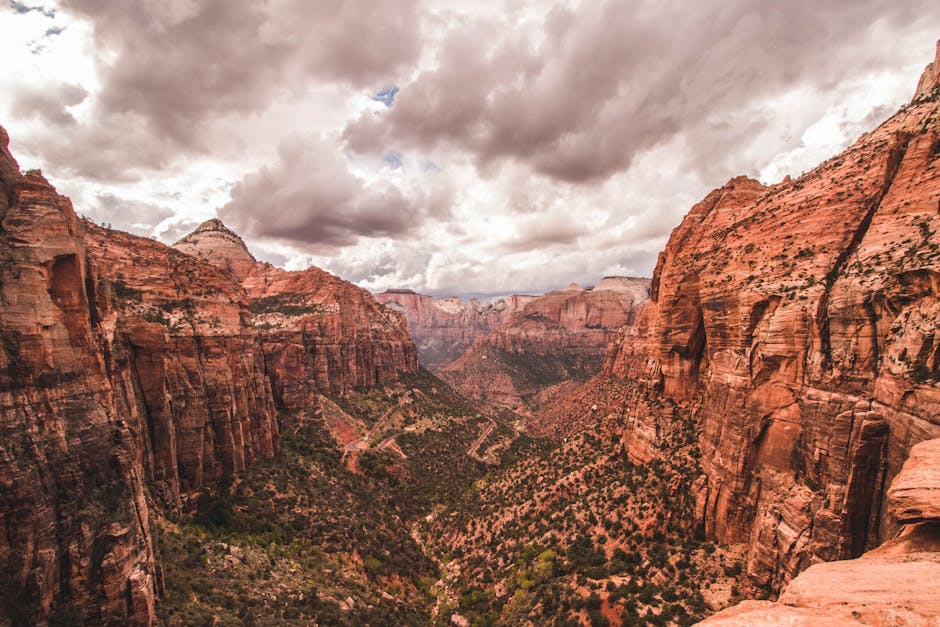
I hiked the Narrows — a trail that is actually the river itself. You wade upstream through the Virgin River, the water between ankle and waist deep depending on the season, the canyon walls narrowing until the sky above is a thin blue strip and the light bouncing off the sandstone turns the water amber and gold. It is unlike any hike I have done. The river is cold. The rocks underfoot are slippery. The walking is slow and uncertain. And the beauty is so relentless, so sustained, that after two hours I stopped taking photos because the act of photographing was taking me out of the experience of being there.
In France, we have gorges — the Gorges du Verdon, the Gorges du Tarn — and they are beautiful. But they are European beautiful: scaled for human habitation, dotted with villages and viewpoints and parking areas. Zion is not scaled for humans. Humans are tolerated here, guests in a landscape that was carved by water over millions of years and will continue being carved long after the last hiker has gone home.
The Desert at Night
The revelation of the Southwest is not the daytime — though the daytime is extraordinary. The revelation is the night sky. I drove out of Moab at eleven o’clock, parked on a dirt road a mile from the highway, turned off the headlights, and waited for my eyes to adjust. What appeared, gradually and then all at once, was the most stars I have ever seen outside of the Sahara.
The Milky Way was not a faint smear across the sky, as it appears in most of Europe. It was a band of light so bright and textured it looked solid — a river of stars dense enough that you could see its structure, the dark lanes of cosmic dust weaving through the luminous clouds. I could see the Andromeda galaxy with my naked eye. Shooting stars appeared every few minutes, casual and unannounced.
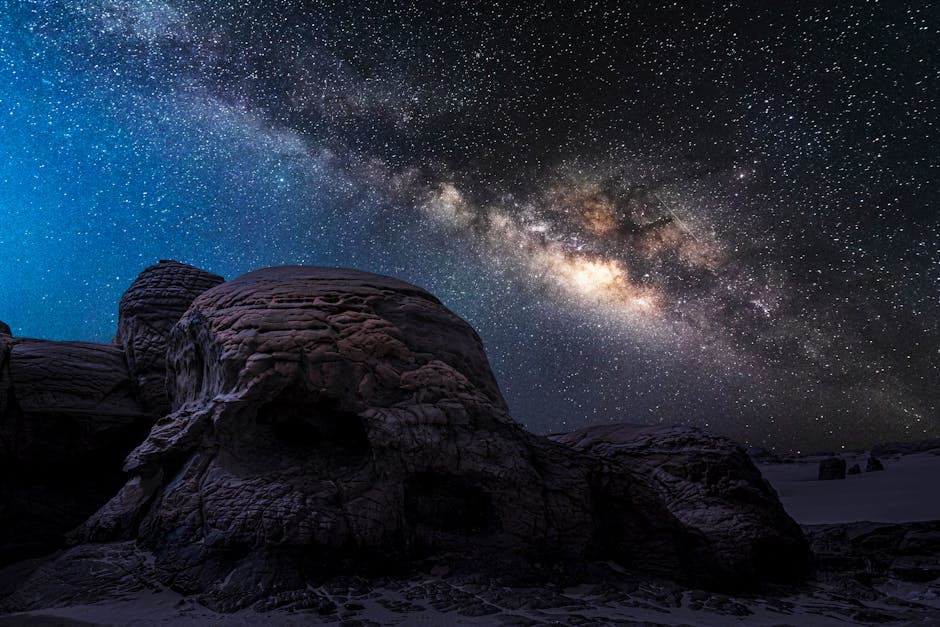
I lay on the still-warm sandstone — it retains the heat of the day for hours — and watched the sky rotate for an hour. The silence was absolute. No light pollution, no sound pollution, nothing but the stars and the faint smell of sage carried by a warm wind. I thought about the first people who lived in this desert, the Ancestral Puebloans who built their homes in the cliff faces and watched this same sky, and I understood something about why every ancient culture assigned significance to the stars. When the sky looks like this, indifference is not possible.
This is what the American Southwest offers that nowhere else does, at least nowhere I have been with a rental car and a paved road. Access to emptiness. Access to geological time. Access to a night sky that reminds you the Earth is a small rock spinning in an incomprehensible darkness, and that this fact is not frightening but beautiful.
What the Road Teaches
The American road trip is its own art form, and I say this as someone from a country that does not understand it. In France, the destination is the point. You drive to the restaurant, to the chateau, to the beach. The driving is a necessary inconvenience. In America — at least in the West — the driving is the experience. The hours behind the wheel, the changing landscape, the gas station coffee, the roadside diners with laminated menus and bottomless refills — these are not obstacles between the good parts. They are the good parts.
I drove three thousand miles in two weeks. I ate at diners where the waitress called me “hon” and the coffee was already on the table before I sat down. I slept in motels with neon signs and parking lots where my rental car sat beside pickup trucks with bumper stickers I could not always parse. I listened to country radio for hours because it was the only station that came in, and somewhere on a straight road in southern Utah, a song about losing a dog made me cry, which is something I cannot explain and do not wish to.
The Southwest taught me that scale matters. That a landscape can be so vast it changes the way you think about time. That silence is not the absence of sound but a presence — something tangible, something the desert provides as a gift. That the stars are always there, above us, and that it takes a place this empty and this dark to remember it.
I will go back. Not to see anything I missed — though I missed plenty — but because the desert has a way of stripping you back to essentials, and sometimes you need to be reminded of what remains when everything else falls away.
Viaja con intención
Guías curadas, destinos tranquilos e historias que vale la pena leer — enviadas cuando tenemos algo que merece ser compartido.
Sin spam. Cancela cuando quieras.