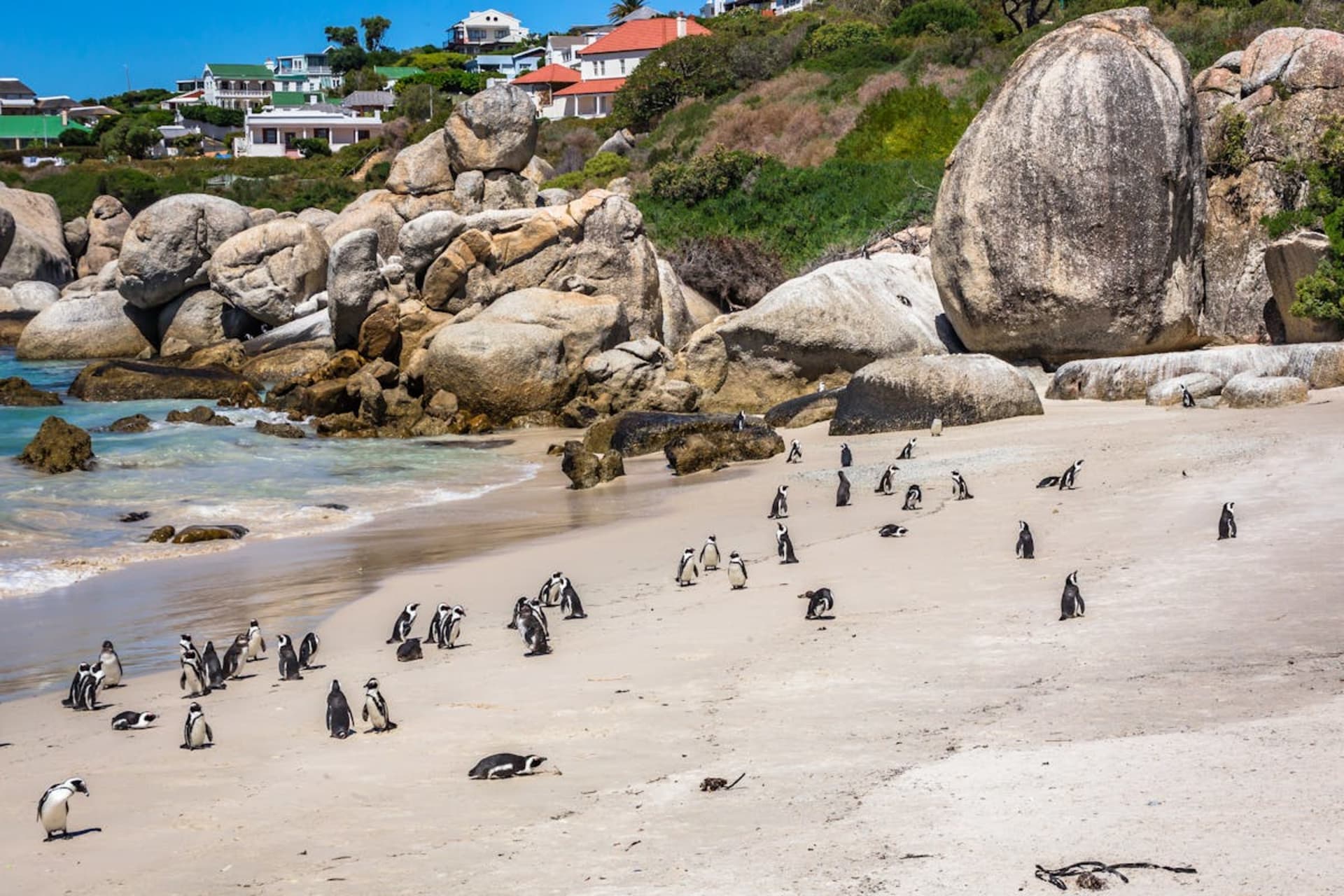
Cape Town to Kruger — South Africa's Impossible Diversity
The Mountain
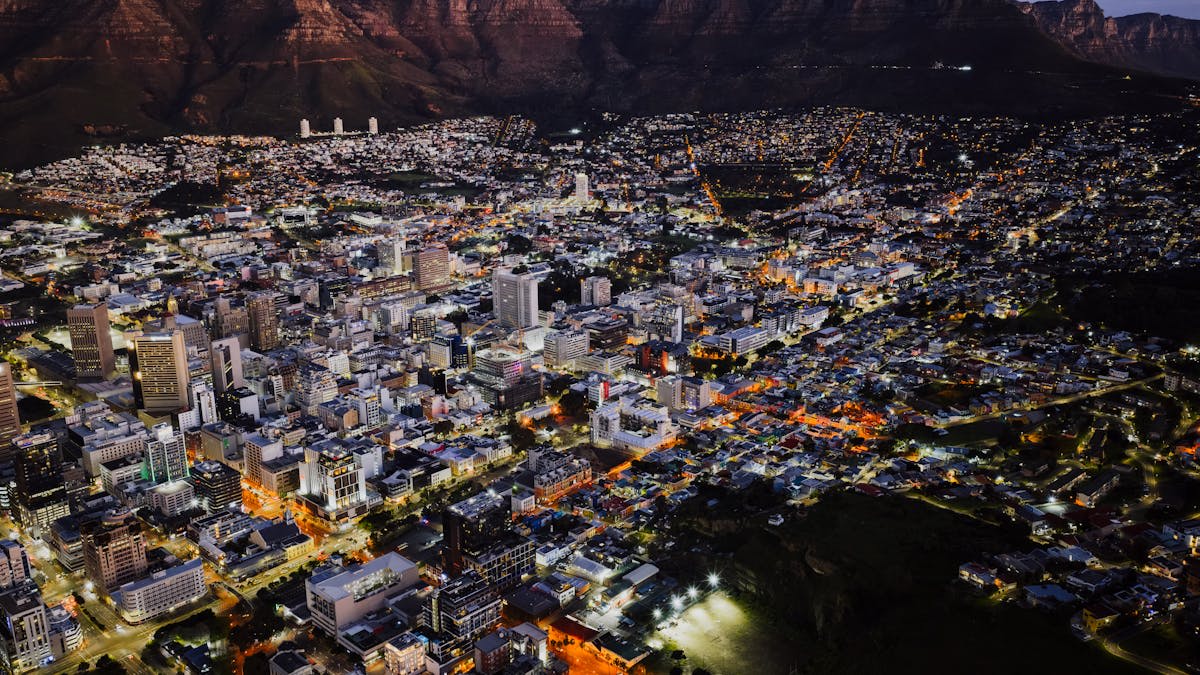
You see Table Mountain before you see Cape Town. Flying in from the north, the city reveals itself in layers — first the sprawl of the Cape Flats, then the harbour cranes, then the Victoria and Alfred Waterfront glinting in the afternoon sun — but the mountain dominates everything, a flat-topped massif rising over a thousand metres straight from the sea, its cliff face catching the light in a way that makes it look less like geology and more like a statement. The mountain does not welcome you. It presides.
We landed in early January, summer in the Southern Hemisphere, and the air outside the terminal was warm and dry and carried the faint salt scent of two oceans. The drive into the city took us along the N2, past the townships that line the highway — Khayelitsha, Langa, Gugulethu — and there it was, immediately, the thing that every honest account of South Africa must reckon with: extraordinary beauty and deep inequality occupying the same frame. The shacks and the mountain. The poverty and the coastline. South Africa does not let you look at one thing without seeing the other. This is not a flaw. It is the country.
We checked into a guesthouse in Gardens, dropped our bags, and did what everyone does first — we went up the mountain. The cable car rotates on the ascent, giving you a slow, dizzying panorama: the Twelve Apostles marching south along the Atlantic seaboard, Robben Island sitting low in Table Bay, the city grid spreading inland toward the winelands. At the top, the wind was strong enough to lean into, and the view was the kind that rearranges your sense of scale. Cape Town looked like a model. The ocean looked infinite. Lia stood at the edge and said nothing for a long time, which is how I know a place has landed.
The next morning we walked through Bo-Kaap, the neighbourhood on the slopes of Signal Hill where the houses are painted in blues and yellows and greens and pinks — a tradition that dates to the end of apartheid, when residents celebrated their freedom by painting their homes in colours that apartheid had, in effect, forbidden. The cobblestone streets were steep and quiet. The call to prayer drifted from the Auwal Mosque, the oldest in the country. A woman on her front step offered us koesisters — twisted doughnuts soaked in syrup, a Cape Malay tradition — and we stood there eating them in the morning light, the city spreading below us, the mountain behind us, and I thought: this is a place that contains more history per square block than most cities contain in their entirety.
The Vines
An hour east of Cape Town the landscape changes completely. The fynbos gives way to vineyards, the coast gives way to valleys, and the air takes on the particular warmth of a wine region in summer — dry, fragrant, heavy with the promise of long lunches. Stellenbosch appeared first: oak-lined streets, Cape Dutch architecture with their distinctive white gables, and a university town energy that keeps it from feeling like a museum. We parked on Dorp Street and walked into a town that felt equal parts Amsterdam, Provence, and something entirely its own.
The wines here have undergone a revolution in the past decade. The old-guard estates still produce their Bordeaux-style blends, but a new generation of winemakers — many of them working with old-vine Chenin Blanc, Cinsault, and Syrah — are making bottles that would hold their own on any table in Burgundy or the Willamette Valley. At Kanonkop, we tasted a Pinotage that challenged every prejudice I had carried about the grape — layered, restrained, nothing like the jammy caricature the world has decided Pinotage must be. At Jordan, the Chenin Blanc was so precise it made me reconsider what South African whites are capable of. We tasted six wines and bought a case.
Franschhoek was different. Where Stellenbosch has the energy of a college town, Franschhoek has the composure of a village that knows its worth. The main street is lined with restaurants that would be celebrated in any European capital — La Colombe, Maison, The Dining Room at Le Quartier Francais — and the Huguenot heritage gives the town a French inflection that extends beyond the name. We had lunch at a farm restaurant where the bread was baked that morning, the charcuterie was cured on site, and the view from the terrace — vineyards running to the base of the Drakenstein mountains — was so extravagantly beautiful that it felt almost impolite.
The Franschhoek Wine Tram, which takes you between estates in an open-sided car that rolls through the vineyards at the pace of a slow conversation, was not something I expected to love. I loved it. Four estates in an afternoon, each with its own character, the mountains changing colour as the sun moved, the vines heavy with fruit. By the time we reached the last stop, we had tasted perhaps twenty wines and could have named perhaps six. It did not matter. The point was the landscape, the pace, the feeling that the afternoon had been designed specifically for the kind of pleasure that requires nothing but a glass, a view, and the absence of urgency.
The Road
The Garden Route is South Africa’s most famous drive, and like most famous drives, it is best when you leave the main road. We picked up the route at Mossel Bay and headed east, but the N2 highway that most people follow is efficient and unremarkable. The magic is in the detours — the passes, the coastal villages, the forest tracks that drop you into landscapes so different from each other that you check the map to make sure you are still in the same province.
Tsitsikamma was the revelation. The national park sits where the Tsitsikamma Mountains meet the Indian Ocean, and the Storms River Mouth trail takes you across a suspension bridge to a viewpoint where the river cuts through a gorge and empties into waves that hit the rocks with a violence that feels personal. The forest behind the coast is ancient — yellowwood trees, some of them eight hundred years old, rising through a canopy so dense the light comes through green and diffused. We hiked for three hours and saw four other people. After Cape Town’s energy and the Winelands’ sociability, the solitude was restorative in a way I had not known I needed.
Knysna sits on a lagoon framed by two sandstone headlands called the Knysna Heads, and the town has the particular charm of a place that was once a timber port and is now a destination for people who want to eat oysters and watch the tide change. We ate the oysters — wild Knysna oysters, served on ice at a restaurant on Thesen Island — and they were briny, clean, and tasted like the lagoon they had been pulled from that morning. With a glass of Hemel-en-Aarde Chardonnay and the Heads framing the view, lunch lasted two and a half hours. Nobody hurried us. Nobody hurries in Knysna.
The Bush
Nothing prepares you for the first game drive. I had seen the documentaries, studied the field guides, listened to podcasts by rangers who speak about the bush with the reverence of monks describing a cathedral. None of it mattered. The moment the Land Cruiser left the lodge gate and entered the Sabi Sands Private Reserve on Kruger’s western boundary, everything I thought I knew about wildlife became theoretical, and what replaced it was visceral, immediate, and overwhelming.
The tracker — a man named Samuel who had grown up in the villages bordering the park and who read the sand the way I read a menu — spotted leopard tracks within twenty minutes. We followed them off-road, the vehicle pushing through scrubby mopane woodland, until Samuel raised his hand and the guide cut the engine. Silence. Then: a rustle in the branches of a marula tree, and there she was. A female leopard, stretched along a branch four metres above the ground, her tail hanging, her rosettes catching the early light, her eyes open and watching us with the particular disinterest of an animal that knows it is the most beautiful thing in any room it enters. We sat there for fifteen minutes. Nobody spoke. The camera shutters were the only sound, and after a while even those stopped, because some things are better witnessed than captured.
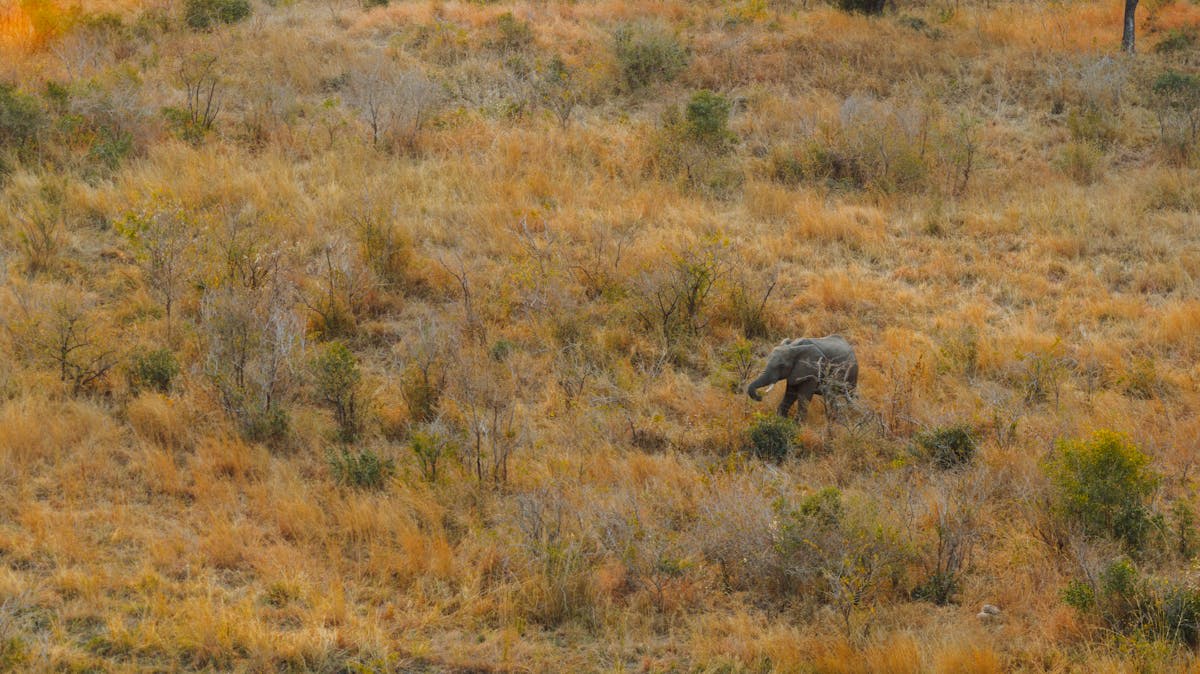
The Big Five — lion, leopard, elephant, rhino, buffalo — is the checklist that sells the safari, and we saw all five within thirty-six hours. But the checklist misses the point. The point is the dawn drive, when the bush is cold and the coffee is hot and the light is the colour of honey. The point is the breeding herd of elephants crossing the road in front of you, the matriarch’s ears spread wide, her eyes assessing you with an intelligence that makes you sit very still. The point is the silence at a waterhole at sunset, when every animal comes to drink and the only sounds are hooves on mud and the distant call of a fish eagle.
The bush breakfast — served under a tree, cooked on a gas burner, the coffee strong enough to restart a conversation — was a daily highlight. So were the sundowner drinks on a granite koppie overlooking the river, the gin cold, the tonic fizzing, the sky turning from blue to orange to the deepest purple I have ever seen. The stars that followed were not the stars I know from home. They were the stars of a sky with no light pollution, a sky so dense with light it looked heavy, and lying in bed that night with the window open and the sounds of the bush coming through — hyena, nightjar, the distant rumble of a lion — I understood why people come back to this place year after year. The bush does not entertain you. It includes you. That is different, and it is better.
What South Africa Teaches You
I have travelled in countries that are beautiful. I have travelled in countries that are complicated. South Africa is both, simultaneously, in every moment, and it refuses to let you separate the two. The sunset over the Winelands is beautiful, and the labour that built those estates is part of that beauty’s history. The bush is wild and free, and the fences around the private reserves are a reminder that wildness is now something that must be managed, funded, and defended. The Bo-Kaap is joyful, and the joy is inseparable from the suffering that preceded it.
This is not a criticism. It is what makes South Africa one of the most important places a traveller can go. It asks you to hold contradictions. It asks you to love a place without simplifying it. The mountain is magnificent. The townships are real. The wine is extraordinary. The inequality is structural. The wildlife is breathtaking. The poaching crisis is existential. All of these things are true at the same time, in the same country, often visible from the same vantage point.
What I did not expect was the warmth. The ranger who stayed an extra hour on the drive because he could see how much the elephants meant to Lia. The sommelier in Franschhoek who opened a bottle that was not on the list because she wanted us to taste what the region was becoming, not just what it had been. The woman in Bo-Kaap with her koesisters and her smile and her willingness to share something with strangers she would never see again. South Africa’s people carry the weight of a history that most countries would buckle under, and they carry it with a grace and a generosity that humbled me.
Three weeks was not enough. I knew that on the plane home, watching the Table Mountain recede through the window, the mountain getting smaller but not less commanding, the city spreading behind it like a secret it was still in the middle of telling. South Africa does not give you answers. It gives you better questions. And it gives you the feeling — rare, precious, impossible to manufacture — that you have been somewhere that matters.
I am already planning the return.
Viaja con intención
Guías curadas, destinos tranquilos e historias que vale la pena leer — enviadas cuando tenemos algo que merece ser compartido.
Sin spam. Cancela cuando quieras.