Lake Atitlán — A Week Among the Volcanoes and Villages
First Sight
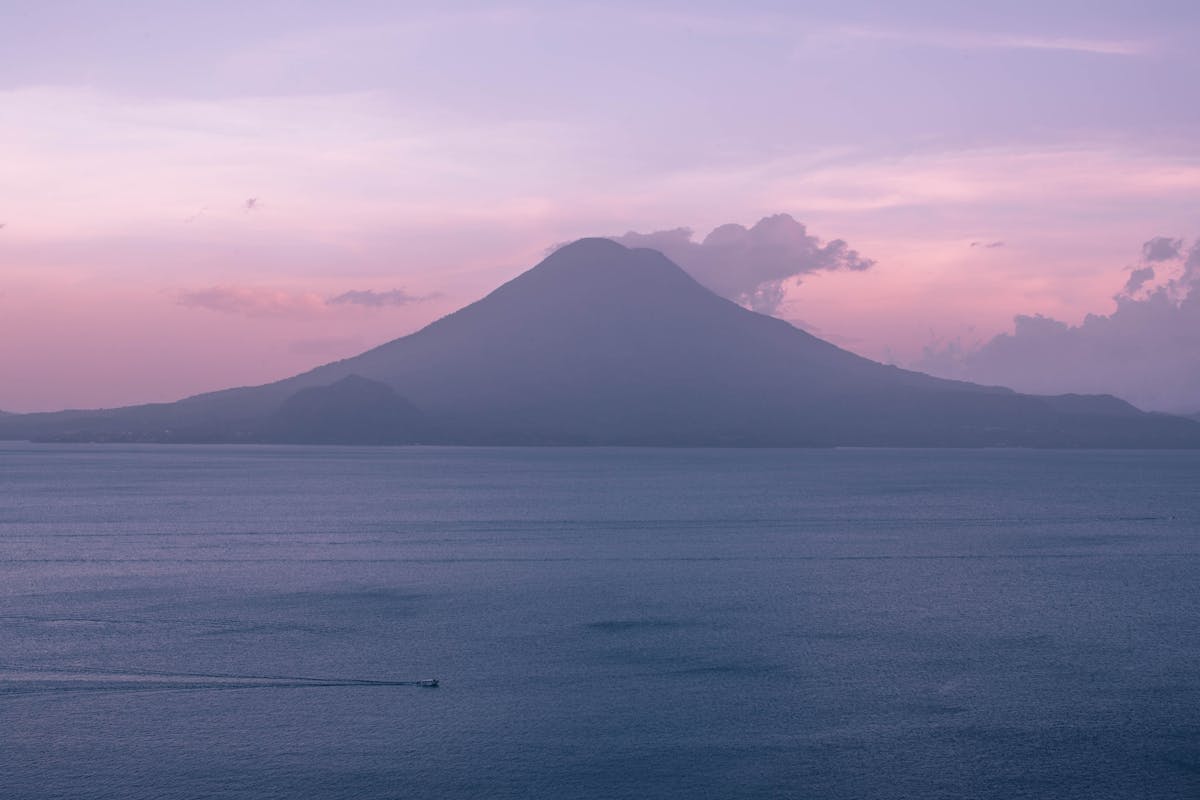
You see Atitlán before you reach it. The road from Guatemala City climbs through pine forests and highlands towns, rounds a bend at Sololá, and suddenly the lake is below you — an expanse of blue so vivid and so still that it looks like someone has painted it onto the landscape. Three volcanoes — Tolimán, Atitlán, San Pedro — stand around its edges like sentinels. The drop from the rim to the water is steep enough that the descent takes twenty minutes of switchbacks, and the whole time you are staring at a view that belongs in a creation myth, not a travel itinerary.
Huxley was right. It may be the most beautiful lake in the world.
The Villages
Atitlán’s magic is not just geological. The lake is ringed by a dozen Maya communities, each distinct — different textile patterns, different dialects of Tz’utujil and Kaqchikel, different patron saints, different market days. You move between them by lancha, the small motorboats that crisscross the lake on informal schedules, and each landing feels like arriving in a different country.
San Juan La Laguna is the quietest and most rewarding for a longer stay. It is a Tz’utujil Maya town where the textile cooperatives are run by women who grow their own cotton, spin it by hand, and dye it with natural pigments — cochineal for red, sacatinta for blue, achiote for orange. You can visit the workshops, but this is not a performance. This is how they work. The respect flows one direction and you should make sure it flows the right one.
Santiago Atitlán is larger, louder, and more complex. The market here is enormous — a sprawl of vegetables, textiles, and bootleg electronics where Maya women in traditional huipiles negotiate prices with the same intensity as a floor trader. The church of Santiago contains Maximón, a syncretic saint who is part Catholic, part Maya, and entirely his own thing — a wooden figure draped in scarves and offerings of cigarettes, rum, and Coca-Cola. The cofradía (brotherhood) that tends him rotates his location annually. Ask where he is. Pay the small fee. Sit with him for a while. It is one of the strangest and most genuine religious experiences in the Americas.

San Marcos La Laguna has become the spiritual retreat centre of the lake, attracting yoga practitioners and seekers in numbers that threaten to overwhelm the village. It is beautiful — stone paths through tropical gardens to a rocky shoreline where the water is crystal clear — but I preferred the silence of San Juan and the complexity of Santiago.
The Days
A day at Atitlán follows its own logic. You wake early because the lake is calmest before 10am, when the Xocomil wind arrives and churns the surface. Coffee on a terrace overlooking water that is deep enough to hold its color — a blue-green that shifts with the light and the depth and the volcanic minerals dissolved in it. A lancha to another village. A walk through streets that are older than European contact. Lunch at a comedor where the almuerzo is fifteen quetzales — about two dollars — and includes handmade tortillas, black beans, a piece of grilled chicken, and a bowl of caldo that tastes like someone’s grandmother made it, because someone’s grandmother did.
Afternoons are for reading, swimming if the wind cooperates, or hiking the trails that connect the villages above the shoreline. The path from San Marcos to Tzununá is a favourite — an hour of walking through avocado groves and coffee fincas with the lake appearing and disappearing through the trees below.
Evenings are quiet. The villages shut down early. Dinner is simple — fried fish from the lake, more tortillas, a beer. The stars appear in numbers that city-dwellers have forgotten are possible. The volcanoes are silhouettes against a sky that is not black but a very deep blue. Somewhere across the water, fireworks signal a village celebration — a birthday, a saint’s day, a wedding. Atitlán is always celebrating something.
Leaving
I stayed a week. I had planned three days. This is what Atitlán does — it dilates time, slows the metabolism, makes you reconsider the pace at which you have been moving through the world. The lake does not care about your itinerary. It was here long before you and will be here long after. The least you can do is sit by it for a while and pay attention.
Viaja con intención
Guías curadas, destinos tranquilos e historias que vale la pena leer — enviadas cuando tenemos algo que merece ser compartido.
Sin spam. Cancela cuando quieras.