Petra by Night — When the Candles Replace the Sun
The Second Visit
I had already seen the Treasury. I had walked through the Siq that morning at six, watched the canyon narrow and the light change, stood in the courtyard while the facade turned from grey to gold in the early sun, and felt the particular vertigo that comes from standing in front of something that is simultaneously two thousand years old and more beautiful than anything built last week. I had done the full day — the Royal Tombs, the Colonnaded Street, the eight-hundred-step climb to the Monastery — and returned to my hotel in Wadi Musa with legs that ached and a camera full of photographs and the comfortable feeling of a site thoroughly visited.
Petra by Night was scheduled for that evening, and I almost did not go. I had seen the Treasury. I had taken the photographs. What could candles add to something that was already, in daylight, one of the most beautiful things I had ever encountered? The answer, which I learned over the next two hours, is: everything. Candles add everything.
The Walk
You enter the Siq at 8:30 PM, and the first thing you lose is context. In daylight, the Siq is a geological marvel — eighty-metre walls of banded sandstone, water channels, carved niches, the play of light and shadow that makes every turn a revelation. At night, it is something else. The walls are darkness. The path is lit only by paper-bag lanterns placed every few metres along the ground, their candles flickering in the slight wind that always moves through the canyon, and your world contracts to the small pool of amber light at your feet and the towering absence above. You cannot see the top of the canyon. You know it is there — you saw it this morning — but at night the walls simply rise and disappear into a blackness that might be twenty metres or might be infinite.
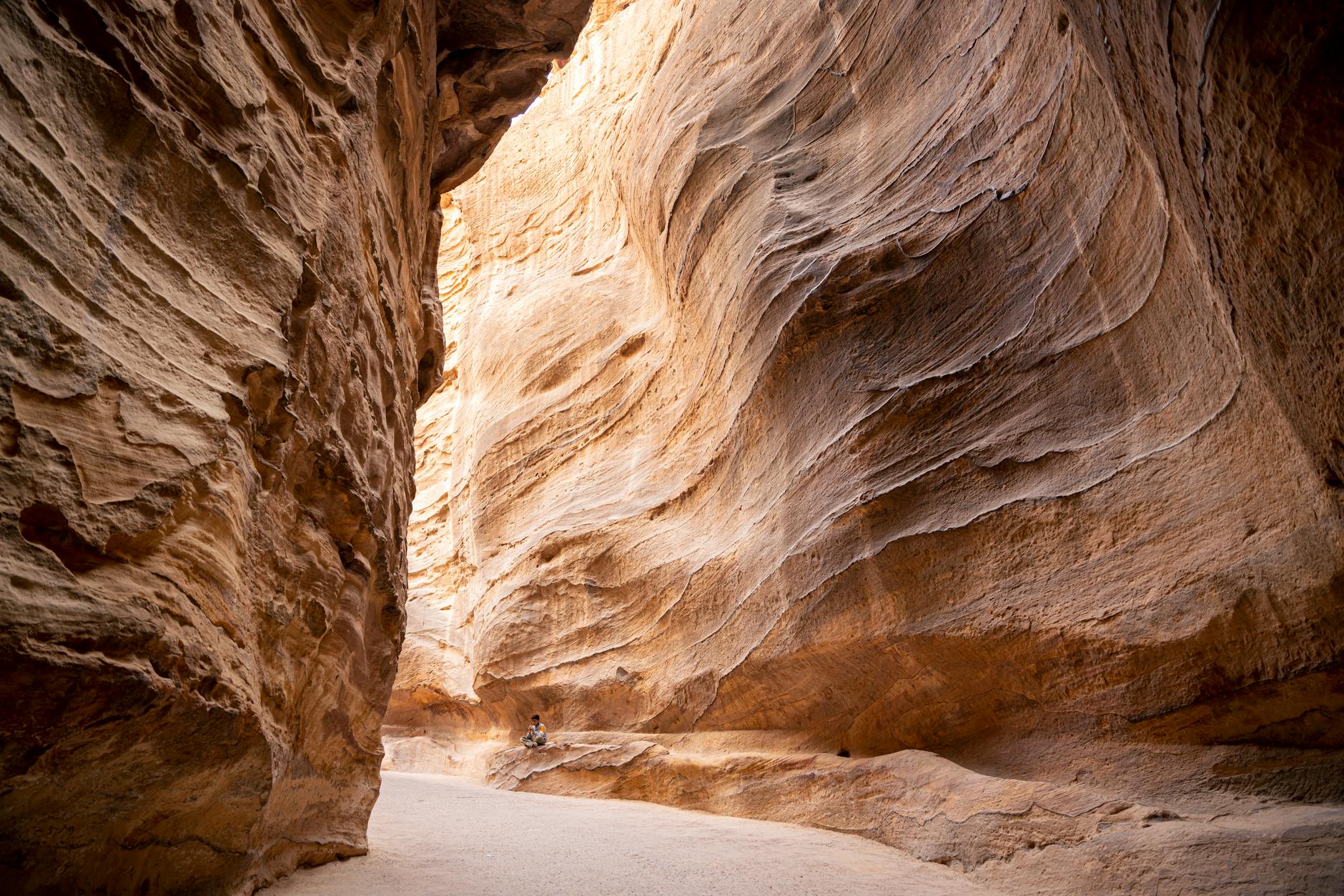
The sound changes too. In daylight, the Siq is full of voices, footsteps, the occasional horse-drawn carriage clattering through. At night, the guides ask for silence, and most people comply, and the result is a walk that becomes meditative. Your footsteps on the gravel. The occasional rustle of a paper bag in the wind. Your own breathing. The canyon amplifies everything and absorbs everything simultaneously, and after ten minutes of walking you stop thinking about photography and start thinking about the Nabataeans who walked this same path two thousand years ago, at night, by torchlight, arriving at their capital city through a darkness that was not theatrical but actual.
The Candles
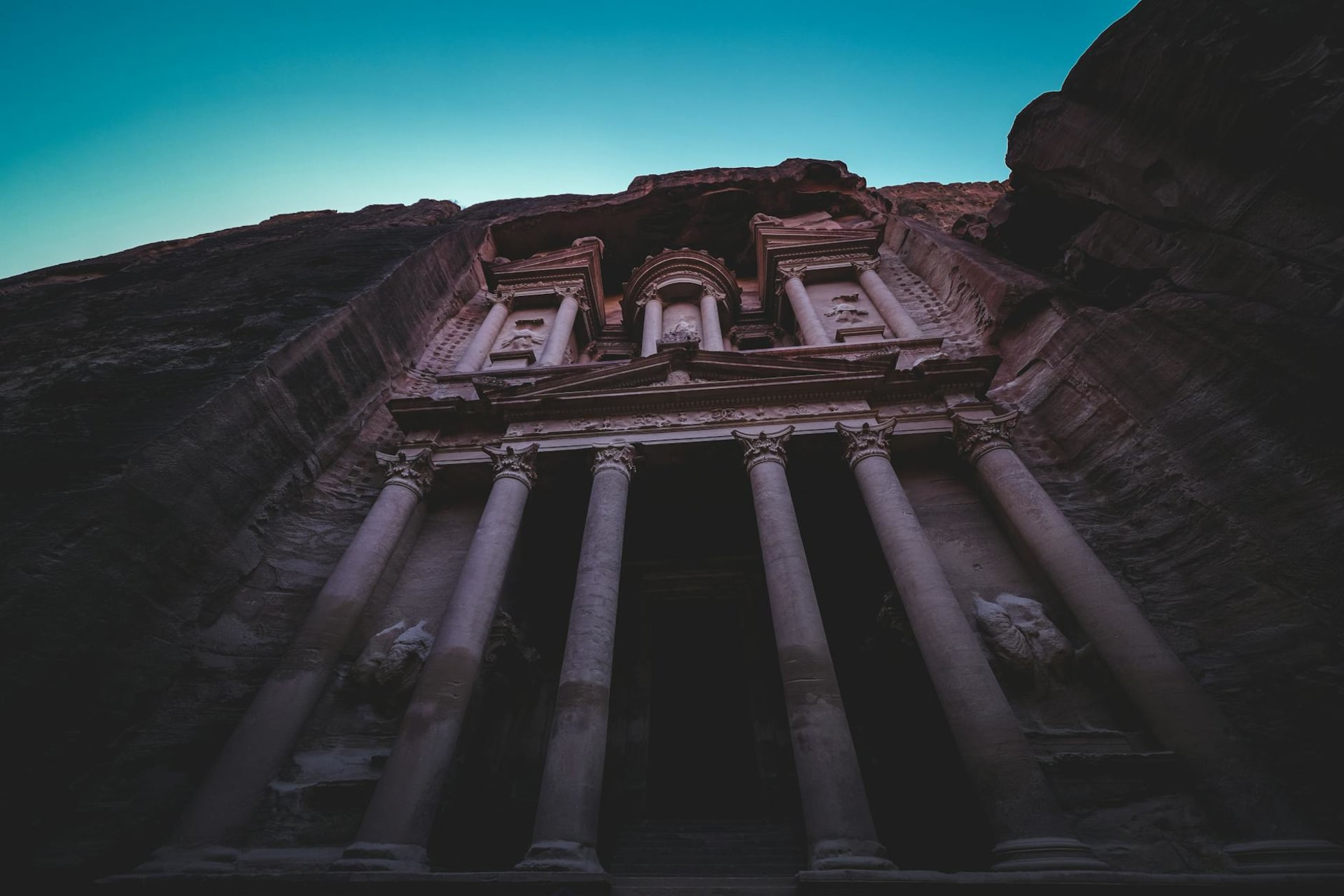
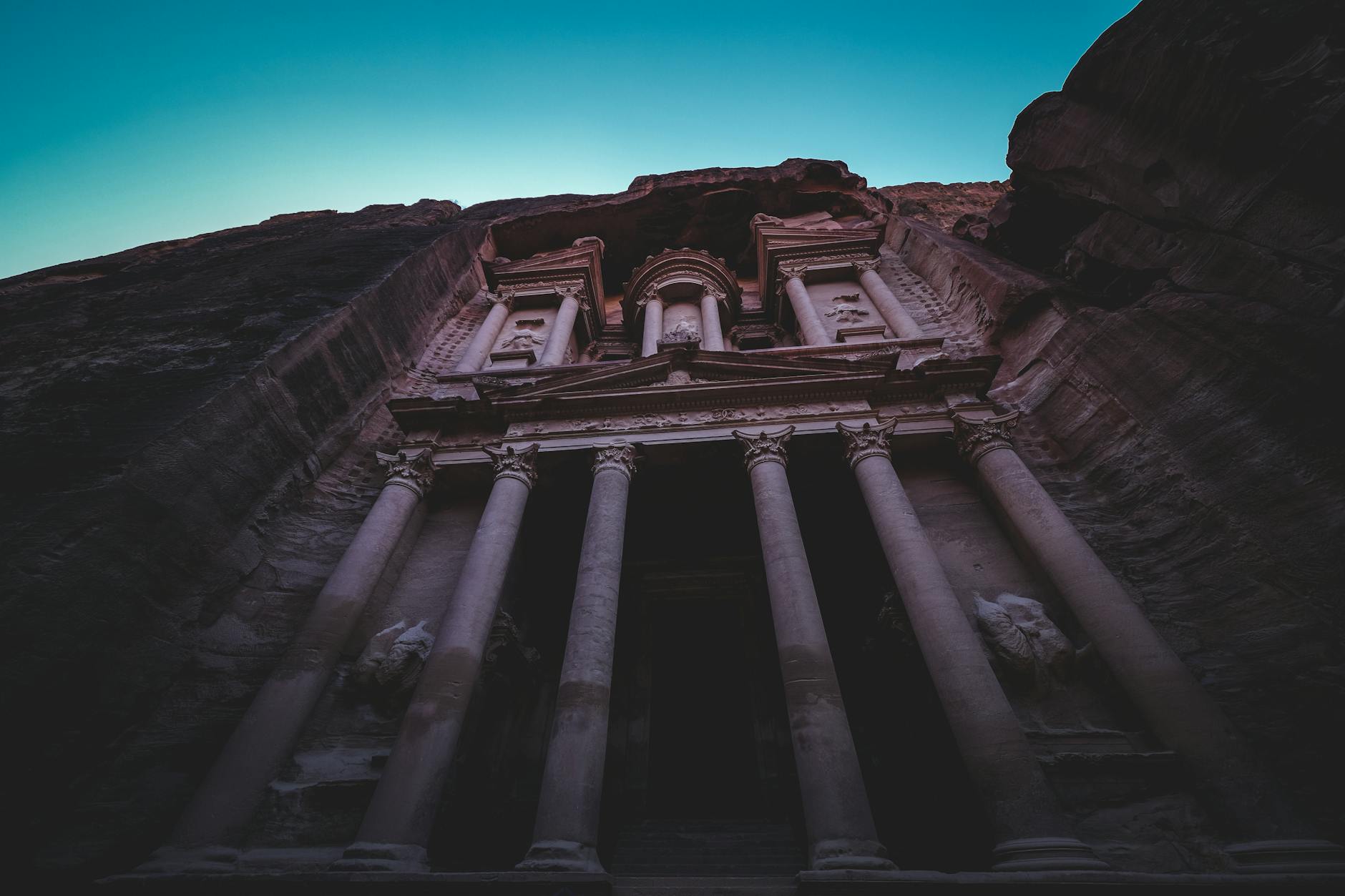
And then the canyon opens. A slight widening, a change in the air, and there — the Treasury, lit by fifteen hundred candles arranged in the courtyard in rows that echo the geometry of the facade. The candles are small, each one in a paper bag, their light warm and unstable, and the effect on the Treasury is transformative. In daylight, the facade is rose-gold and precise, every column and capital sharp against the blue sky. By candlelight, it glows amber and soft, its details dissolving into suggestion, the pediment floating in darkness, the columns seeming to breathe with the flickering light. It is the same building. It is not the same experience.
You sit on the ground in the courtyard — rugs are laid out — and tea is served in small glasses. A Bedouin musician sits near the facade and plays the rababa, a single-stringed instrument that produces a sound somewhere between a violin and a human voice. The melody is minor-key, repetitive, and deeply affecting — it spirals rather than progresses, and after a few minutes it becomes part of the candlelight, part of the stone, part of the extraordinary stillness that settles over a hundred tourists who, for once, have all stopped talking at the same time.
What the Darkness Gives Back
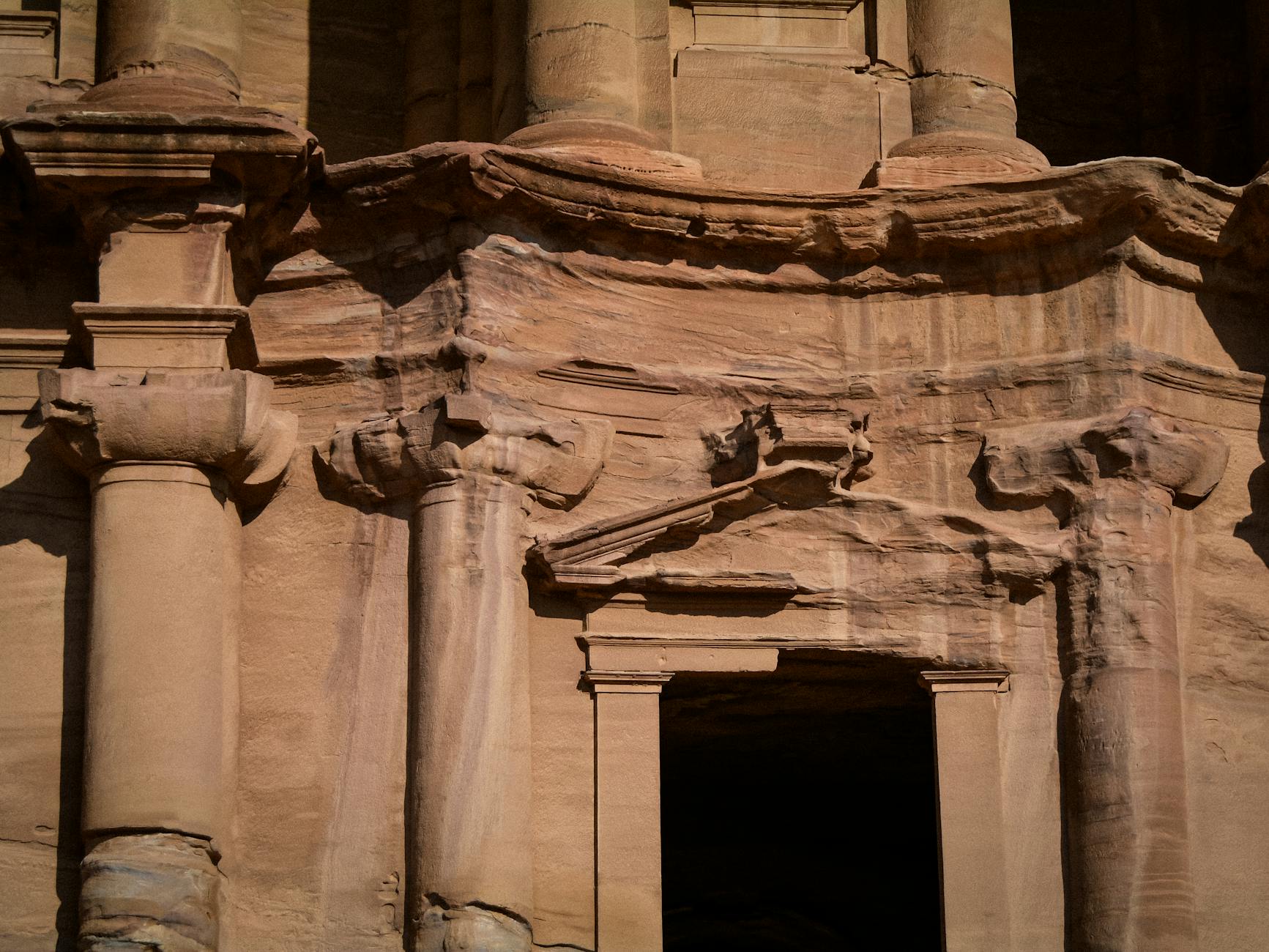
I thought about why this worked — why seeing the Treasury by candlelight felt not like a lesser version of the daytime visit but like a completion of it. And I think the answer is that daylight lets you see a building, but darkness lets you feel a place. In daylight, the Treasury is an architectural masterpiece, a feat of engineering, a historical document carved in sandstone. By candlelight, it becomes what it was always meant to be: a threshold. A place where the world of the living meets the world of the dead. The Nabataeans carved it as a tomb — possibly for King Aretas IV — and tombs are not meant to be seen in the brightness of noon. They are meant to be approached in the half-light, with reverence, with the slight unease that comes from standing at the border between what you can see and what you cannot.
The ceremony lasted about an hour. The musician played three pieces. The tea was sweet and strong. At the end, the guides stood and the crowd dispersed back through the Siq, lanterns still flickering, the walk back longer and quieter than the walk in, as though everyone was carrying something fragile that might break if they spoke too loudly. I walked slowly. I did not take photographs on the way back. Some things are better stored in the body than on a screen.
The Morning After
I returned to Petra the next morning, my third entry on a three-day pass, and I walked through the Siq one more time. The light was the same as the first morning — amber, shifting, theatrical — but I saw it differently. I saw the canyon as a transition, not just a path. The Nabataeans designed it this way: you do not simply arrive at Petra. You are processed through a experience that narrows your world, removes your reference points, and then opens onto something that resets your understanding of what human beings are capable of building.
The Treasury in the morning light was as beautiful as ever. But I kept thinking about the candles. About the rababa. About the quality of the silence in a canyon that has been conducting visitors toward wonder for twenty-two centuries. Some places are best seen once, in perfect conditions, and remembered. Petra is not one of them. Petra demands the return visit. It demands the night. It demands the second look that reveals what the first look, dazzled by beauty, could not see: that this place was built not to impress but to move, and that it succeeds — by candlelight, in silence, across the unbridgeable distance of two thousand years — more completely than anything I have ever seen.
Viaja con intención
Guías curadas, destinos tranquilos e historias que vale la pena leer — enviadas cuando tenemos algo que merece ser compartido.
Sin spam. Cancela cuando quieras.