Jambiani is what happens when a village hasn’t been completely colonized by its own tourist economy. It’s only a few kilometers south of Paje, but the distance in atmosphere is considerable. The beach bars are smaller and dimmer. The menus are handwritten. The guesthouses are family-run in the literal sense: I stayed in a place where the grandmother cooked dinner and her granddaughter brought it to the table and the grandfather sat in a plastic chair by the gate watching the road, and nobody seemed to think this arrangement required explanation.
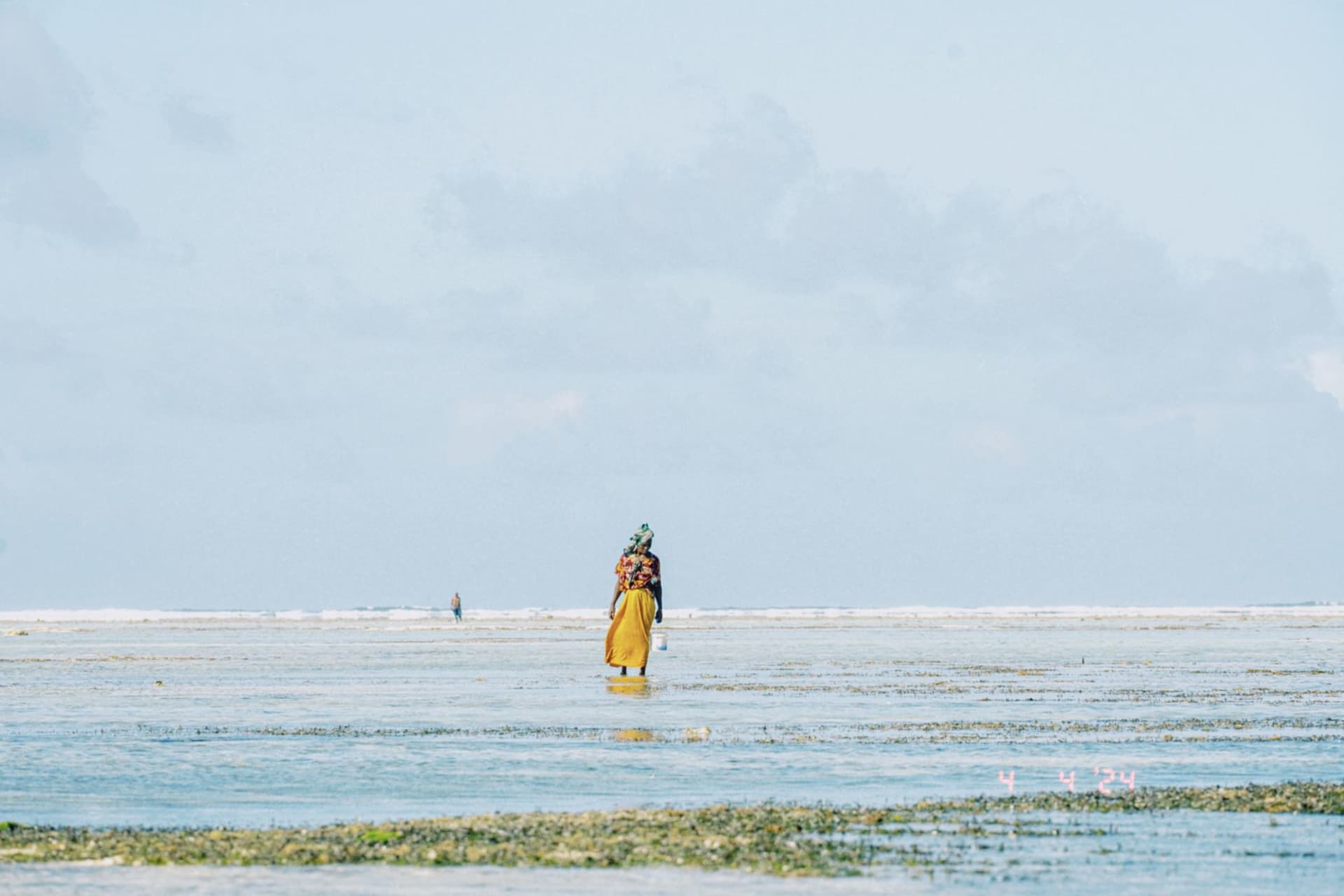
The east coast beaches empty at low tide, and Jambiani is no exception. But here the emptying reveals something worthwhile. The seaweed farms stretch far out into the flats — hundreds of lines strung between wooden pegs, cultivating the red algae that gets harvested, dried in the sun, and exported to food processing plants in Asia. It’s agricultural infrastructure in the sea, which takes a moment to register as the normal thing it is.
Seaweed Farming
The women of Jambiani — and it is mostly women — go out twice a day when the tide permits. I walked out with one of them early one morning, my feet in the warm silt, stepping carefully to avoid the lines. She showed me how to read the growth: the color, the texture, how long before harvest. The water around the lines smelled faintly of iodine and the sea floor was soft enough to leave deep footprints that the next tide would erase.
The economics of seaweed farming are modest. The work is constant and the prices are set by buyers the farmers will never meet. But it’s work that’s been running here for decades, built incrementally by women who found a sustainable use for the tidal flats that the fishermen couldn’t reach. I found it genuinely moving in a way I hadn’t expected.
The Pace
Jambiani imposes a rhythm on you if you give it the chance. After two days I’d stopped checking my phone before breakfast. After four days I was waking up with the fishermen, before dawn, because the light over the water at 5:30 a.m. is worth being awake for: pink then orange then a yellow so sharp it feels aggressive, the dhows in the channel turning from shadows to color.
Lia read three books in five days and declared Jambiani the best decision we’d made in the previous six months. I didn’t disagree.
The village has one road running parallel to the beach. There’s a handful of general stores selling biscuits, phone credit, and cold Kilimanjaro beer from a chest freezer. There’s a football pitch that fills up in the late afternoon when the heat backs off. There’s a mosque with a sound system that carries the call to prayer to every corner of the village. These are the main structures of the day. You fit yourself around them.
Food at the Source
The fish in Jambiani is exceptional because the boats go out from the beach in front of you and come back a few hours later with what the Indian Ocean gave up. There’s no supply chain to interrupt the freshness. The guesthouse where I stayed served grilled kingfish in a garlic and lime marinade that I would describe as perfect except that word has been used on too many inferior things. Cassava chips fried in coconut oil on the side. Cold beer. The sound of waves.
There are no rooftop bars with menus in five languages. This is not a criticism.
The Beach Itself
At high tide, Jambiani’s beach is genuinely beautiful — white sand under palms, the water a layered progression of turquoise to deep blue where the reef drops away. Swimming is good then. At low tide it becomes a different kind of place, all space and sky and the long lines of the seaweed farms, and that’s beautiful too, in a more demanding way that asks you to pay attention rather than just feel good.
When to go: June to October is ideal — dry, reliably warm, and the seaweed farming activity peaks as the tides are favorable. December to February also works well. Avoid April and May. Jambiani is better for a longer stay than a day trip; its pleasures accumulate rather than announce themselves.