Americas
Yukon
"I pulled over on the Klondike Highway and just stood there, useless."
I arrived in Whitehorse on a February afternoon when the temperature was minus thirty-two and the sky looked like brushed pewter. The taxi driver from the airport said nothing for the entire ride, which I appreciated. There’s a particular kind of silence in the Yukon that you don’t interrupt — not because the locals are unfriendly, but because the landscape demands that you take a moment before speaking. The mountains to the west were so still they looked painted.
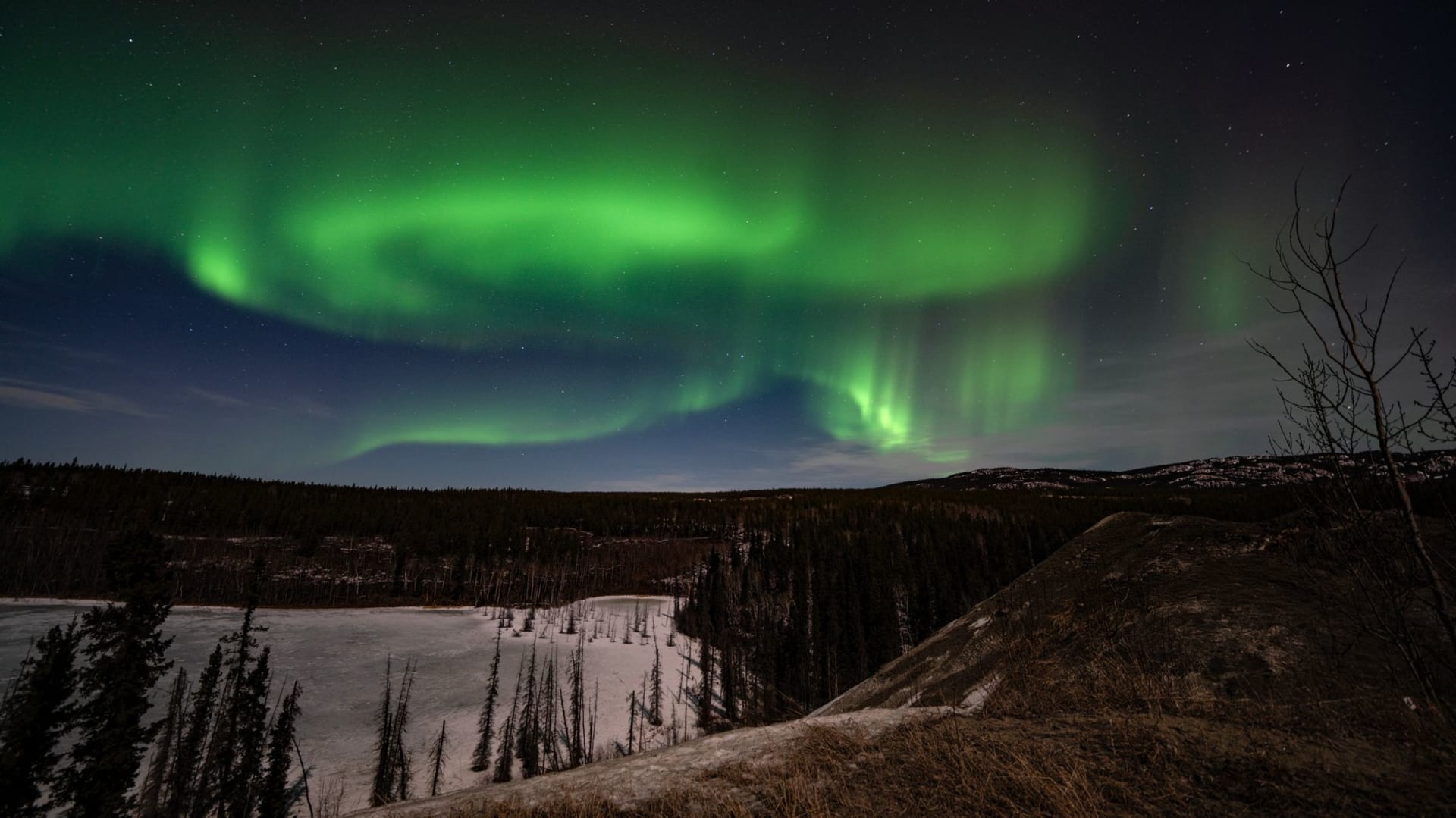
I’d come for the light, which is a strange reason to travel somewhere that has almost none in winter. But darkness is the point. Whitehorse sits at sixty degrees north, and in early February the sun barely clears the ridge behind town before it gives up for the day. What you get instead are long blue dusks that last hours, the snow going from white to rose to deep violet, and then — if you’re patient and you’ve picked the right night — the aurora. I saw it for the first time from the shore of Schwatka Lake, south of town, my breath freezing on my scarf. It came in sheets, then in curtains, then in something that had no name. Green mostly, with a pulse of pink along the upper edge that made me wonder if I was imagining it. I was not imagining it.
Outside of Whitehorse, the territory opens into something genuinely wild. I drove north on the Alaska Highway toward Haines Junction and stopped at Kluane National Park, where the Saint Elias Mountains hold the largest non-polar icefields on earth. You don’t hike Kluane in February — you look at it, which is its own kind of experience. At Kathleen Lake the ice had cracked into geometric plates over the winter and refrozen at angles, and the whole surface had this violet cast in the afternoon light that I still think about. In Whitehorse itself, I ate bison stew at a spot on Second Avenue, drank Yukon Gold at the Dirty Northern, and bought dried fish from a woman at the Saturday market who’d smoked it herself over alder.
When to go: December through March for the aurora — you need long nights and clear skies, and the Yukon delivers both. February is the sweet spot: cold enough that the aurora is reliable, but not so dark that you lose the landscape entirely. September is extraordinary if you want colour and no crowds; the taiga goes orange and red in a single weekend and the light is extraordinary.
What most guides get wrong: They sell the Yukon as an adventure tourism destination — dog sledding, snowmobiling, bucket-list experiences packaged for people who fly in for a week. The real thing is slower and stranger than that. The Yukon works on you gradually. You need to sit in a truck stop outside of Carmacks, drink bad coffee, and watch the road for a while. You need to understand that Whitehorse has twelve thousand people and the rest of the territory has about twenty-five thousand more, spread across an area bigger than California. The emptiness isn’t a backdrop. It’s the whole point.