Margaret River
"We came for the wine. We stayed for the caves and the waves and something harder to name."
Three hours south of Perth the landscape changes character so completely it feels like crossing a border. The karri and jarrah forests close in, the road narrows, and the air takes on a smell — wet eucalyptus, salt from the Southern Ocean, something fungal from the leaf litter — that tells you you’ve arrived somewhere distinctly itself. Margaret River has been producing serious wine since the 1970s, but it wears its reputation without the stiffness that wine regions usually cultivate. The people pouring at cellar doors often made the wine themselves. They’ll argue with you, tell you which vintage disappointed them, open something that isn’t on the list.
Between the Vines and the Waves
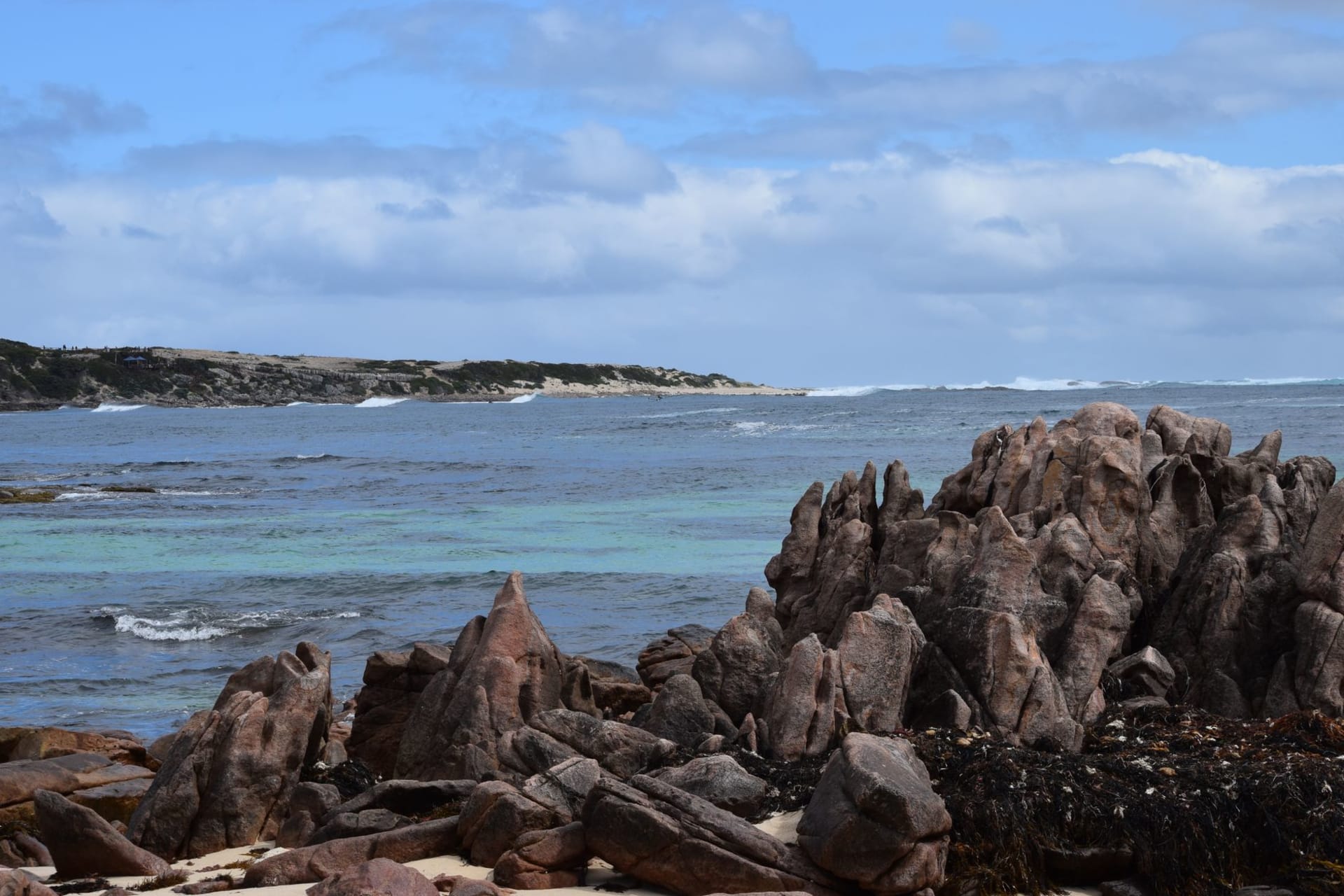
The region’s geographic peculiarity is what makes it work: the Margaret River itself flows inland, separating two coastlines that face different oceans and generate completely different surf. The west-facing beaches — Surfers Point, Smiths Beach — receive Southern Ocean swells that have been running uninterrupted since Antarctica. Professional surfers come here specifically for this. I watched a World Surf League qualifying event from the dune above Surfers Point while Lia read in the car behind me, unwilling to stand in a twenty-knot wind. The waves were terrifying and beautiful, six-foot walls of dark green water that the competitors rode with a kind of violent elegance.
The eastern beaches are gentler. Prevelly and the river mouth are where you swim, where families bring children, where the light in the afternoon goes amber and soft. I swam in the river where it meets the sea, two temperatures of water layering around my body, and thought about how wine and surf occupying the same postcode ought to feel forced and instead feels completely natural.
The Cave Country
Beneath the limestone plateau that supports the vineyards runs a network of caves that has been here for hundreds of thousands of years. Lake Cave, Mammoth Cave, Jewel Cave — each one different in character, all of them extraordinary. I went into Lake Cave early on a Tuesday morning and had it nearly to myself: a guided path descending into cool darkness, a suspended table of calcite hovering above an underground lake, the acoustic quality of a sealed room where nothing has echoed for millennia except dripping water. The ranger spoke carefully about the cave’s geology, and I kept losing track of his words because the shapes around me were too strange, too patient in their formations, to let me concentrate on information.
Eating and Drinking Without Effort
The food culture here has grown alongside the wine and now the two are inseparable. Cape Mentelle, Leeuwin Estate, Voyager Estate all run serious restaurants. But the region’s best meals aren’t necessarily at the grand places — they’re at the farm gate, the fishmonger in town selling marron (the local freshwater crayfish) by the kilo, the bakery in the main street of Margaret River town where the sourdough is dense and slightly sour and exactly right.
I drank a local Chardonnay at a picnic table outside a winery whose name I can no longer remember, watching a wedge-tailed eagle work a thermal above the treeline. The wine was cold. The eagle was enormous. Nobody was watching either of us, and that was the most Margaret River thing I can report.
When to go: October through April for warm weather, festivals (Leeuwin Concert in February, Margaret River Gourmet Escape in November), and reliable surf. Winter (June–August) brings rougher swell for experienced surfers and dramatically lush, empty scenery with low room rates — genuinely lovely if you don’t mind cold mornings.