Rum Village
"Everything in Wadi Rum starts here. The village doesn't ask you to notice it."
Rum Village is not a destination in the conventional sense — it’s a threshold. A hundred or so Bedouin families, a visitor center with slightly inconsistent opening hours, a few small shops selling water and snacks, a cluster of jeeps waiting in a lot that becomes chaotic around 8am when the overnight buses from Aqaba arrive. Beyond the last building, the protected area begins, and the scale shifts so abruptly you feel it in your chest.
The first time I arrived, I didn’t understand the village at all. I was focused on getting into the desert, on booking a tour, on the logistics of a jeep circuit. On the second visit, I spent a morning just sitting in the village, and that was when it started to make sense.
The Texture of the Place
Rum Village has the lived-in quality of a place that exists for its inhabitants first. The children racing bicycles through the narrow lanes between the stone houses are not performing authenticity; they are simply cycling. The older men drinking tea at the shaded tables outside the rest house are having the same conversation they have every day, which is the conversation. Goats wander with the confidence of animals who own the place, which in a practical sense they do.
The rest house serves the best coffee I had in Jordan — a cardamom-heavy brew in small cups that they refill without being asked. I drank three and felt my pulse for the next two hours. The flatbread from the small bakery near the main square, bought hot from the rack in the morning, was the kind of simple thing that becomes a memory specifically because it was unremarkable in the best way.
The Visitor Center
The Wadi Rum Visitor Center sits at the edge of the village, a modern building that manages to be both informative and slightly at odds with its surroundings — all clean lines and interpretive panels in an environment of ancient sandstone and improvised structures. The geology exhibit is genuinely good, explaining the formation of the Hisma sandstone in terms that make the landscape comprehensible rather than just spectacular. The historical section on the Bedouin Zalabia tribe, who have lived in this area for generations, is worth the twenty minutes it takes.
Maps and tour bookings can be arranged here, though most guides now book through WhatsApp, a technological leap the desert has made without apparent irony.
Arrival and Departure
The village marks the only entry point for non-Bedouin visitors entering the protected area. There’s an entry fee — paid here, at the visitor center — and all vehicles beyond this point must be registered. The practical function of this is that Rum Village becomes a site of concentrated transaction in the morning hours: guides collecting groups, drivers loading supplies into jeep beds, camp operators ferrying arriving guests. It’s organized chaos that resolves itself by 9am when everyone disperses into the desert.
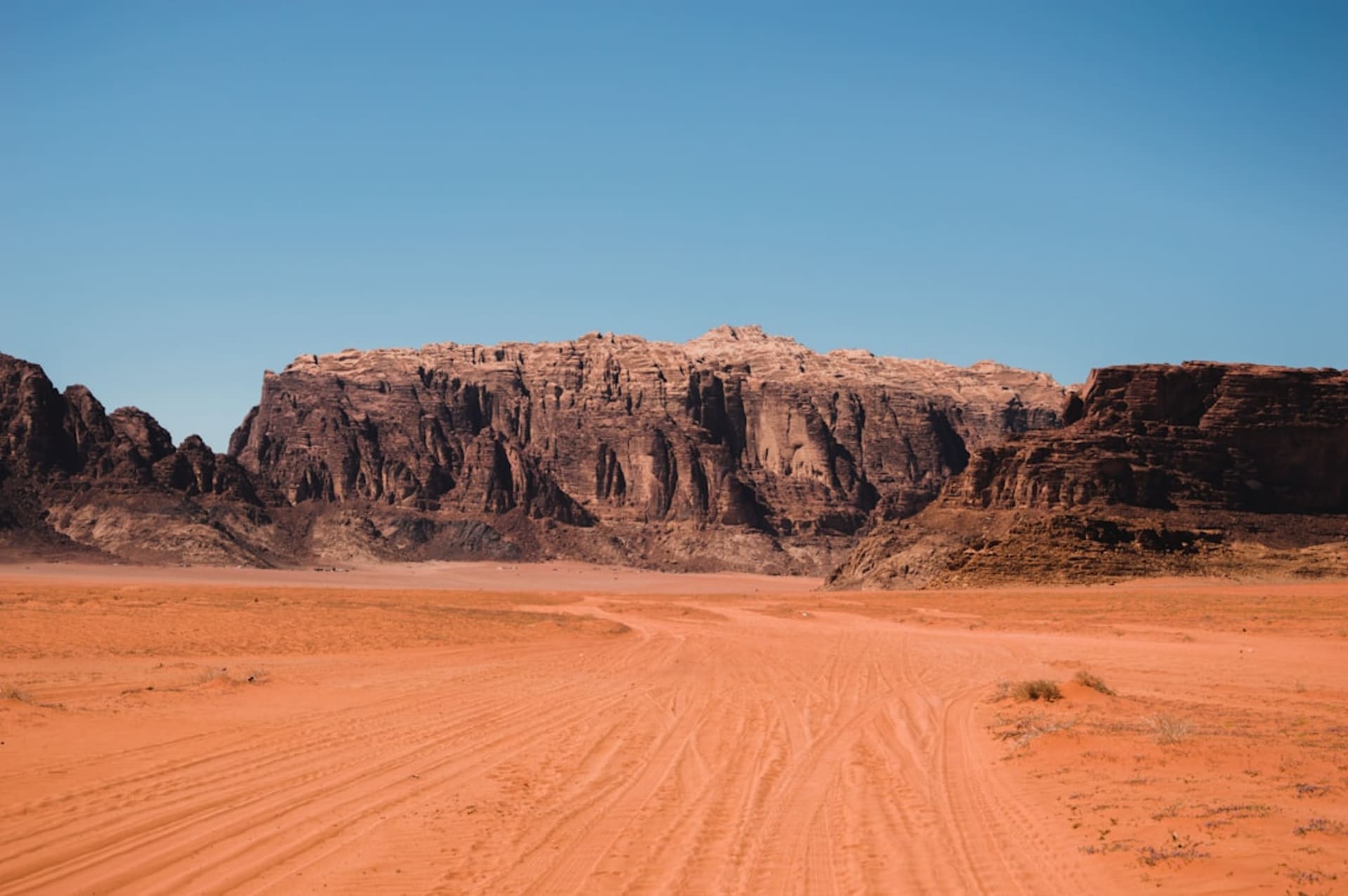
Arriving at sunrise, before most of this starts, is worth the early alarm. The village in the first light, with the Seven Pillars of Wisdom catching the sun and the cliffs turning from gray to orange while the tea shops are still closed — that’s the moment that explains why anyone would choose to live here.
When to go: The village itself is accessible year-round, but the most atmospheric time is early morning before tour groups arrive, or late afternoon when vehicles return and the village settles into its own rhythm. If you’re spending multiple nights in the desert camps, you’ll pass through twice — plan to linger at least once.