
Ninh Binh
"Ha Long Bay on land -- except quieter, greener, and somehow even more beautiful."
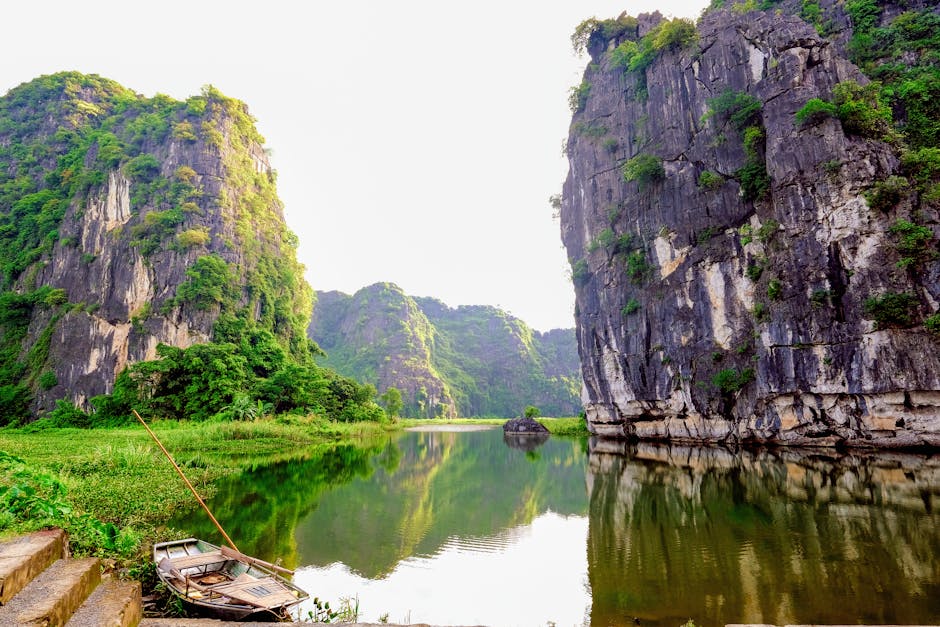
Ninh Binh is often called the inland Ha Long Bay, and the comparison is apt but insufficient. The limestone karsts here rise from flooded rice paddies rather than seawater, and the effect is different — softer, greener, more intimate. At Tam Coc, sampan boats piloted by women rowing with their feet glide through three natural caves while the karsts loom overhead and egrets pick their way through the paddies. It is one of the most beautiful boat rides on earth, and it costs almost nothing.
Tam Coc by Sampan
The boat ride through Tam Coc is the centrepiece, and nothing I had read prepared me for how it felt. The boatwoman — mid-sixties, arms like rope, a conical hat tilted against the sun — rowed with her feet while steering with her hands, a technique unique to this region that looks impossible until you watch someone who has been doing it since childhood. We glided between karsts that rose vertically from the water, their limestone faces streaked with green where ferns and mosses had found purchase in the cracks. Three caves punctuate the route, each one a tunnel of dripping stone where the sampan barely fits and the only light comes from the water’s reflection on the ceiling. Between the caves, the rice paddies spread to the horizon, and the only sounds were the dip of the oar, the call of a kingfisher, and the distant rumble of a motorbike on the road above.
Mua Cave and the Valley View
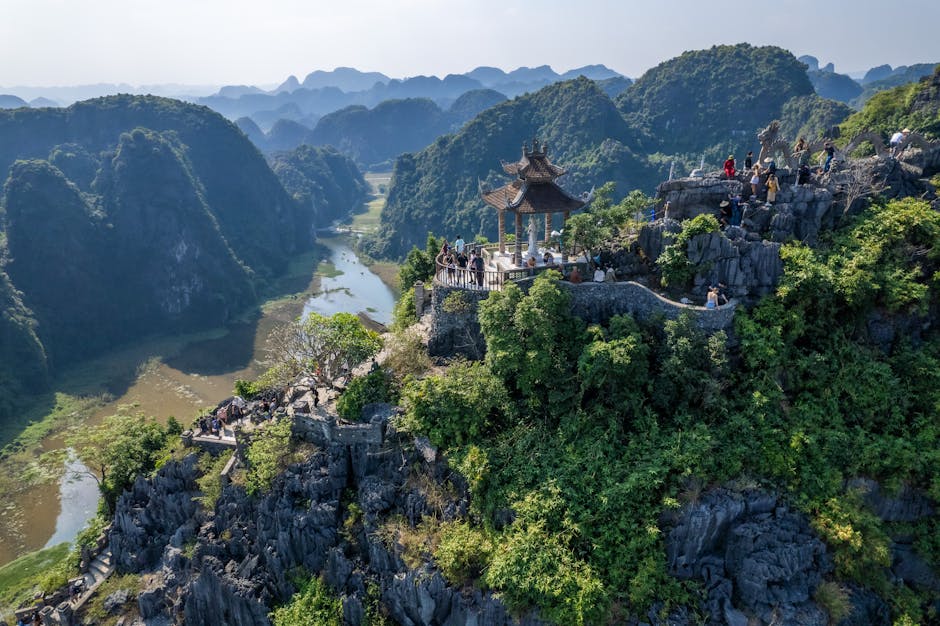
Mua Cave demands a steep climb — five hundred stone steps carved into the karst face, each one a test of your commitment to the view at the top. I climbed it in the late afternoon, when the heat was beginning to ease, and arrived at the summit drenched in sweat and entirely unprepared for what I saw. The entire Tam Coc valley lay below, a checkerboard of rice paddies and water channels threaded between limestone towers that stretched to the horizon in every direction, the river winding through it all like a silver thread in green silk. A stone dragon sits at the summit, coiled around the peak, and I sat beside it for twenty minutes watching the light change and the shadows lengthen across the valley. It is, without exaggeration, one of the finest viewpoints in Southeast Asia, and the physical effort required to reach it makes the arrival feel earned.
Trang An and Hoa Lu
Trang An, the UNESCO-listed landscape complex nearby, offers a longer boat route through even more caves and past temples hidden in the cliffs. The ancient capital of Hoa Lu, with its tenth-century temples dedicated to the Dinh and Le dynasties, adds historical weight to a landscape already heavy with beauty. The temples are small and exquisitely decorated — dragon carvings, incense-blackened altars, courtyards where the only visitors on the morning I went were a monk and a cat sleeping in a sunbeam. Rent a motorbike, take the back roads through the villages and paddy fields, and lose yourself. The route from Tam Coc to Trang An through the countryside is one of the most beautiful short drives in Vietnam — a corridor of green where every turn reveals another karst, another paddy, another moment that makes you reach for your camera and then put it down because the photograph could never capture what your eyes are seeing.
When to go: May to June when the rice paddies are at their greenest, or September for the golden harvest. Winter months are cool and grey but atmospheric.