Hue
"Vietnam's soul lives here -- in the food, the tombs, and the quiet pride of a former capital."
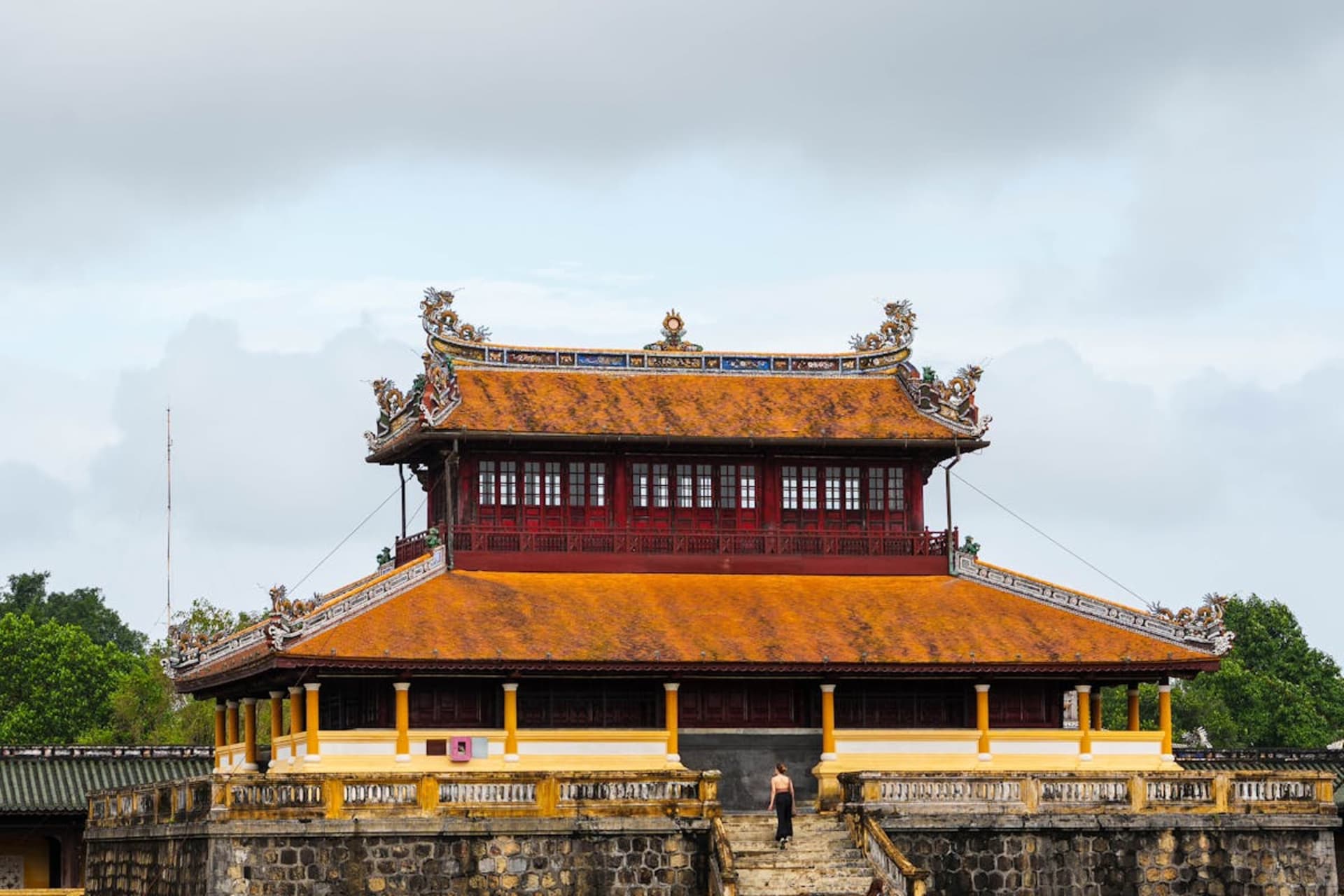
Hue carries itself with the dignity of a city that was once the centre of the universe, or at least the centre of Vietnam. The Imperial Citadel, modelled on Beijing’s Forbidden City, still dominates the north bank of the Perfume River — its walls thick, its gates monumental, its interior a mix of restored palaces and atmospheric ruins left by the wars that passed through. The Forbidden Purple City within its walls is haunting in its emptiness, a reminder of how completely power can vanish.
The Imperial Citadel
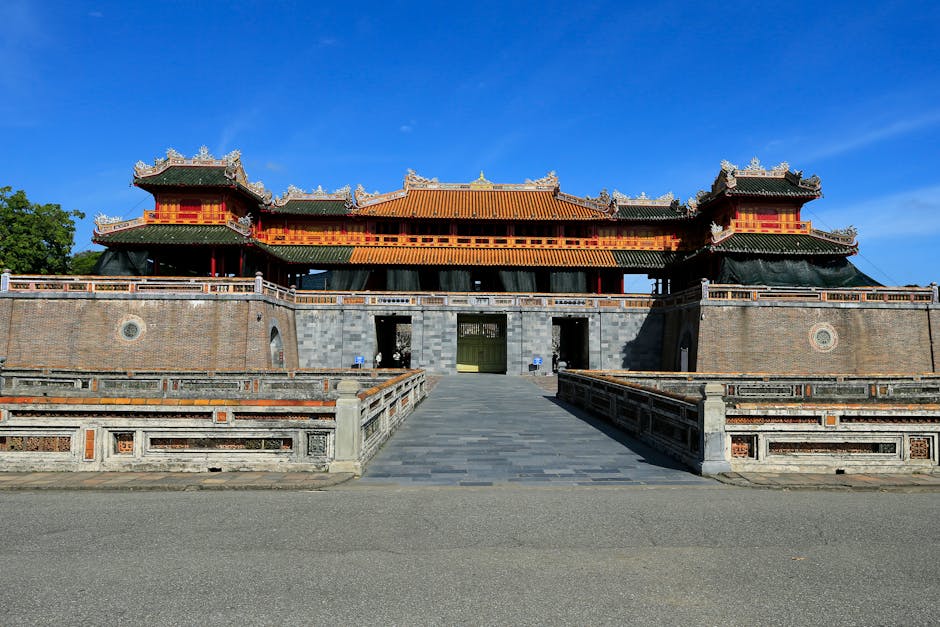
I spent a full morning inside the Citadel and still left feeling I had rushed it. The Ngo Mon Gate alone — the ceremonial entrance where emperors appeared to their subjects — is worth thirty minutes of contemplation. The Halls of the Mandarins, the Nine Dynastic Urns, the Thai Hoa Palace with its lacquered columns and gold-leaf ceiling — each structure tells a chapter of a dynasty that ruled Vietnam for a hundred and forty-three years, from 1802 until the last emperor, Bao Dai, abdicated in 1945. The Tet Offensive of 1968 destroyed much of the inner citadel, and the ruins of the Forbidden Purple City — walls without roofs, foundations without buildings, gardens slowly reclaiming their territory — are among the most atmospheric war ruins I have encountered anywhere. There is something in the combination of imperial ambition and wartime destruction that makes you stand very still and think about what civilizations build and what they lose.
The Royal Tombs
The royal tombs scattered along the Perfume River are each a masterpiece of landscape architecture. Tu Duc’s tomb is a garden of pavilions and lotus ponds — the emperor, who had a hundred and four wives and no heir, designed it as a retreat for his living years as much as a resting place for his death. Khai Dinh’s is a baroque fantasy of mosaic and concrete, built in the 1920s with a fusion of Vietnamese and European styles that should be a disaster and is instead strangely beautiful. Minh Mang’s tomb, set deep in the forest among lakes and stone bridges, is the most serene of all — a place where the architecture and the landscape become indistinguishable, and where the silence is broken only by birdsong and the occasional splash of a fish in the lotus pond.
The Food
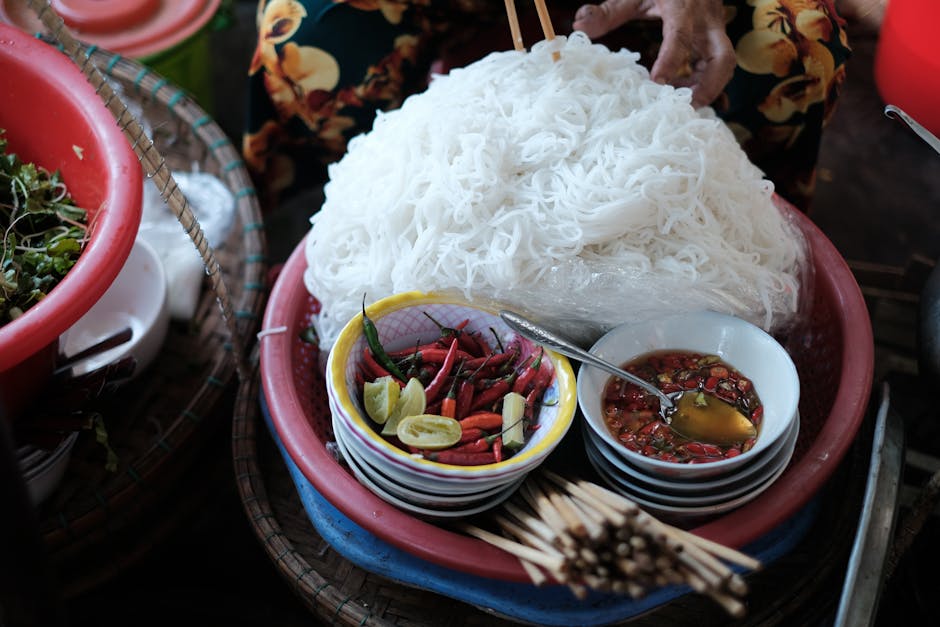
And the food — Hue is arguably the culinary capital of Vietnam, a claim that Hanoi and Saigon both dispute but that anyone who has eaten here will support. Bun bo Hue, the spicy beef noodle soup with its lemongrass-infused broth and thick round noodles, is the city’s signature. But the real revelation is the street food: banh beo, banh nam, banh loc, served in sets of tiny dishes that feel like a tasting menu designed by grandmothers who have been refining these recipes since the Nguyen dynasty. I ate my way through a dozen of these stalls along Nguyen Binh Khiem Street, and each one offered a slightly different interpretation of the same canon — the same ingredients, the same traditions, but a different hand, a different emphasis, a different grandmother’s instinct.
When to go: February to April for the driest, most pleasant weather. September to November is peak rainy season and flooding is common. The Hue Festival, held biennially in even years, is a cultural highlight.