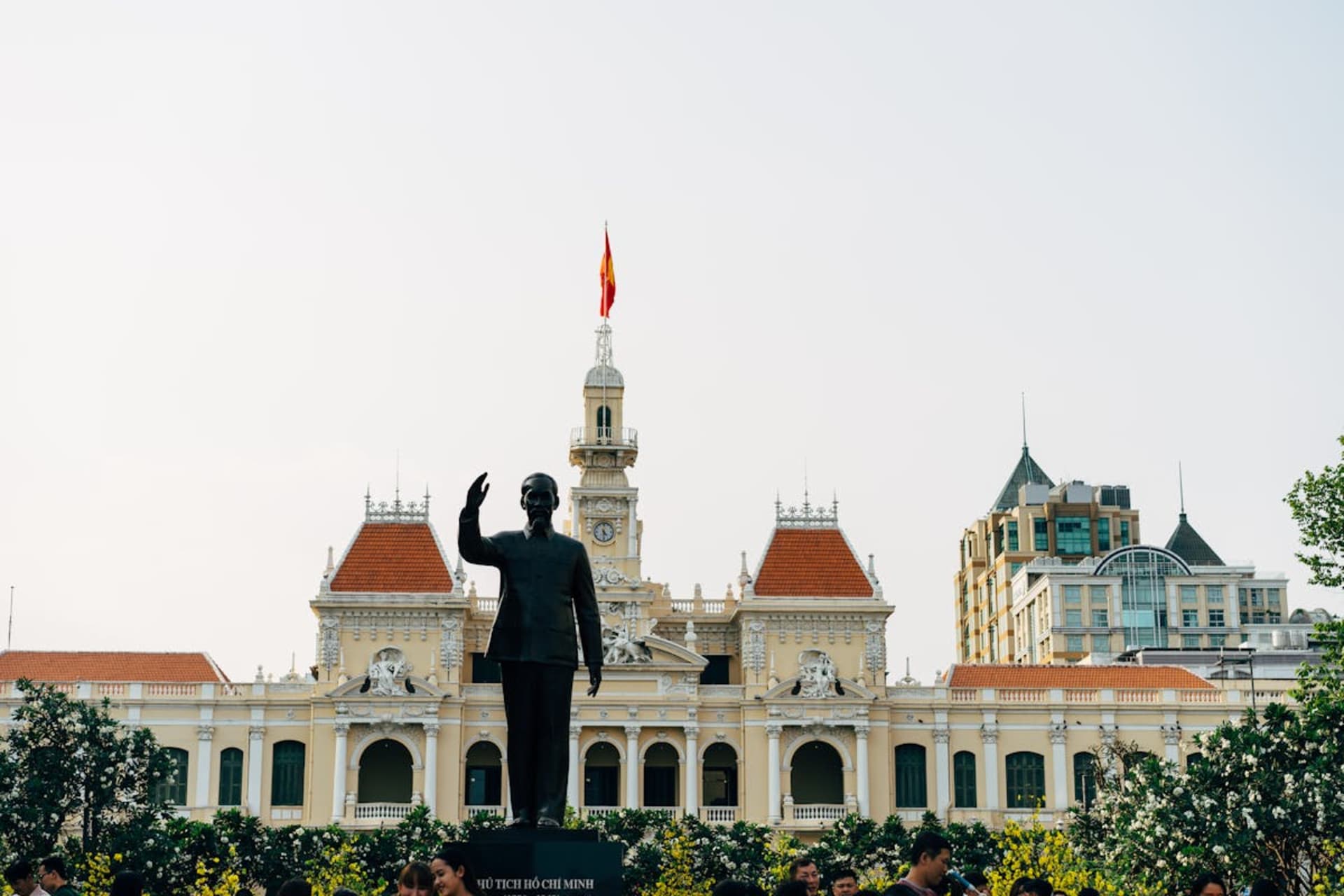
Ho Chi Minh City
"Saigon moves at a speed that makes other cities feel like they are standing still."
Ho Chi Minh City — still Saigon to everyone who lives here — is Vietnam at full throttle. The motorbike rivers are wider and faster than Hanoi, the buildings taller, the ambition more visible. The Reunification Palace sits frozen in 1975, its rooms preserved exactly as they were when the last helicopter left the roof. The War Remnants Museum is devastating and essential. But step outside and the city has already moved on — construction cranes, rooftop bars, craft coffee, and a food scene that reinvents itself weekly.
The Districts
District 1 is the centre of gravity, but the city reveals itself in the margins. I spent my best day in Saigon ignoring every guidebook recommendation and wandering through District 4, where the street food vendors set up along the canal and the banh xeo — crispy turmeric crepes stuffed with shrimp and pork — are the best I have found anywhere in the country. Cholon, the Chinatown in District 5, is a world within a world — temples, markets, and medicinal herb shops packed into streets that feel like a different country entirely. The energy there is rawer, louder, less filtered for tourist sensibilities, and infinitely more interesting. Ben Thanh Market is the tourist landmark; Binh Tay Market is where locals actually shop, and the difference in atmosphere is the difference between a performance and a life being lived.
The Food and Coffee
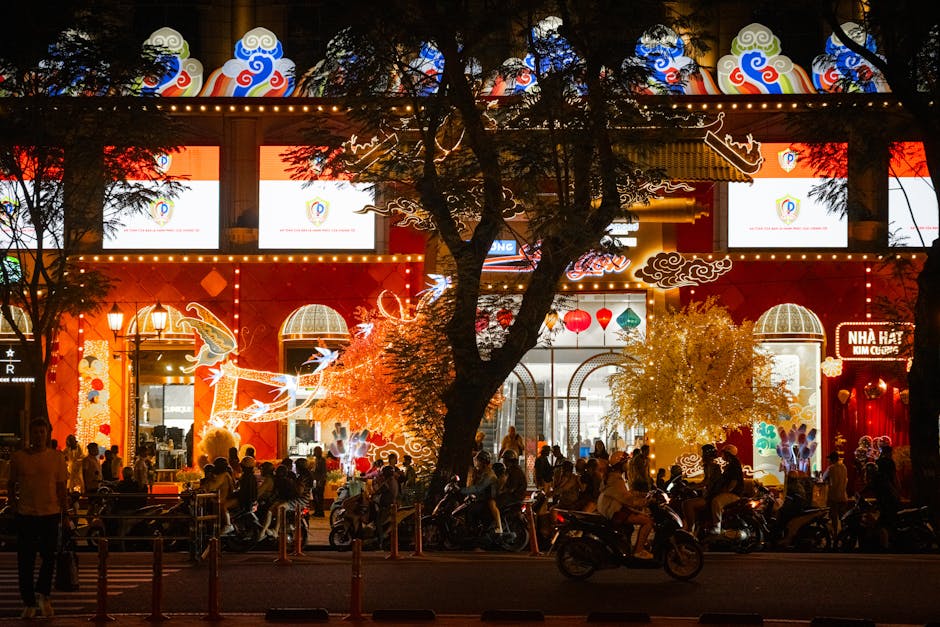
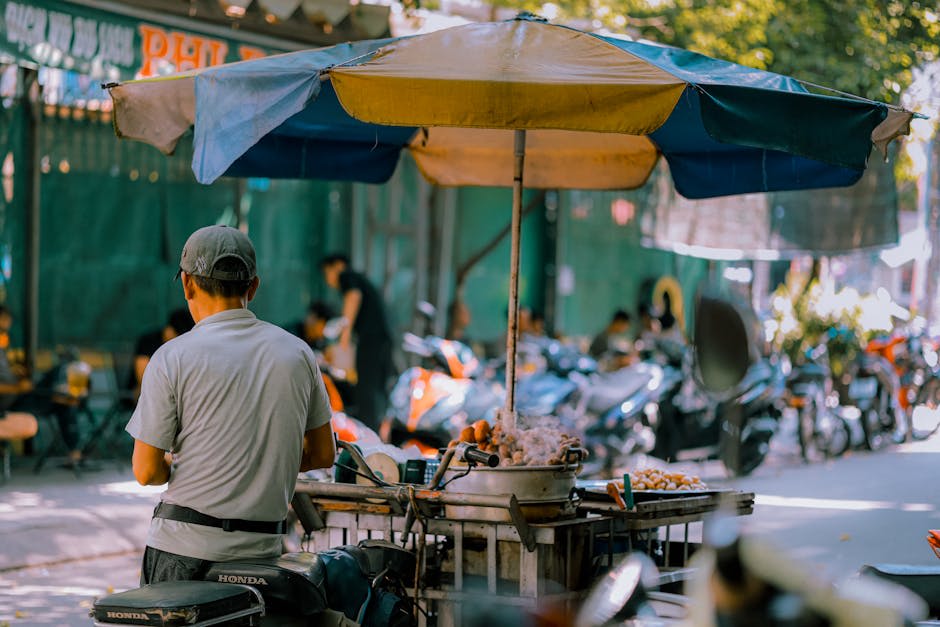
Saigon’s coffee culture alone deserves a week. The city runs on ca phe sua da — strong dark coffee dripped through a metal phin filter over sweetened condensed milk and ice, served in glasses at sidewalk cafes where the plastic chairs are six inches off the ground and the people-watching is world-class. The food is sweeter and bolder than the north — broken rice plates with grilled pork chops, hu tieu noodle soup with its clear, slightly sweet broth, and the banh mi from Banh Mi Huynh Hoa on Le Thi Rieng Street, where the queue wraps around the block every evening because the pate is house-made and the bread is still warm.
History and Architecture
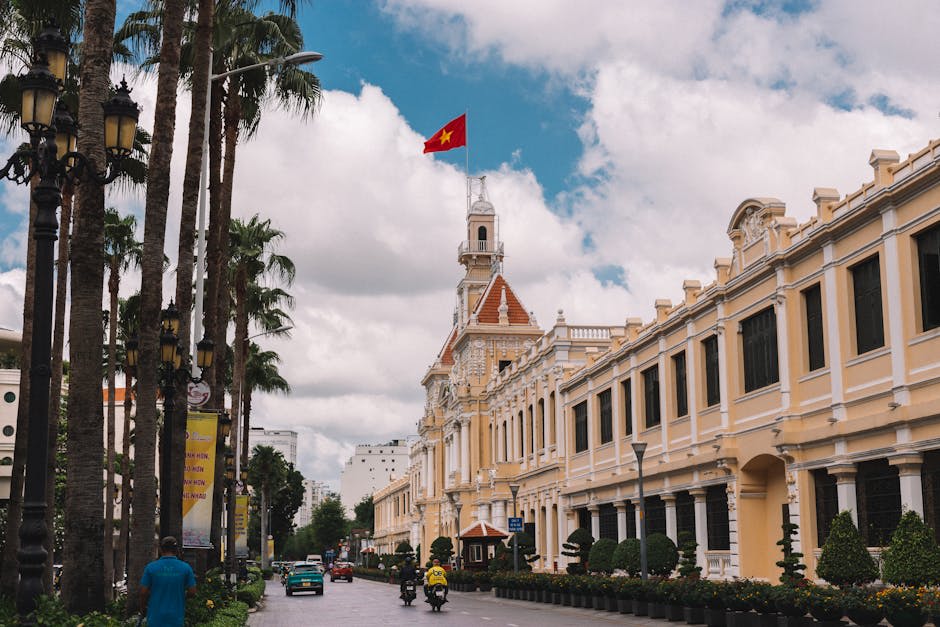
The French colonial architecture tells a story the city has complicated feelings about. The Central Post Office, designed by Gustave Eiffel’s firm, is a cathedral of communication with vaulted ceilings and hand-painted maps that make you want to write a letter to someone you love. Notre-Dame Cathedral Basilica stands across the street, its twin bell towers still commanding the skyline even as glass towers crowd in from every direction. The Reunification Palace is the strangest museum I have ever visited — not because of what it contains, but because of what it preserves: the exact moment a war ended and a country changed its name. The rooftop helipad where that final helicopter lifted off is still there, fenced and sun-bleached, and standing on it produces a silence that the city below never allows.
When to go: December to April for dry season. The wet season from May to November brings afternoon downpours that are dramatic, brief, and oddly refreshing.