Hanoi
"Crossing the street here is an act of faith -- and the food makes it worth the risk."
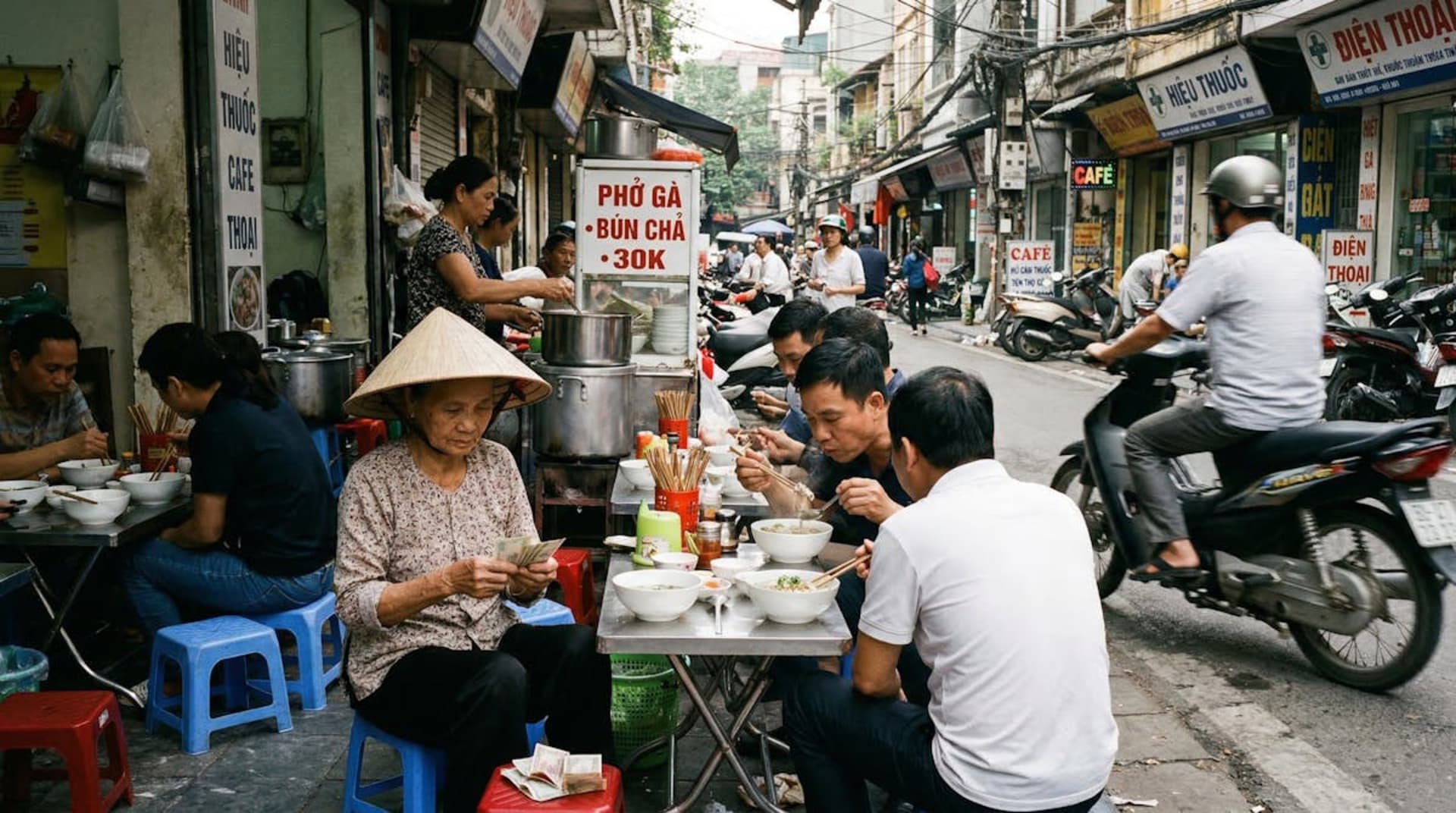
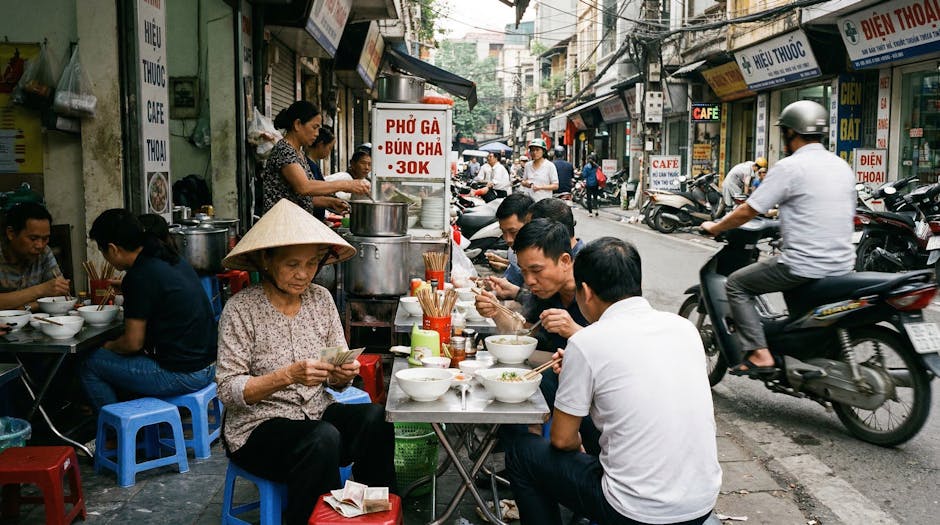
Hanoi is chaos refined into something beautiful. The Old Quarter is a labyrinth of narrow streets, each one historically dedicated to a single trade — silk, tin, paper, herbs — and now dedicated to the universal trade of overwhelming your senses. Motorbikes flow around you like water around a stone. The smell of pho rises from street-level kitchens where grandmothers have been perfecting the same broth for decades. The lakes provide breathing room — Hoan Kiem in the centre, West Lake to the north — and the French colonial architecture gives the whole city a faded, romantic grandeur.
The Old Quarter
I have lived in Mexico City, walked through the souks of Marrakech, navigated the backstreets of Naples — and nothing quite prepared me for the sensory density of Hanoi’s Old Quarter. Each of the thirty-six streets carries the name of its original guild: Hang Gai for silk, Hang Bac for silver, Hang Ma for paper offerings that burn in temple courtyards. The trades have evolved, but the principle remains — every street is a world unto itself, and walking from one to the next feels like changing channels on a television that only broadcasts in vivid colour. The motorbike traffic is the thing everyone warns you about, and the thing everyone gets wrong. It is not dangerous. It is choreography. You step off the kerb, you walk at a steady pace, and the stream of Honda Waves and Yamaha Excitors parts around you like a murmuration. The trick is to never stop, never run, and never look afraid. Within a day, you will be doing it with a bowl of bun cha in one hand.
The Lakes
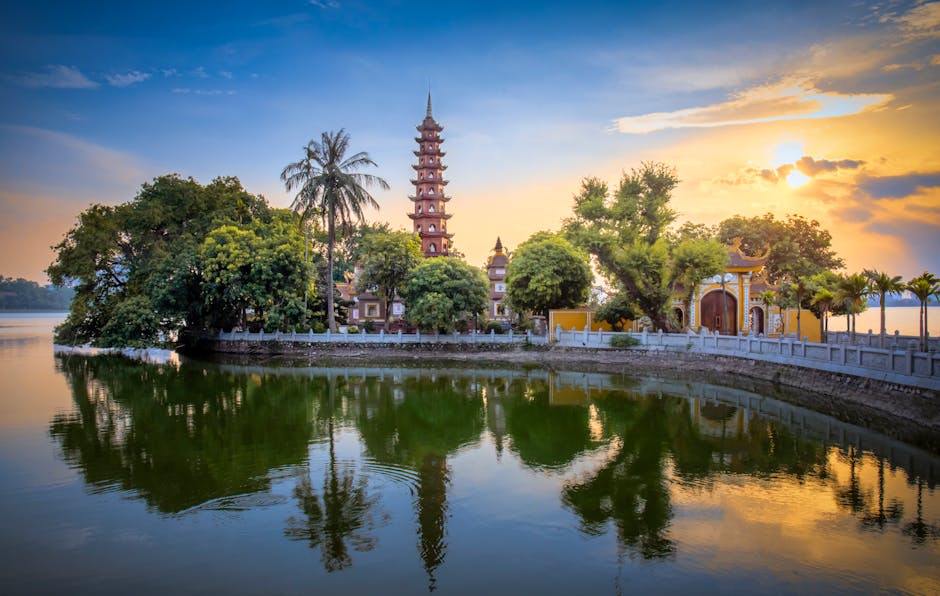
Hoan Kiem Lake is Hanoi’s emotional centre — a small, green jewel around which the city arranges itself. The red Huc Bridge leads to Ngoc Son Temple on a tiny island, and in the early morning the banks fill with tai chi practitioners moving in slow unison, their gestures reflected in the water. I went at dawn on my first morning and sat on a bench for an hour, watching the city wake up around a body of water that has anchored it for a thousand years. Tran Quoc Pagoda on West Lake is older still — built in the sixth century, it rises from a narrow causeway into the lake, its red walls and tiered tower reflected in water that turns golden at sunset. West Lake itself is the city’s escape valve, ringed with cafes, pagodas, and the kind of tree-lined lanes where you can almost forget you are in a capital of eight million people.
The Food
The food alone justifies the trip. Bun cha served on tiny plastic stools — grilled pork patties swimming in a sweet-sour broth, dipped with cold rice noodles and armfuls of fresh herbs. Egg coffee at a second-floor cafe overlooking the lake — a drink that sounds absurd and tastes like liquid tiramisu. Banh mi from a cart that has no name and needs none. Pho bo at a stall where the queue starts forming at five in the morning and the broth has been simmering since the previous night, a depth of flavour that no restaurant in Paris or New York has managed to replicate, despite decades of trying. The Temple of Literature offers a thousand years of scholarly tradition in a quiet garden. The water puppet theatre is stranger and more charming than you expect. And the energy of the city — relentless, generous, slightly manic — gets under your skin and stays there.
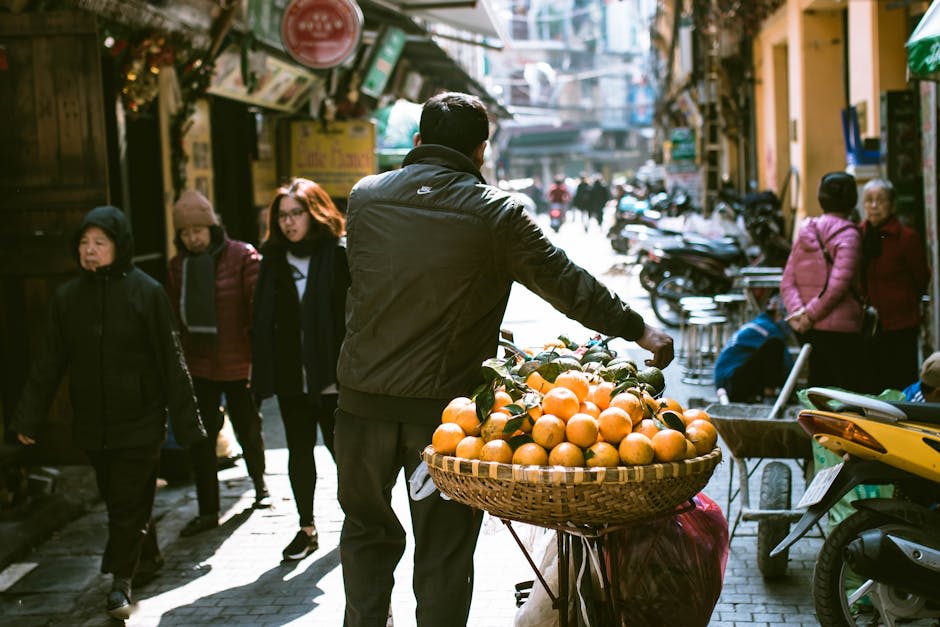
When to go: October to December for cool, dry weather. March and April are pleasant. Summers are hot and humid, and January can be surprisingly cold and grey.