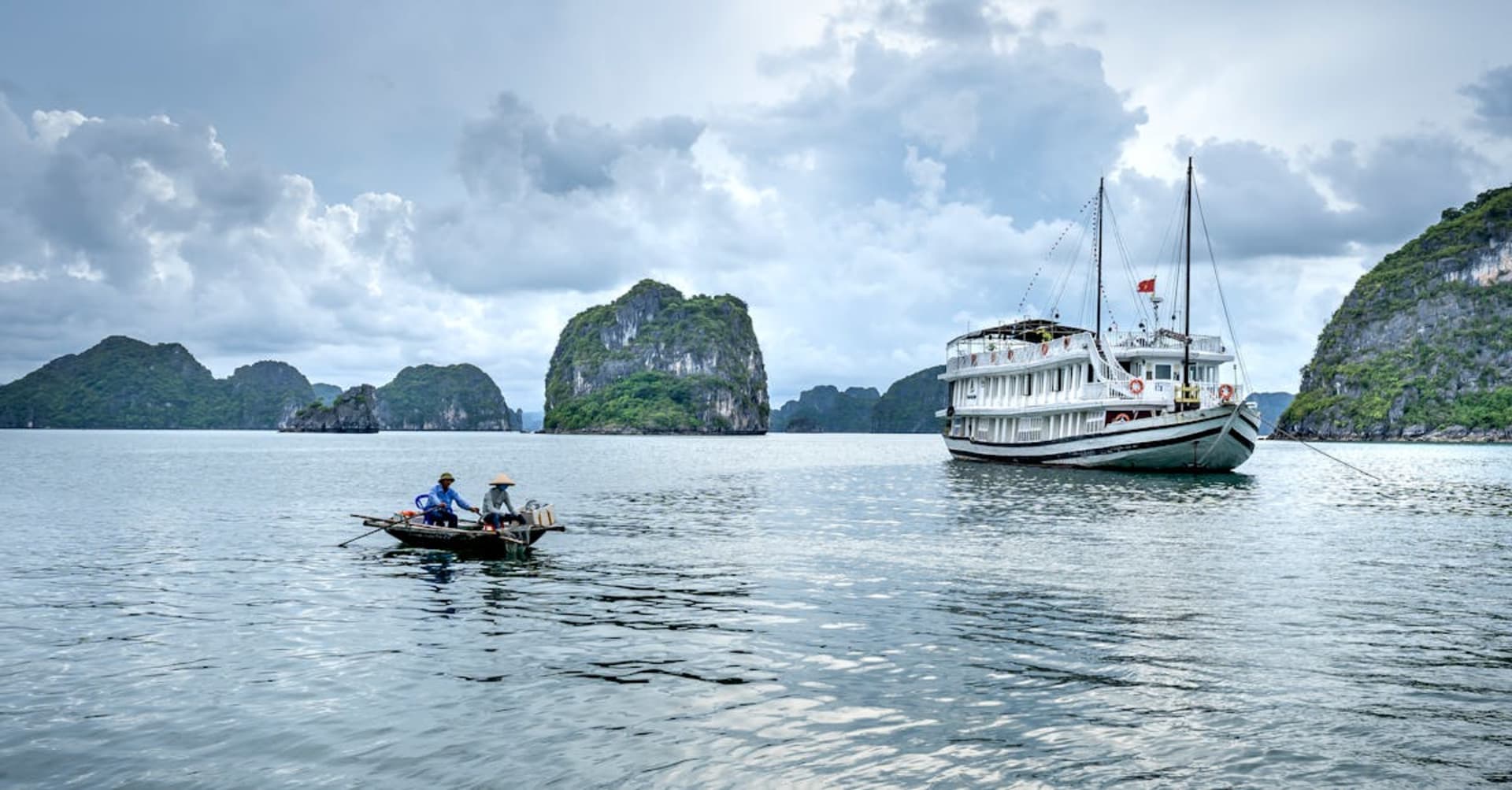
Ha Long Bay
"The bay where dragons descended -- and honestly, looking at it, you believe them."
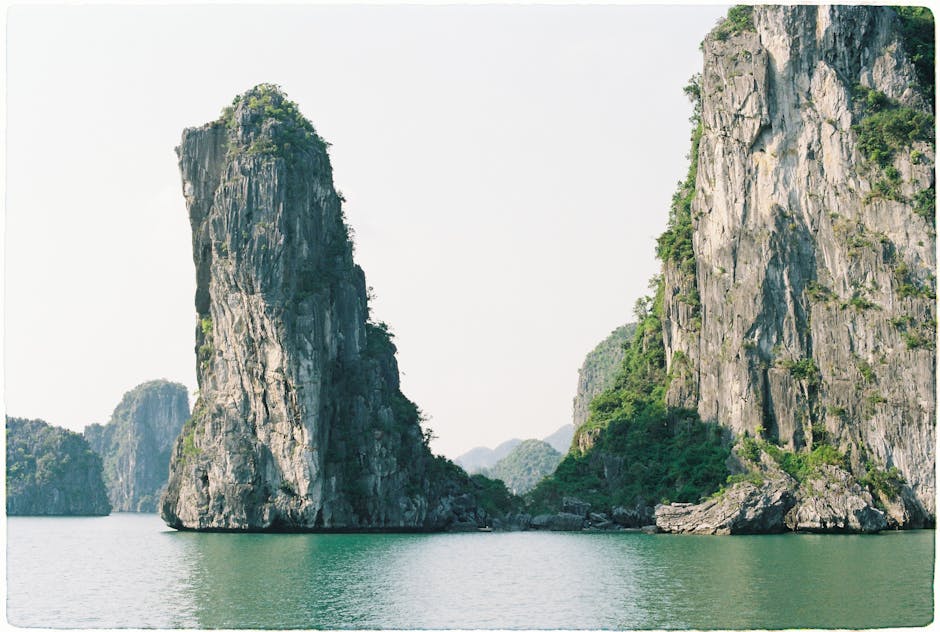
Ha Long Bay is one of those places that photographs cannot oversell. Nearly two thousand limestone karsts and islands rise from the Gulf of Tonkin in formations so dramatic they look sculpted by something with an imagination larger than geology. The water is jade green, the mist hangs between the peaks like gauze, and the silence — once you leave the harbour and the tour boats thin out — is the kind that makes you speak in whispers without knowing why.
On the Water
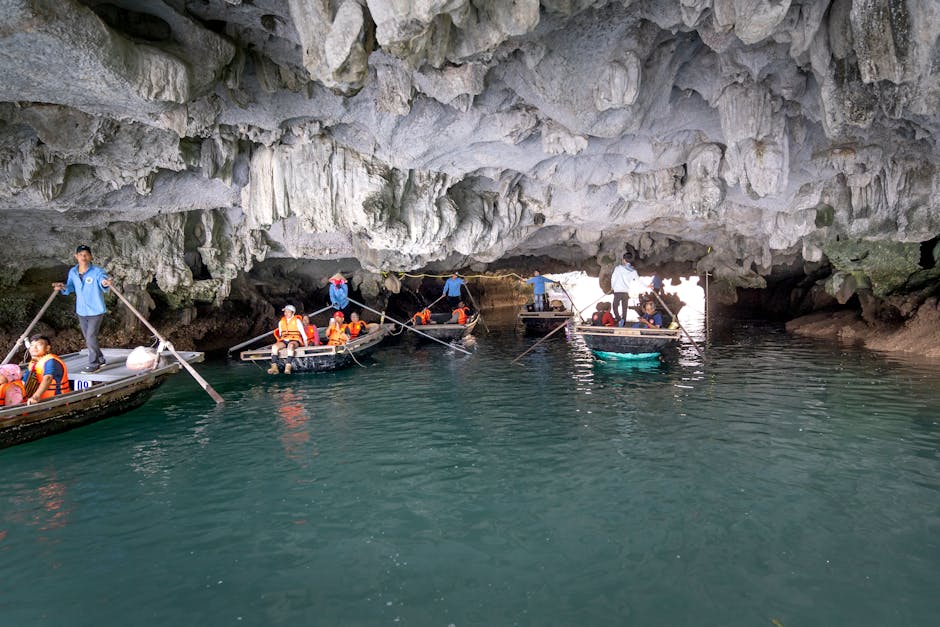
An overnight cruise is the way to experience it. The boats range from budget to luxury, but even the modest ones anchor in coves where the scale of the landscape rearranges your sense of proportion. I chose a mid-range junk boat with wooden decks and a crew of five, and as we motored away from the harbour at Tuan Chau, the karsts began to multiply — first a handful, then dozens, then hundreds, each one a different shape, some topped with jungle, some sheer and bare, some pierced with caves that the boat nosed into while I stood at the bow and watched the limestone walls close in overhead. The Vietnamese name means “descending dragon,” and the legend says a dragon sent by the gods spat out jewels and jade that turned into the islands. Standing among them, with the mist rising and the water still, the story feels less like mythology and more like a perfectly reasonable explanation.
The Caves and Villages
Sung Sot Cave is enormous and theatrically lit — a cathedral of stalactites that the Vietnamese tourism board has illuminated in greens and purples, which is either magical or garish depending on your tolerance for drama. I found it magnificent. The floating fishing villages are a reminder that people live here, not just visit — families in wooden houses tethered to the karsts, children rowing to school in sampans, a way of life that is slowly disappearing as the bay becomes more regulated. I kayaked into a lagoon surrounded by cliffs so high and so close that the sky was reduced to a ragged blue oval, and the only sounds were the drip of water from the cave ceiling and the distant putter of a fishing boat heading home.
Beyond the Crowds
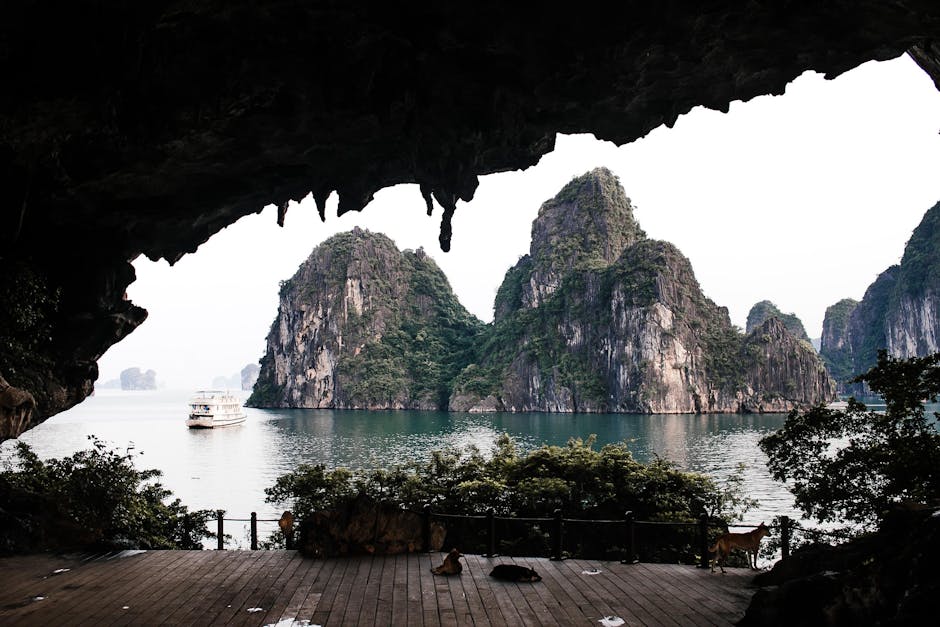
For fewer crowds, Lan Ha Bay and Bai Tu Long Bay to the south and northeast offer the same geology with a fraction of the boats. Lan Ha Bay in particular has become my standard recommendation — it connects to Cat Ba Island, which adds jungle trekking and a proper town with cheap seafood restaurants to the itinerary. The kayaking there is extraordinary, threading between karsts into hidden lagoons that feel like they were placed there specifically for the purpose of making you question whether beauty this extreme can really be accidental.
When to go: October to December for clear skies and comfortable temperatures. March and April are also good. Summer is hot and hazy, and typhoon season runs from June to September.