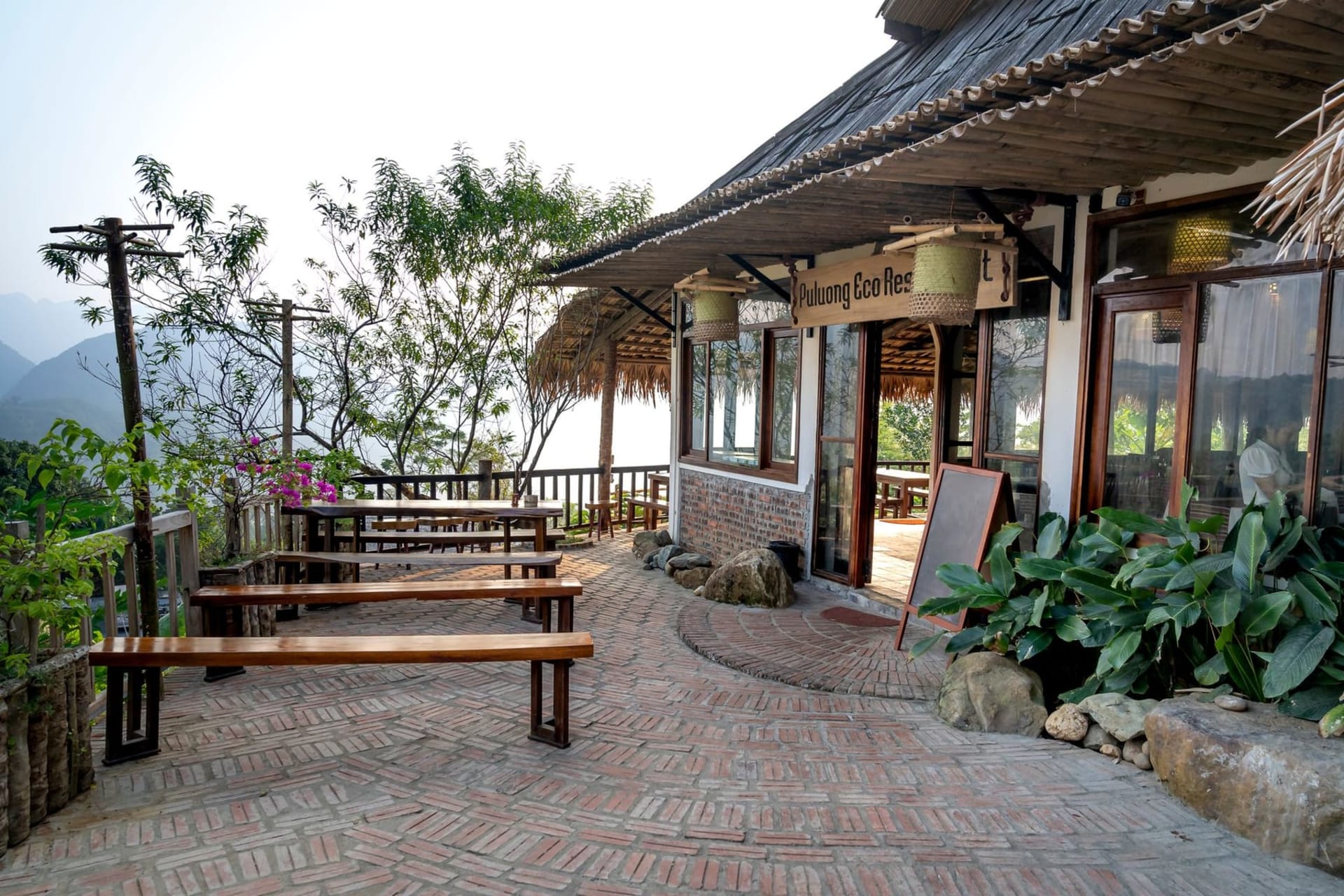
Terraced valleys and Thai minority stilt villages northwest of Hanoi, still untouched by the Sapa crowds.
I first heard about Pu Luong from a guesthouse owner in Ninh Binh who drew a rough map on the back of a receipt and said, with no further explanation, that it was the valley that didn’t need to be discovered. That should have been enough to put it out of my mind. It wasn’t.
The Road Into the Valley
The drive from Hanoi takes around four hours, the last stretch along Route 15C where the road narrows and the mountains press in close enough that you can reach through the window and brush the wild banana leaves. We arrived in late afternoon, when the light was coming in low and gold over the Ban Hieu valley, pouring across the wet terraces like something poured deliberately, tier by tier. Lia went quiet, which is how I know a place has done something to her.
The terraces here belong to the White Thai and Muong communities who have farmed them for generations. They’re not the Instagram-famous flooded mirrors of Mu Cang Chai — they’re older-looking somehow, more worked-in, the paddy walls irregular and mossy, the paths between fields trodden so often they’ve gone almost black. Water channels cut from bamboo feed each level from above, and you can hear them all night from the stilt houses: a constant, low percussion that becomes indistinguishable from sleep.
Eating in the Stilt House
Our host in Ban Hiuu village made com lam each evening — sticky rice steamed inside green bamboo tubes over a wood fire, split open at the table and eaten with stewed river fish and bitter greens that tasted faintly of iron and rainwater. There was rice wine, dark and funky, poured into shared cups without ceremony. I kept asking the name of the greens and kept receiving a word I couldn’t retain. It didn’t matter. I ate three portions.
The unexpected thing happened on our second morning. I followed a concrete path past the last house on the village edge and found myself in a grove of ancient pong lang trees — the tree whose wood is used to make the xylophone-like instrument of the same name. A woman was sitting beneath one, splitting bamboo with a machete, and she sang something quiet and unself-conscious, to herself, to the trees, to no one. I stood there longer than was probably polite.
Getting the Timing Right
Pu Luong receives almost no tourist infrastructure, which means it rewards preparation and punishes bad weather. The valley is navigable on a rented motorbike, and the loop through Puong Cave and over the Ban Ho pass takes the better part of a day.
When to go: September and October bring the harvest season, when the terraces are deep gold before cutting — the most photogenic window and still far less crowded than Sapa’s equivalent peak. Avoid the heavy rains of July and August, when the mountain roads turn unreliable.