Phong Nha
"Phong Nha's caves make you feel the earth's age in a way that no museum could ever manufacture."
The world's largest cave system hidden inside jungle karst, still only partially explored.
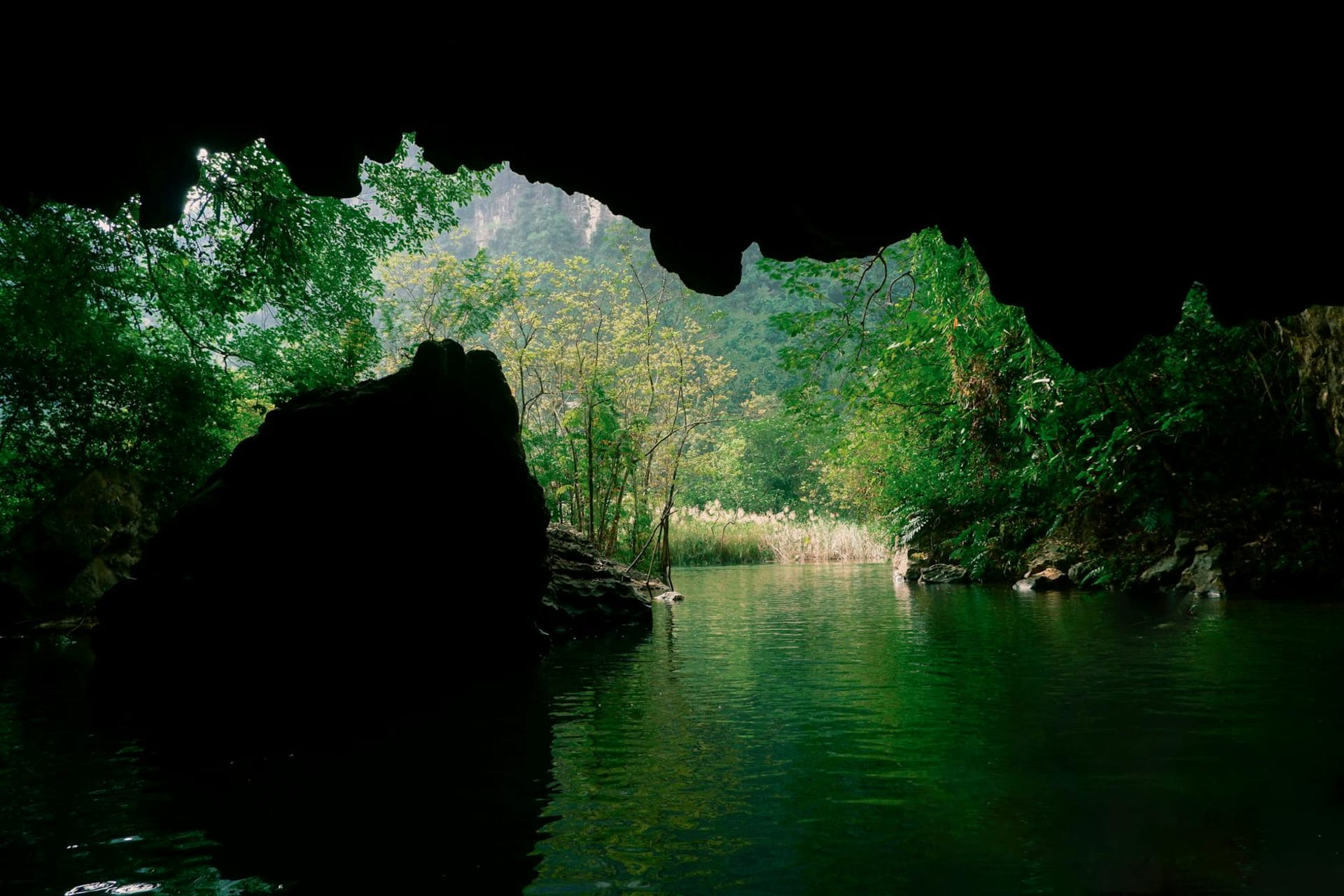
There is a moment, maybe thirty seconds after the boat passes under the first arch of Phong Nha cave, when your eyes stop working entirely. The Son River carries you forward in the dark and the sound of the engine bounces off walls you cannot see. Then the guide’s flashlight catches a stalactite the color of old bone, and you understand, viscerally, that you are inside something that was forming before the first human being ever looked at the sky.
Into the Karst
Lia and I arrived in Phong Nha town after a four-hour bus from Hue, deposited on Tran Hung Dao Street in the early afternoon heat. The village exists almost entirely in the shadow of the national park — guesthouses, a handful of open-air restaurants serving bun bo Hue, a couple of places renting motorbikes by the day. We ate at a plastic-table spot near the boat dock, a bowl of pork broth with lemongrass and shrimp paste that left a red tint on my lips. The karst towers loomed behind the kitchen roof, limestone gone dark green with jungle, shaped like knuckles pushing through skin.
The boat ride into Phong Nha cave itself takes about forty minutes up the Son River. The water is that specific shade of teal that seems almost artificial, fed by underground streams that have filtered through millions of years of rock. Inside the cave, the boat slows to a drift. Mineral formations hang from ceilings forty meters above, lit by colored lights that I found slightly theatrical at first — until I stopped looking at the lights and started looking at the shapes behind them. Formations that look like coral reefs, like pipe organs, like something a dream would invent.
The One That Surprised Me
I had expected the cave to be the story. What I did not expect was Paradise Cave — accessible by a short trek through secondary jungle — to completely reframe everything. You descend into it on a wooden boardwalk and the chamber opens into a cathedral that stretches for thirty-one kilometers underground. We only walked two kilometers in. Two kilometers of absolute silence except for our footsteps and the occasional drip of water finding the same groove it has found every day for three hundred million years. At one point I turned off my headlamp on purpose, just to stand in that blackness for ten seconds. It is one of the only times in my life I have felt genuinely small.
Getting the Time Right
The roads around Phong Nha Ke Bang park are quiet enough that a rented motorbike is a real pleasure — the loop past Nuoc Mooc Spring and through the jungle buffer zone takes half a day and costs almost nothing.
When to go: February through August offers the driest conditions; the central Vietnamese rainy season from September to January can flood some cave access points entirely and makes the jungle roads slippery. April and May sit in a sweet spot before the summer heat peaks.