The Boiling Pot
"Every guidebook calls it 'challenging.' They mean the descent. The Boiling Pot itself is something closer to terrifying."
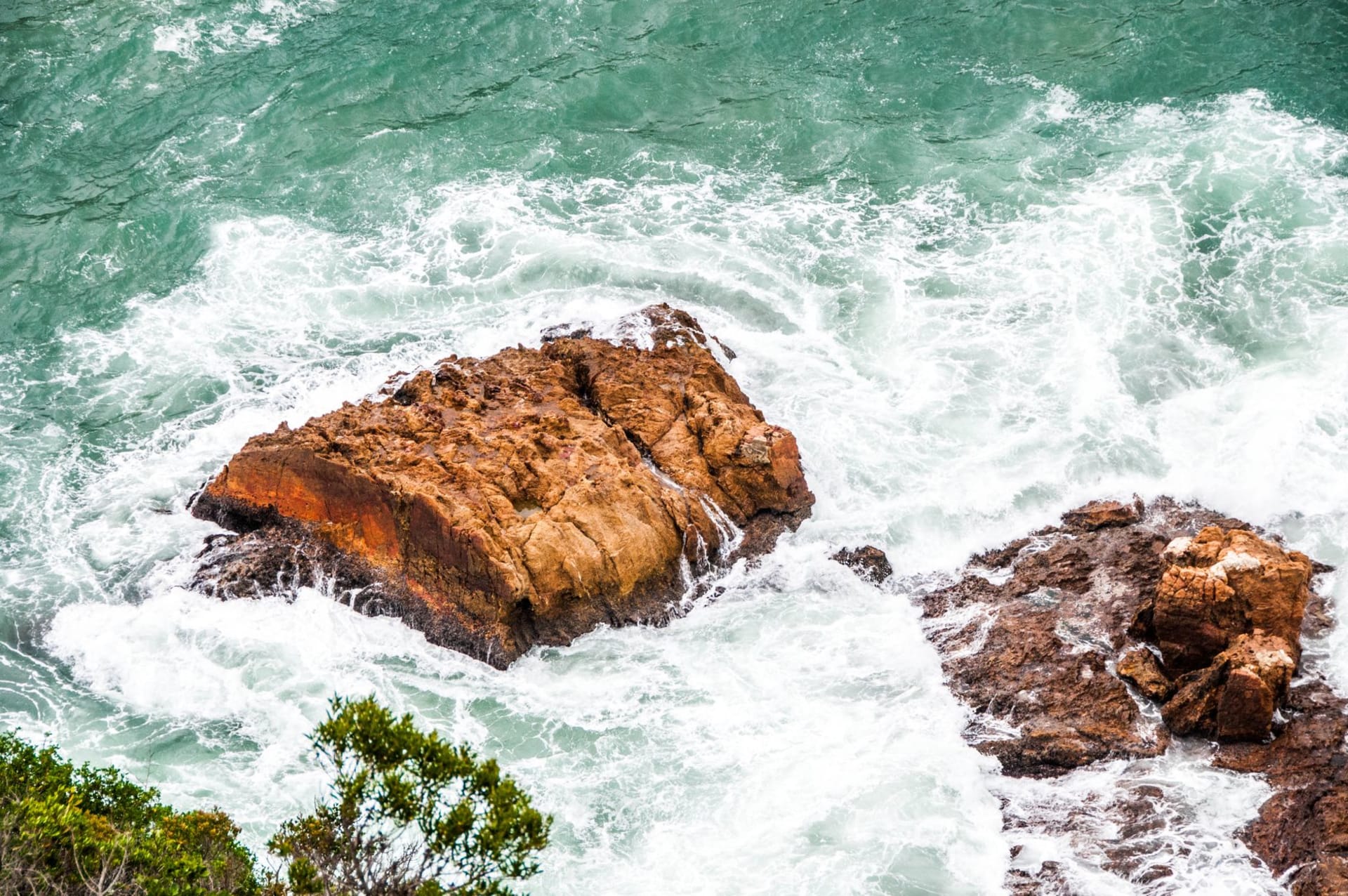
The Boiling Pot is what Victoria Falls becomes after it falls. All 1,700 meters of the main curtain drops 108 meters into a single plunge pool at the base of the gorge, and the water that arrives there from four separate cataracts simultaneously is not calm about it. The pool churns with a violence that’s hard to look at directly — the surface roiling and folding and breaking continuously, spray thrown up in clouds, the noise at the base overwhelming in the way that the falls above are overwhelming, but lower, more enclosed, directed at your body by the gorge walls on either side.
Most visitors to Victoria Falls never see this. They stand at the viewpoints above, which are spectacular, and they don’t know there’s a path down.
The Descent
The path begins near the entrance to the Zimbabwe falls viewpoints and descends steeply through the gorge to the base. It’s marked, technically, but barely — a series of rough steps cut into the rock face, chains bolted to the cliff in the steeper sections, loose shale underfoot for much of the way. The descent takes about thirty minutes at a careful pace.
By halfway down, you’re below the level of the surrounding plateau, the vegetation has changed to a subtropical lushness fed by the permanent spray, and the sound is already different — not the wide ambient roar of the viewpoints but something more directional, coming from below. You can feel it in the soles of your feet.
At the bottom, the path arrives at a rocky platform above the pool. The view from here is the falls from below — an angle that photographs poorly and that I think about more often than the famous frontal views.
The Pool Itself
The Boiling Pot is not swimmable. I want to be clear about that. The currents are complex and unpredictable, the pool is deep in the places it’s not shallow, and the hydraulics created by the waterfall’s impact are the same kind that hold swimmers down in dangerous ways. People have died here. The power of what you’re looking at is not decorative.
What you can do is stand on the rocks near the water’s edge and feel the ground vibrating and watch the surface behavior of a body of water receiving one of the world’s largest waterfalls and understand, at a physical level, something about energy and volume and geology that the viewpoints above don’t teach you.
I was there for about an hour. The light at the base of the gorge is unusual — direct sun only for a narrow window at midday, otherwise a diffuse brightness reflected off the spray and the dark wet basalt. Everything smells of wet rock and mist.
The Bridge Above
The Victoria Falls Bridge spans the gorge directly overhead from this vantage point — a steel arch construction from 1905 that connects Zimbabwe and Zambia and serves as the launch point for the gorge swing and bungee jump operations. From below, watching someone drop from the bridge while you stand at the base of the falls is a perspective that takes a moment to make sense of. The falling person is far above you but the scale of the gorge makes them look very small.
Getting There
The trailhead is within the Zimbabwe falls entrance area — ask at the gate or at any of the viewpoints near the end of the path. No special permit required beyond the falls entrance fee. Take water, wear shoes with actual grip, and go early before the heat accumulates in the gorge. The climb back up is harder than the descent.
When to go: May through October when conditions are drier and the path is less slippery. Avoid rainy season (November–April) when the descent becomes genuinely hazardous with wet rock and high spray volume. Early morning gives the best light at the bottom and avoids the worst of the gorge heat.