Americas
Valparaíso
"No other city has made me feel so watched — by the walls themselves."
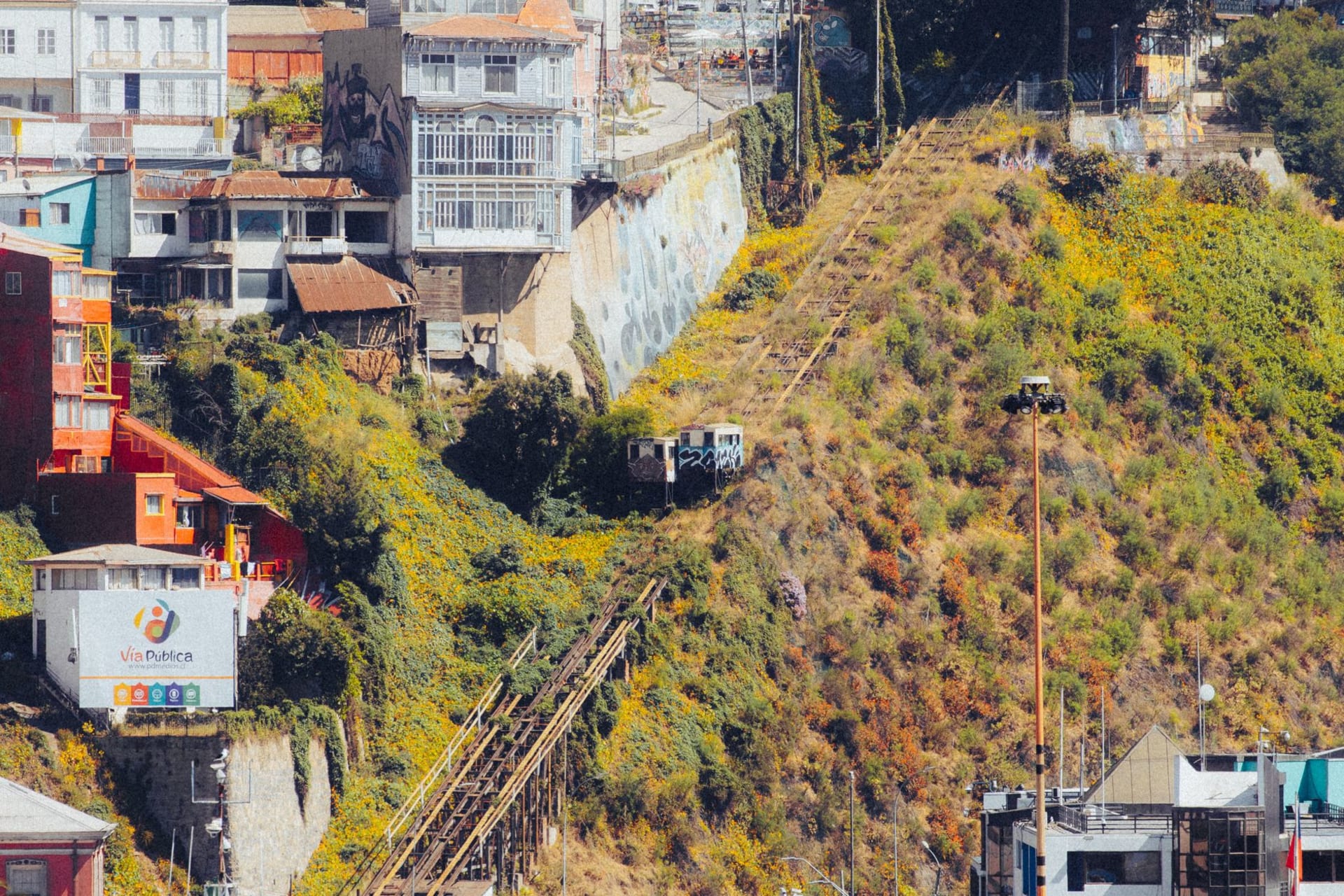
I arrived by bus from Santiago in the early afternoon, and the city revealed itself the way good cities always do — gradually, then all at once. The highway drops you into the flat port district, all container terminals and industrial grime, and for a moment you wonder if the hype was misplaced. Then you take an ascensor — one of Valparaíso’s ancient funicular elevators, lurching and creaking up the hillside — and the city opens like a hand releasing a fist. From Cerro Alegre, every direction is color. Turquoise houses with orange trim. A Boa Mistura mural three stories tall. Laundry lines strung between buildings painted the color of sea glass.
Valparaíso is the kind of place that resists summary because it is genuinely different on every hill. Cerro Alegre and Cerro Concepción are the postcard hills — cafés, boutique hostels, the kind of street art that ends up in photography books. But cross into Cerro Bellavista and the neighborhood gets quieter, more residential, the art more raw. Keep climbing to Cerro Polanco and you are somewhere few tourists bother to reach, which is its own reward. The city’s famous open-air museum, Museo a Cielo Abierto, lives here — forty murals by Chilean artists painted directly onto the facades of houses that families still live in. It is the least curated art experience I have had anywhere in South America, and therefore one of the best.
The food does not get enough attention. Chorrillana — a pile of fries buried under caramelized onions, beef strips, and fried eggs — is Valparaíso’s dish and it belongs to no other city. The city’s position as Chile’s historic port means its market, Mercado Puerto, still trades in the anarchic, oceanic way of real port markets: congrio colorado pulled from the ice that morning, locos served with mayonnaise the way the old men at the next table have been eating them for forty years. There is a Chilean wine bar on Cerro Alegre called La Vinoteca where I sat for three hours one evening working through a flight of Itata Valley wines and talking to the owner about why Chilean wine is finally becoming interesting again. These are the hours Valparaíso manufactures without effort.
When to go: November through March is summer in the southern hemisphere — warm, dry, the sea shimmering below every viewpoint. January and February bring festivals, including the extraordinary New Year’s Eve fireworks over the bay, one of the largest in South America. Avoid July and August if you are sensitive to cold and drizzle, though the city’s empty-season melancholy has its own appeal.
What most guides get wrong: They treat Valparaíso as a day trip from Santiago. It is not. One night is not enough. Two nights gets you oriented. Three nights is when the city finally starts to feel like yours — when you have a favorite café, a preferred ascensor, a hill you return to just before sunset. The guides also oversell Cerro Alegre at the expense of the less-visited hills. The real Valparaíso is not the one that appears in Instagram search results. It is one funicular ride higher than wherever you are standing right now.