Nurata
"The springs have been running since before the fortress and they'll be running after the tourists are gone."
Nurata sits at the foot of the Nuratau Mountains where the Kyzylkum Desert begins, a position that made it useful for every civilization that moved through Central Asia: as a water source, a garrison, a holy site. Alexander the Great built a citadel here in 327 BCE — the ruined walls are still visible on a rocky hill above town. A mosque was later built around the springs themselves, which have been considered sacred since pre-Islamic times and still run clear and cold year-round, feeding a pool thick with mirror carp that are so accustomed to being fed bread by pilgrims that they surface in expectation when you approach.
It’s an odd layering — Greek military architecture, Islamic sacred hydrology, Soviet-era concrete in the market — and Nurata holds it without particular anxiety.
The Springs and the Fish That Live There
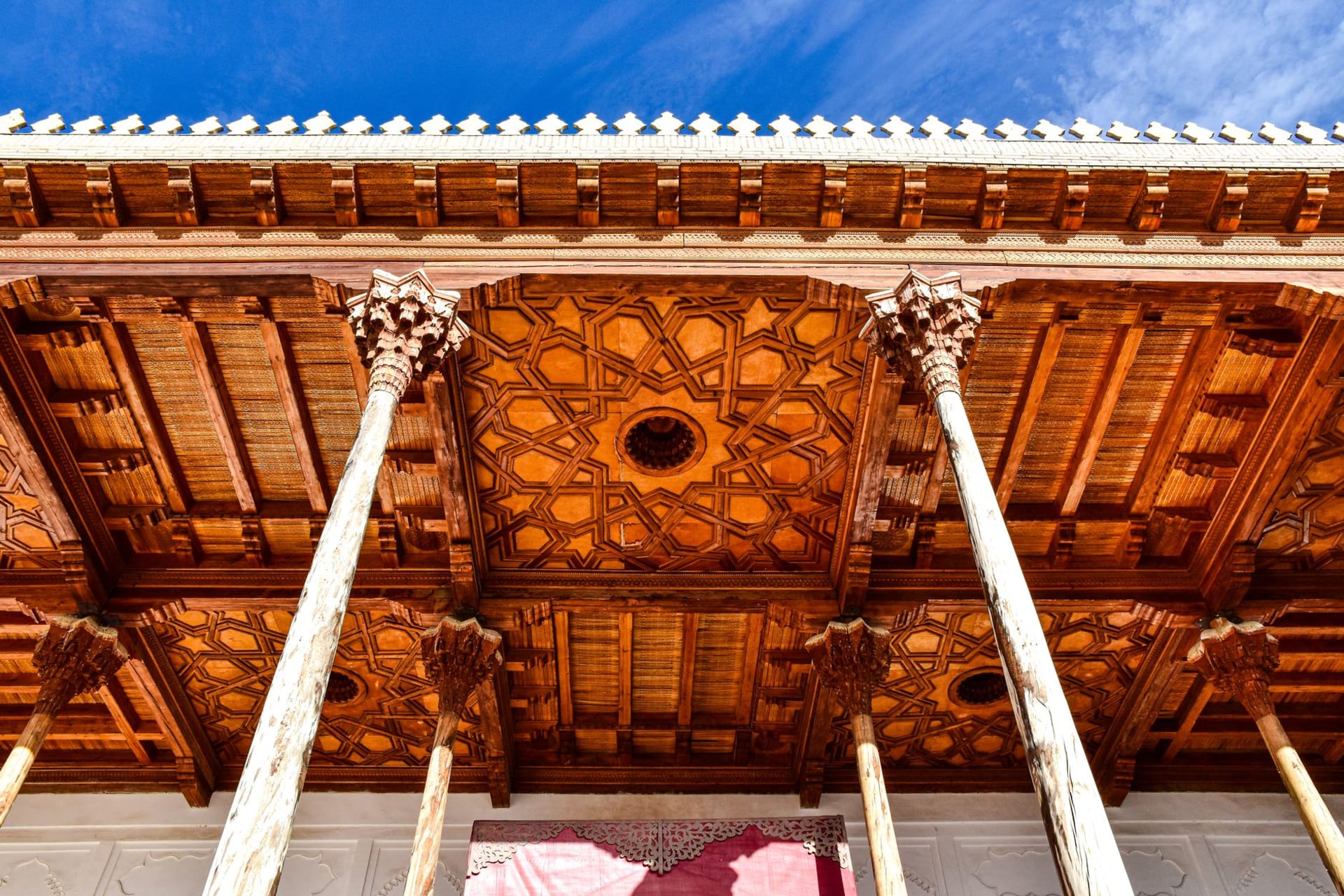
The Chashma springs complex is the center of town in every sense: a mosque courtyard built around a pool fed by underground springs whose source nobody has fully mapped. The carp in the pool are enormous and very old and by convention must not be harmed. They move slowly in the clear water, occasionally surfacing in the shadow of the mosque’s carved wooden iwan when a visitor throws bread.
I bought a small packet of round non bread from a vendor at the entrance and sat at the pool’s edge for a long time. The carp came and went. Two women in headscarves were saying prayers at the far end. A small boy was trying to count the fish and kept losing track. The water made a sound against the stones that was the oldest sound in the whole place.
The Fortress Hill and the View
The Hellenistic citadel on the hill above town is in ruins — eroded mud-brick walls and the outlines of towers — but the climb is worthwhile for the panorama alone: the oasis green of the town below, the flat Kyzylkum beginning immediately to the north and west, the Nuratau ridge to the south. In the late afternoon the desert turns a dark amber and the town’s minaret casts a shadow that points exactly northeast.
There is no interpretation here. No signs in English, no audio guide. The stones are just stones on a hill where something was built by someone a very long time ago. I liked it better for the absence of explanation.
The Yurt Camps on the Steppe
The most specific reason to stay in Nurata rather than passing through is the yurt camp culture on the Kyzylkum steppe twenty minutes outside town. Families of the Nurata region have been offering hospitality in traditional yurts to travelers for decades, and what’s available now ranges from basic (sleeping mats, outdoor fire, family kitchen) to modest-comfortable (proper beds, a generator for the evening). The experience is not wilderness isolation — you’re aware of being a paying guest, and the dynamics are straightforward — but the steppe itself is genuine, and nights on the steppe have a sky density that the towns don’t.
I had dinner with the family who ran the camp I stayed at: plov, then a lamb broth with dried apricots, then tea and dried fruit that lasted until I was too warm and full to stay awake. The father spoke some Russian, I spoke a little, and we managed about forty minutes of actual conversation about agriculture, about where I was from, about what France looks like, which he had seen in a television documentary.
When to go: Late March through May and September through early November. The steppe is coldest in winter but also has the most dramatic skies. Summer heat on the open desert is manageable in early morning and evening but the midday hours near the springs are the better option then. Spring wildflowers on the Nuratau foothills appear briefly in April and are worth timing for if possible.