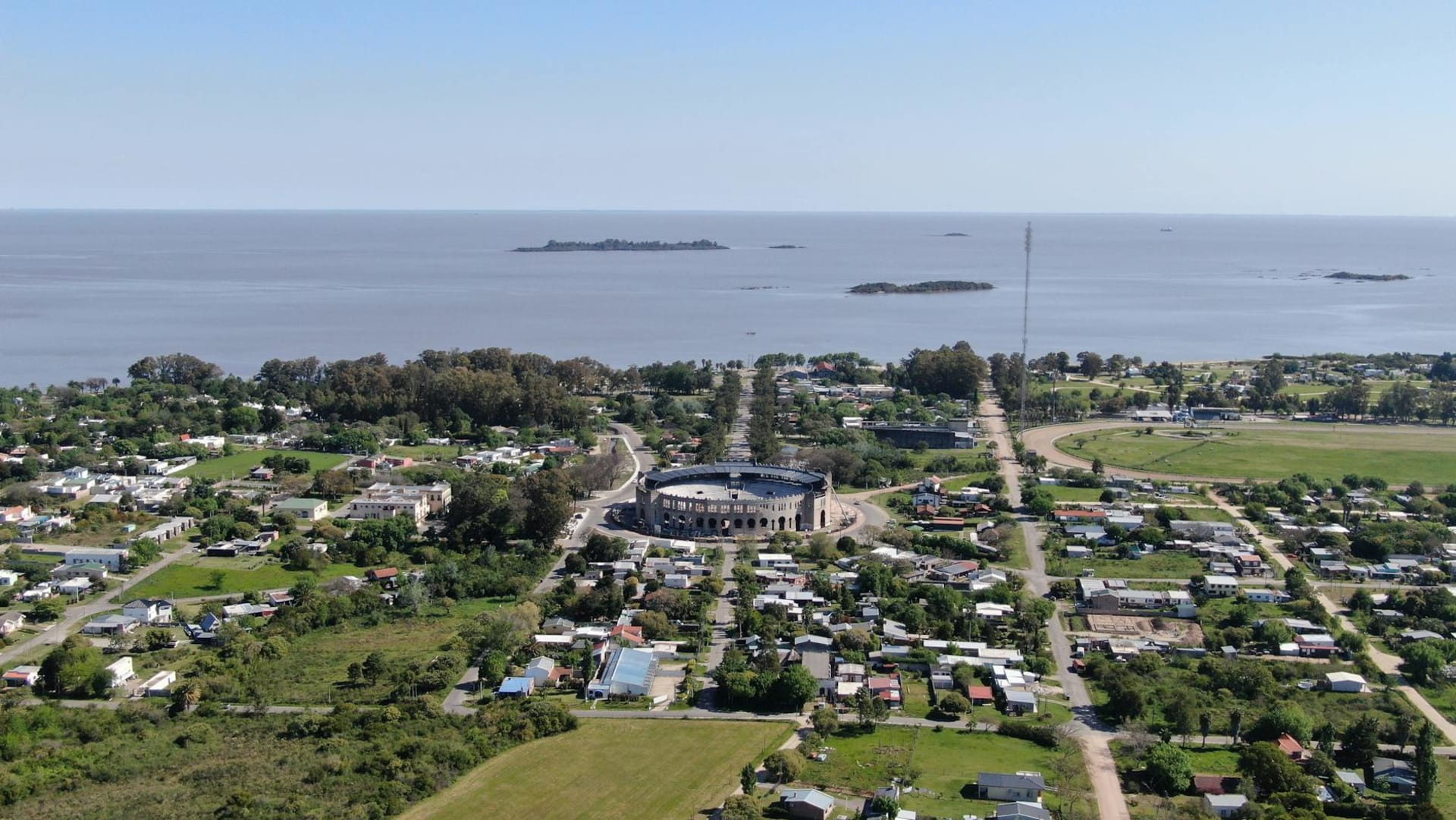
Colonia del Sacramento
"An hour by ferry from Buenos Aires and three hundred years back in time."
A UNESCO Portuguese-Spanish colonial town across from Buenos Aires, where the cobblestones are older than most nations.
The ferry from Buenos Aires takes roughly an hour, which is not enough time to prepare. I stepped off the dock at Colonia del Sacramento expecting a quiet colonial town — I found something closer to a dream that hadn’t been cleaned up.
The Barrio Histórico at Your Feet
The UNESCO historic quarter begins almost immediately past the port, and the first thing that stops you is the street itself. Calle de los Suspiros — the Street of Sighs — is paved in basalt blocks worn smooth by three centuries of boots, hooves, and bare feet. The stones are irregular, almost geological, and they catch the late-afternoon Río de la Plata light in a way that makes everything feel slightly amber-tinted, slightly unreal. The walls on either side are low and thick, whitewashed or painted in faded yellows and blues, with climbing plants doing their slow work over doorways.
I walked the whole length of it twice. Lia photographed the shadows.
The Faro de Colonia, the squat colonial lighthouse at the edge of the barrio, is the obvious landmark — and yes, worth climbing for the view across the river toward Buenos Aires, whose skyline sits on the horizon like a rumor of the present. But what I remember more is the small Museo Portugués tucked behind the Plaza Mayor, its rooms smelling of old wood and iron humidity, displaying anchors and tile fragments and navigational instruments that belonged to people who genuinely didn’t know what was on the other side of things.
Eating and Unexpected Hours
Lunch pulled us into a courtyard restaurant on Calle del Comercio — I ordered a chivito, Uruguay’s answer to the world’s question of what to do with beef, egg, ham, and olives between bread, and ate it under a lemon tree while cats moved along the top of the wall above us. The river was visible between buildings in thin silver slivers.
The surprise came later, toward dusk. Wandering past the Portón de Campo, the old city gate, I heard live guitar coming from an unmarked door. Not performative, not tourist-facing — just a man practicing, the sound falling out into the street like it had nowhere better to be. We stood there for ten minutes without speaking.
Arriving and Leaving
Colonia is small enough that a single afternoon reaches its edges. Most people cross from Buenos Aires as a day trip, which works, though staying overnight lets you have the cobblestones at eight in the morning when the tour groups haven’t arrived and the light is still low and flat off the water.
When to go: March through May brings warm days without summer crowds, and the river light in autumn has a particular quality — golden and slightly diffuse — that suits the place exactly. December and January are busy; avoid them if you want the streets to yourself.