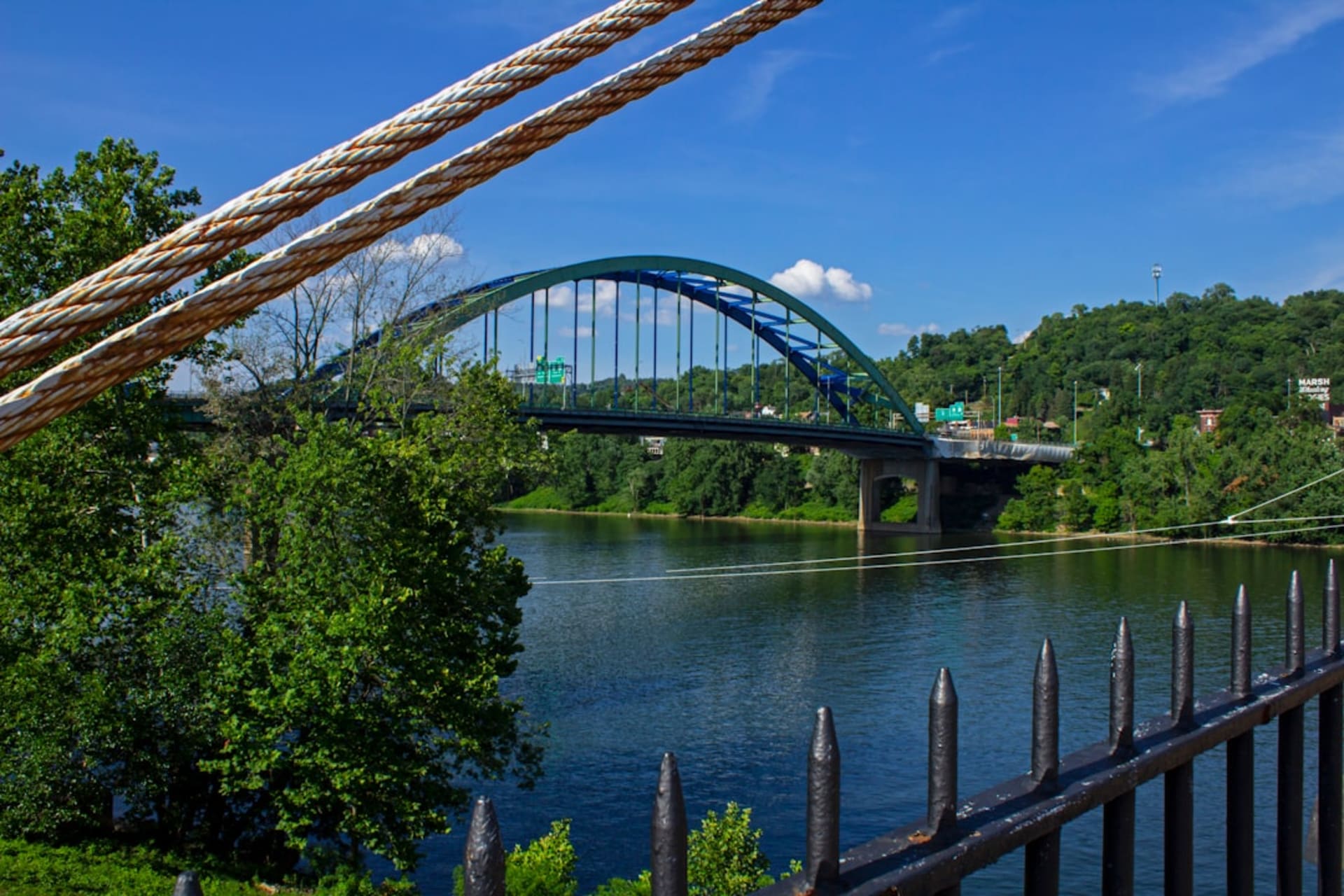
An Ohio River town of Victorian storefronts and cast-iron facades that briefly served as West Virginia's first state capital and never quite got over its own grandeur. I spent an afternoon just looking up at the cornices on Main Street.
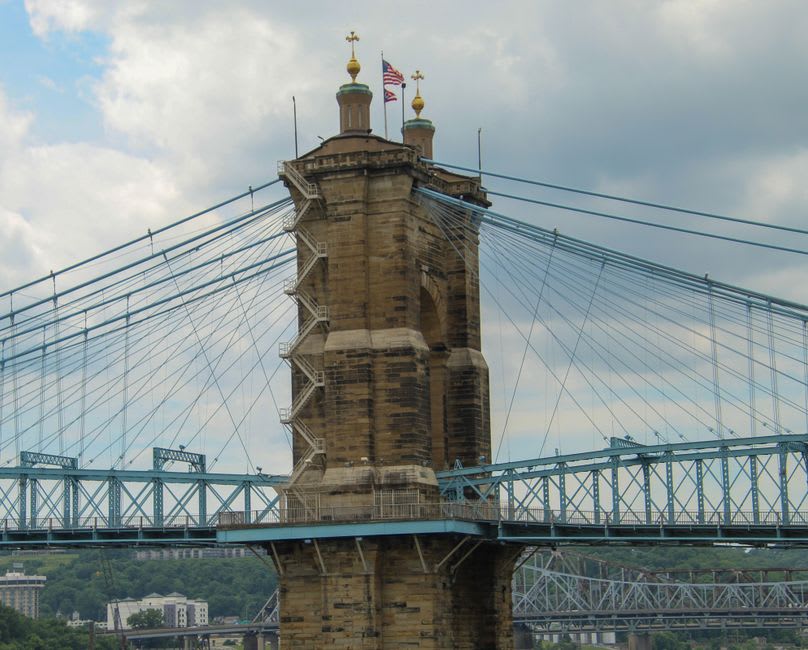
Wheeling has the bones of a city that expected to become something enormous and then quietly didn’t, and there’s a particular pleasure in walking streets built for that ambition. I crossed into town on the Wheeling Suspension Bridge, a wrought-iron span thrown across the Ohio River in 1849 that was, for a few years, the longest suspension bridge in the world — it still carries traffic today, the deck flexing faintly underfoot as trucks roll over it, which felt like it shouldn’t be legal and somehow was reassuring anyway. On the far bank, downtown rises in ornate brick and sandstone, cornices and cast-iron columns from an era when this was one of the wealthiest cities per capita in the country.
Main Street and the Centre Market
The heart of old Wheeling is Main Street and the twin market houses of Centre Market, a pair of long brick sheds that have anchored trade here since the 1850s. I wandered through on a Saturday when a handful of vendors had set up inside — local honey, a butcher stall, secondhand books — and the light coming through the high arched windows made the whole place feel like a chapel for commerce. Around the market, the Victorian storefronts of the historic district run for blocks, their upper floors still carrying the pressed-tin and stone detailing of Wheeling’s Gilded Age boom, when the city briefly served as West Virginia’s first state capital before Charleston took over.
Wheeling Island and Oglebay
Across the suspension bridge from downtown sits Wheeling Island, a flat residential neighborhood squeezed onto a strip of land in the river, its streets of modest houses giving way abruptly to a casino and racetrack at the island’s northern end — an odd juxtaposition of front porches and slot machine lights that I found weirdly endearing. On the other side of the city, Oglebay Park sprawls over seventeen hundred acres of hills that once belonged to a single wealthy family and now hold a golf course, a small zoo, and a mansion museum. I drove up there at dusk mostly for the view back over the Ohio Valley, the smokestacks and church steeples of Wheeling laid out below in the fading light.
Getting There
Wheeling has its own small airport but most travelers fly into Pittsburgh International (PIT), about an hour and fifteen minutes northeast by car on I-70. From Washington, D.C., it’s roughly a four-hour drive west. A car is essential for getting around — the historic district, Wheeling Island, and Oglebay Park are spread out enough that you’ll want your own transportation between them.
Keep exploring
More of West Virginia