Bennington
"Bennington measures itself in centuries, not seasons, and it shows in every clapboard wall."
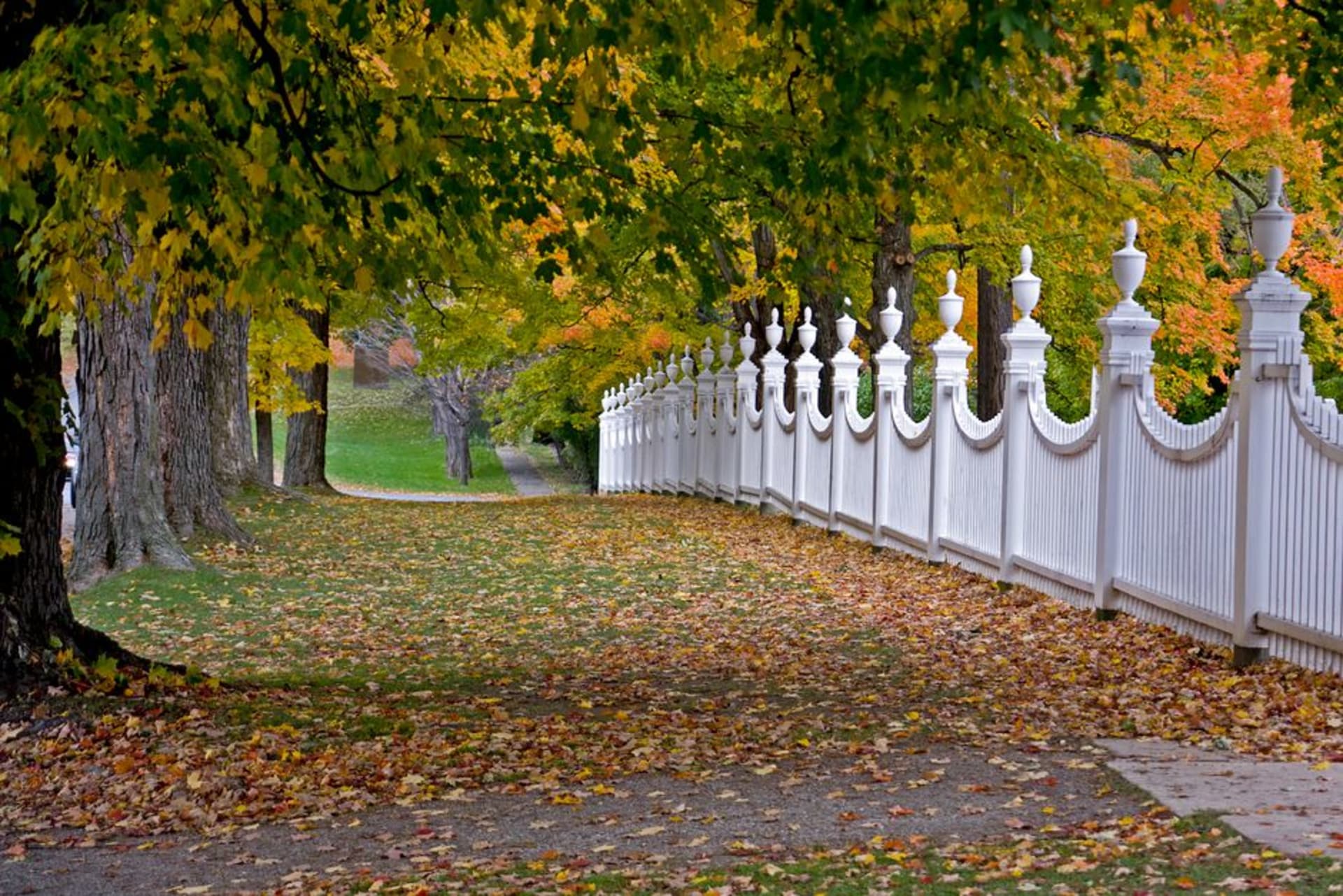
A monument taller than I expected, a poet's grave I almost walked past without noticing, and white clapboard houses so precise they looked painted onto the hillside. Bennington snuck up on me the way the best small towns do — quietly, and then all at once.
I saw the Bennington Battle Monument before I saw the town itself, a gray stone needle poking up over the tree line as I came down Route 7A, and for a while I just drove toward it without really knowing what it was. Three hundred and six feet of dolomite obelisk, built to mark a Revolutionary War battle that technically happened just over the border in New York, it dominates the skyline of this southwestern Vermont town in a way that feels almost accidental, like the monument arrived first and the town grew up around the idea of it. I climbed the elevator to the observation deck on a clear afternoon and could see three states from up there — Vermont, New York, Massachusetts — the Green Mountains rolling off in one direction and farmland flattening out in the other.
Old Bennington’s white houses and Robert Frost’s grave
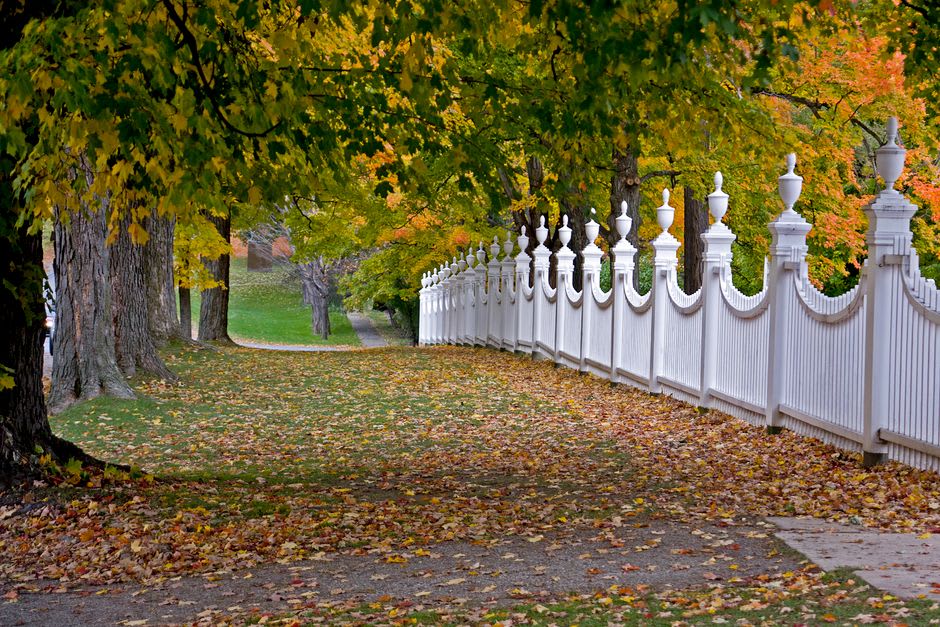
Down the hill from the monument sits Old Bennington, a cluster of Federal and Greek Revival houses so uniformly white and so carefully kept that walking through felt like stepping into a historical society’s fever dream, except every one of these houses is still lived in. I parked near the Old First Church, a handsome 1806 meetinghouse, and wandered into the cemetery behind it almost by accident. That’s where I found Robert Frost’s grave — a flat stone reading “I had a lover’s quarrel with the world,” which stopped me cold. I stood there longer than I meant to, in the kind of hush that old New England burying grounds seem to generate on their own, headstones leaning at odd angles under maples that were just starting to turn.
Grandma Moses and a college that doesn’t sit still
The Bennington Museum surprised me — I’d gone in expecting local-history dioramas and instead found a whole room devoted to Grandma Moses, the self-taught painter who spent much of her life nearby and whose flattened, vivid farm scenes felt like they were painted from memory of exactly the hills I’d just driven through. Bennington College, a mile or so up the road, gives the town a different energy entirely: a progressive arts school with a campus of white buildings and a reputation for producing writers and misfits in equal measure. I had a coffee at a shop near the campus where a table of students argued about a film I hadn’t seen, loudly and happily, and it reminded me that this isn’t just a preserved-in-amber colonial town — it’s still arguing with itself.
Getting There
The closest airport with meaningful commercial service is Albany International in New York, about an hour’s drive southwest. From Boston, figure on just under three hours east on Route 9 and various state roads through the Green Mountains — a scenic drive, but a real one, with plenty of two-lane stretches. A car is essential; Bennington’s sights are spread out enough, and Vermont’s rural transit thin enough, that you’ll want your own wheels for the whole visit.
Keep exploring
More of Vermont