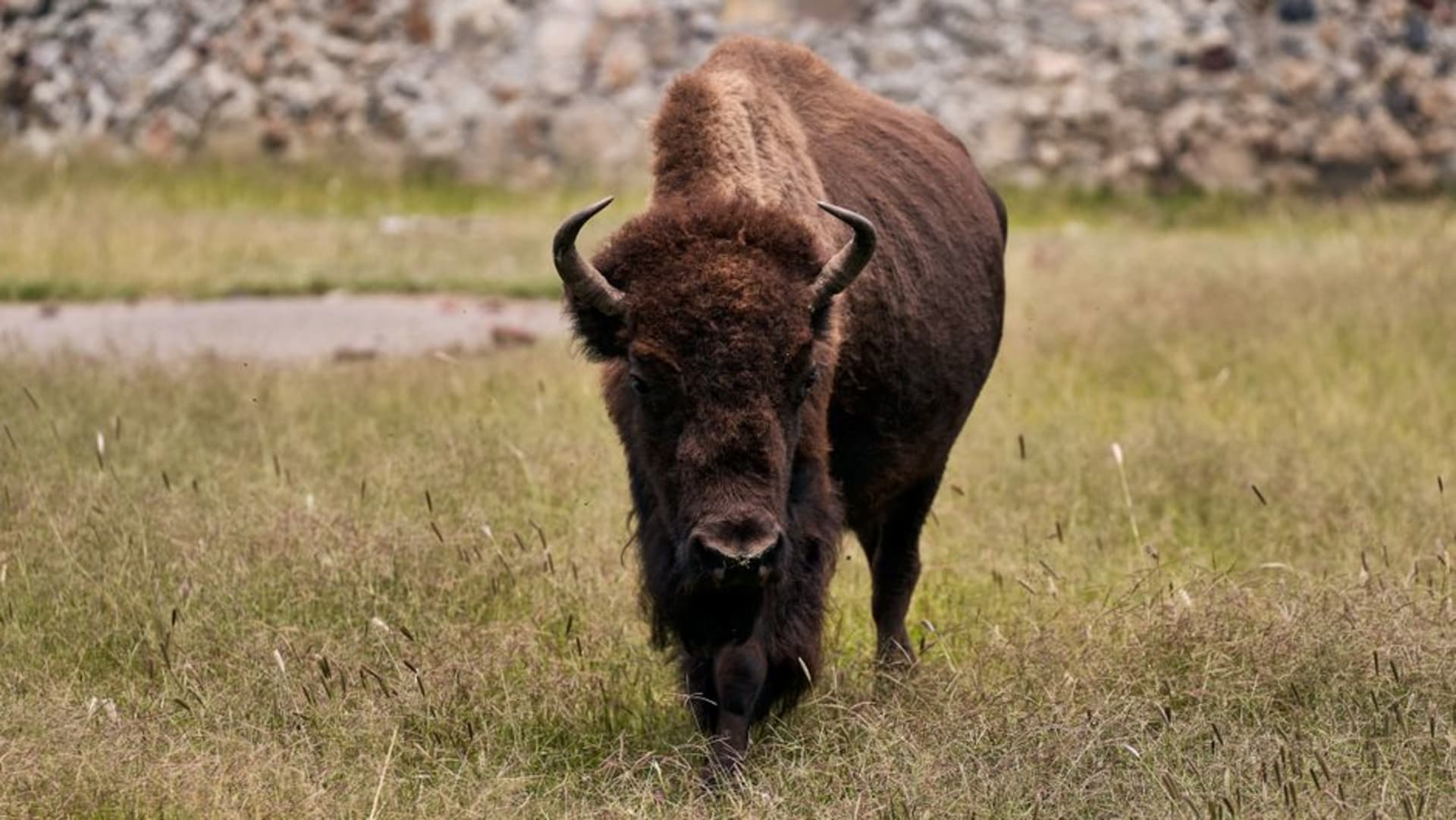
Wind Cave
"The ranger held a ribbon to the cave's mouth and it snapped straight out — the hill was exhaling, and we were about to walk into its lungs."
A South Dakota prairie where bison graze over one of the world's longest caves, a dark labyrinth famous for its rare honeycomb boxwork. Above ground, tallgrass rolls to the horizon; below it, the rock breathes.
The first thing you learn at Wind Cave is that it earned its name honestly. Before we went underground, a ranger crouched at the small natural entrance and held a strip of surveyor’s tape to the opening, and the tape stood out horizontal, ruler-straight, tugged by air rushing out of the ground. When the barometric pressure shifts, the cave inhales and exhales through that fist-sized hole with a force the Lakota knew long before any surveyor did — this is a sacred place, the emergence point in their creation story, and standing there with the hill breathing on my hand, I understood why. Lia laughed, a little nervously, and said it felt like the earth was deciding whether to let us in.
The Boxwork Beneath the Grass
Down the concrete stairs and into the constant fifty-something-degree cool, Wind Cave stops being a novelty and becomes something genuinely strange. This is one of the longest caves on the planet, more than 150 miles of passage mapped so far and folded into an astonishingly small patch of ground, and it is famous for a formation you barely see anywhere else: boxwork. Thin fins of calcite project from the ceilings and walls in a honeycomb of interlocking cells, like a beehive turned to stone, so delicate that the whole ceiling looks knitted. Ninety-five percent of the world’s known boxwork is here, and on the Natural Entrance tour our guide killed the lights for a moment so we could feel the true darkness — total, weightless, the kind your eyes never adjust to.
A Prairie Full of Animals
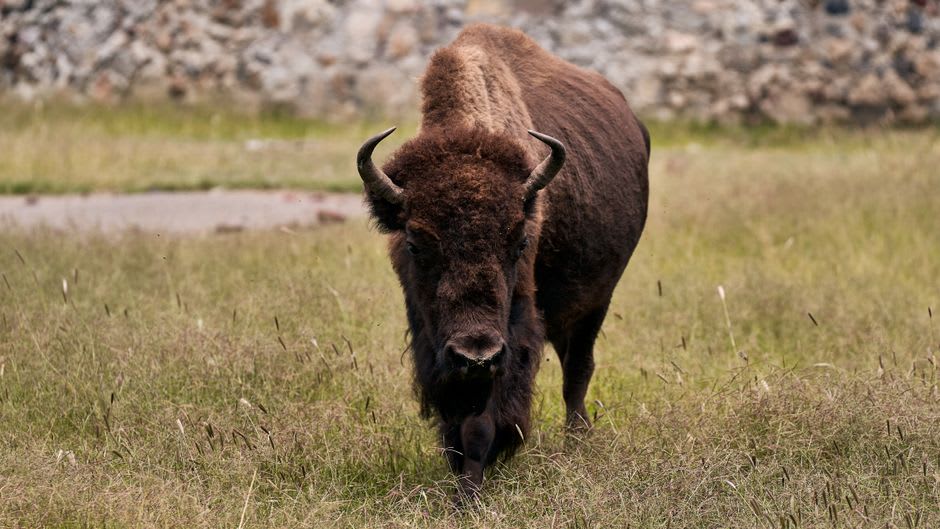
What surprised me most was that the surface is as much the park as the cave. Above the labyrinth lies one of the last intact mixed-grass prairies in the country, a rolling sea of grass fringed with ponderosa pine where the plains meet the Black Hills. We drove the park road at dawn and had to wait while a bison herd ambled across, calves the color of cinnamon trotting to keep up. Pronghorn drifted along the ridgelines, prairie dogs stood sentinel over their towns and barked as we passed, and a coyote trotted the shoulder without a glance our way. It is a small park by western standards, easy to feel you have to yourself, and that intimacy is its charm.
Walking the Upper World
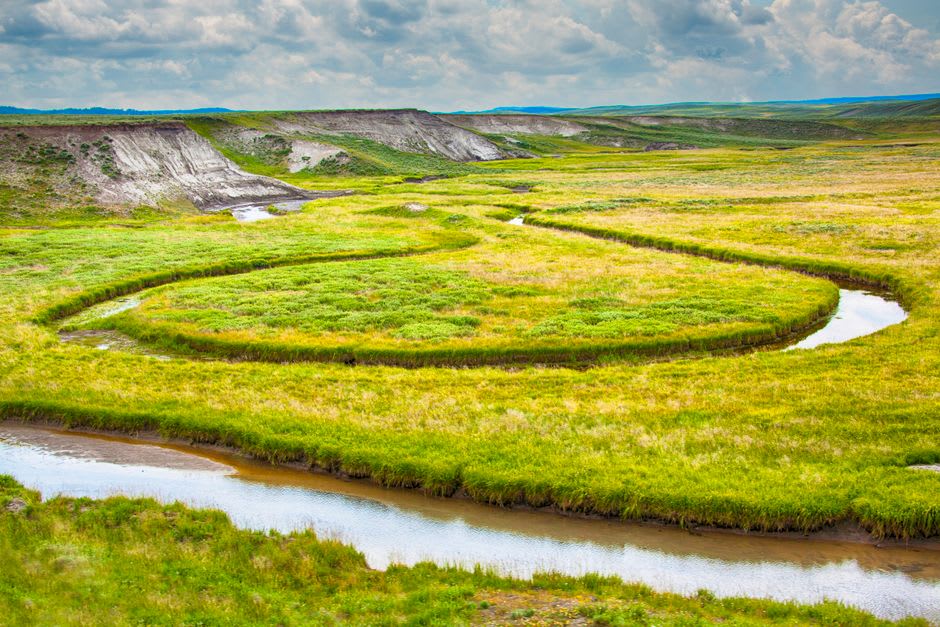
We spent an afternoon on the surface trails, which almost nobody does, and had them entirely to ourselves. The Rankin Ridge loop climbs to a fire lookout with a view across the whole southern Black Hills, the pines giving way to grass in every direction. Lower down, Cold Brook Canyon and the Wind Cave Canyon trail follow dry drainages where deer bed in the shade and the only sound is wind in the grass and the occasional meadowlark. Late in the day the light goes long and gold, the boxwork forgotten below our feet, and it is hard to believe the busy granite spires and tourist crowds of Custer and Mount Rushmore are only a short drive north.
Getting There
Wind Cave sits in the southern Black Hills of South Dakota, about an hour south of Rapid City, the nearest airport, and just below Custer State Park — the two share a boundary and a wandering bison herd, so pair them. Cave tours run year-round but only by ranger-led ticket bought at the visitor center; in summer they sell out, so arrive early or reserve ahead. Spring and autumn are ideal above ground, with comfortable temperatures and animals on the move; the cave itself stays the same cool temperature every day of the year, so bring a layer whatever the season.
Keep exploring
More of South Dakota