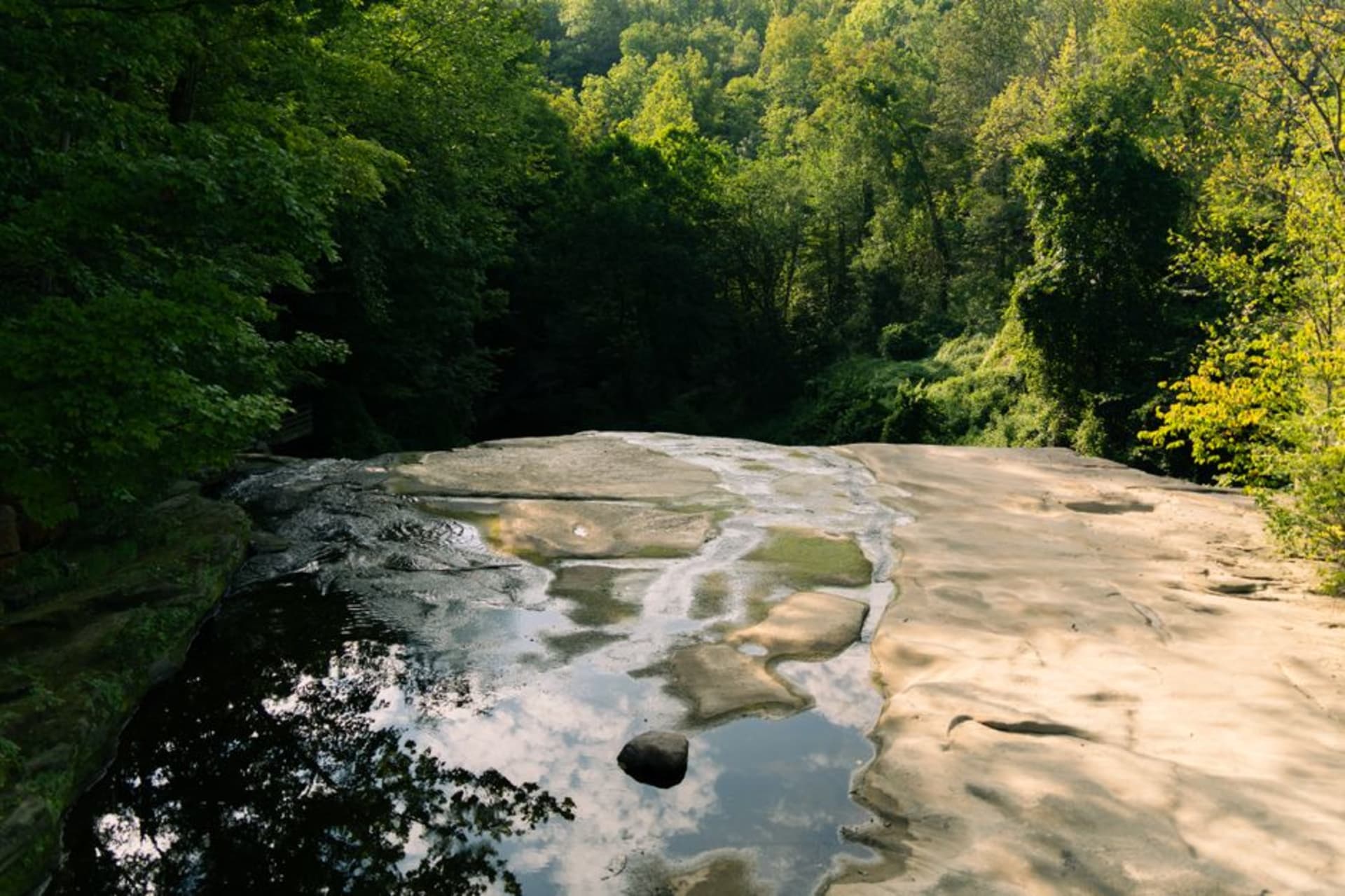
An unlikely national park tucked between Cleveland and Akron, where a once-burning river now runs clear through a valley of waterfalls, farm fields and an old canal towpath. A place of blue herons, a scenic railway and quiet redemption. Proof that land can be given a second life.
I had read, before we came, that this river once caught fire — that the Cuyahoga was so thick with oil and waste in 1969 that it burned, and the shame of it helped write America’s clean-water laws. So I arrived expecting something scarred. Instead Lia and I walked out onto the towpath at dawn to find a great blue heron standing motionless in clear shallows, mist lifting off the water, a freight of birdsong in the sycamores. “This is the burning river?” Lia said. It was. There may be no better argument anywhere for the idea that a ruined place can be brought back.
Brandywine Falls
We came for the waterfall and it did not disappoint. Brandywine Falls drops sixty feet over tiers of Berea sandstone and Bedford shale, a bridal veil of water that you reach by a boardwalk winding down through hemlock and damp fern. We arrived early enough to have it nearly to ourselves, just the roar and the cool breath coming off the plunge pool. Lia stood at the lower platform with her eyes closed for a long minute. Later the crowds came, families and strollers and a wedding party posing on the boardwalk, and I didn’t mind — there is something right about a place this lovely being loved by everyone.
The towpath and the canal
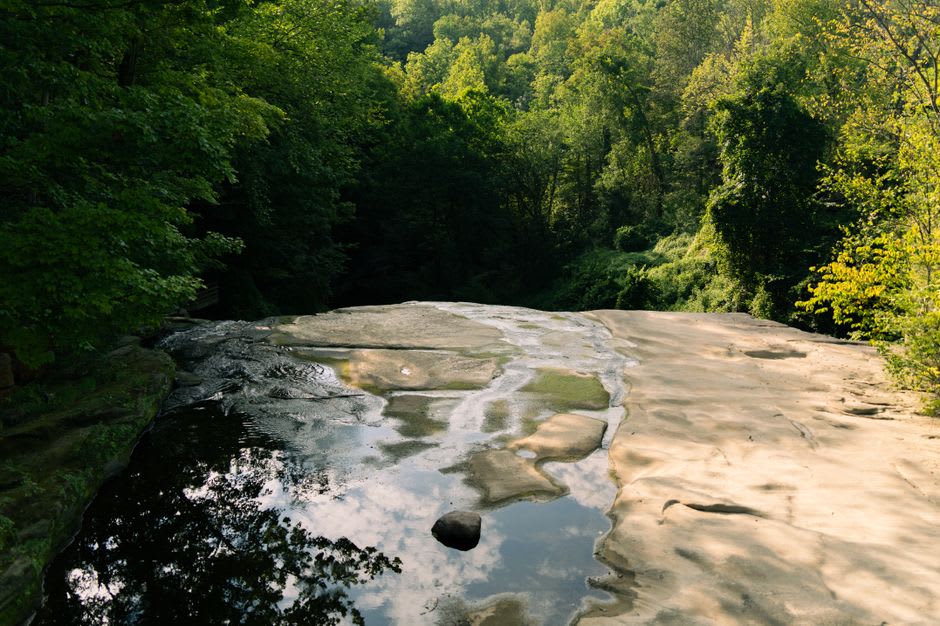
The Ohio and Erie Canal once carried boats between the lake and the river, mules plodding along a towpath beside the water. The mules are gone but the towpath remains, twenty miles of flat crushed limestone that we rode by rented bike, past locks and lock-keepers’ houses and long reflective stretches of the old canal, still and green. The genius of this valley is the Towpath Railway: you can ride the historic scenic train one way and flag it down to carry you and your bike back. We pedaled south all morning, ate lunch in Peninsula, and let the train do the return while our legs recovered and the valley slid by the window.
Farms, ledges and slow country
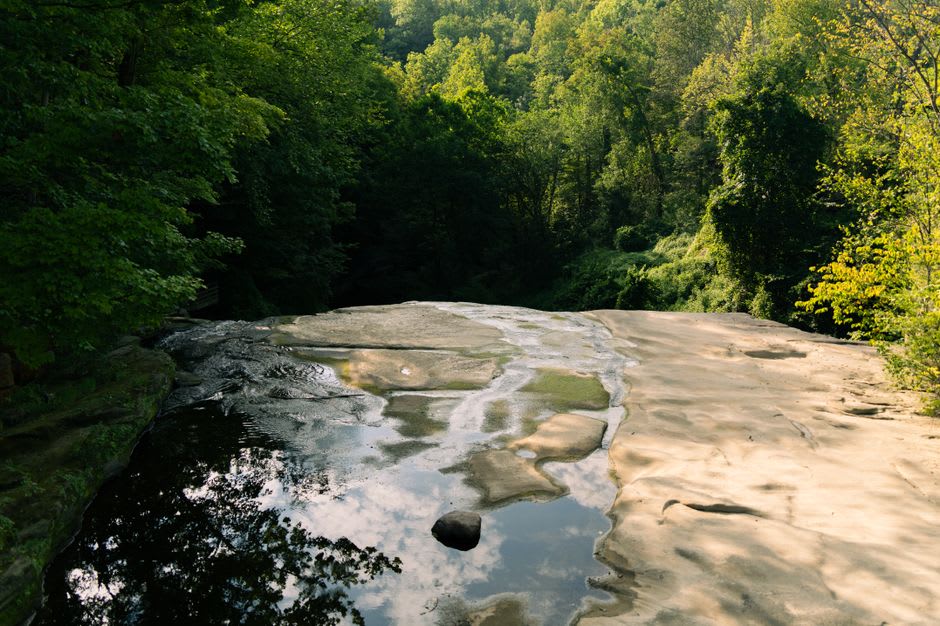
Between the famous stops the valley keeps its best secret: it is quietly rural. We drove narrow lanes past working farms that the park keeps in cultivation, bought sweet corn and honey from a roadside stand, and hiked the Ledges trail, where you thread between towering blocks of split sandstone furred with moss, cool even at midday. From the Ledges overlook the whole valley opens westward, and we timed it for sunset, sharing the rock shelf with a dozen strangers who had all had the same good idea. Nobody spoke much. The light did the talking.
Getting There
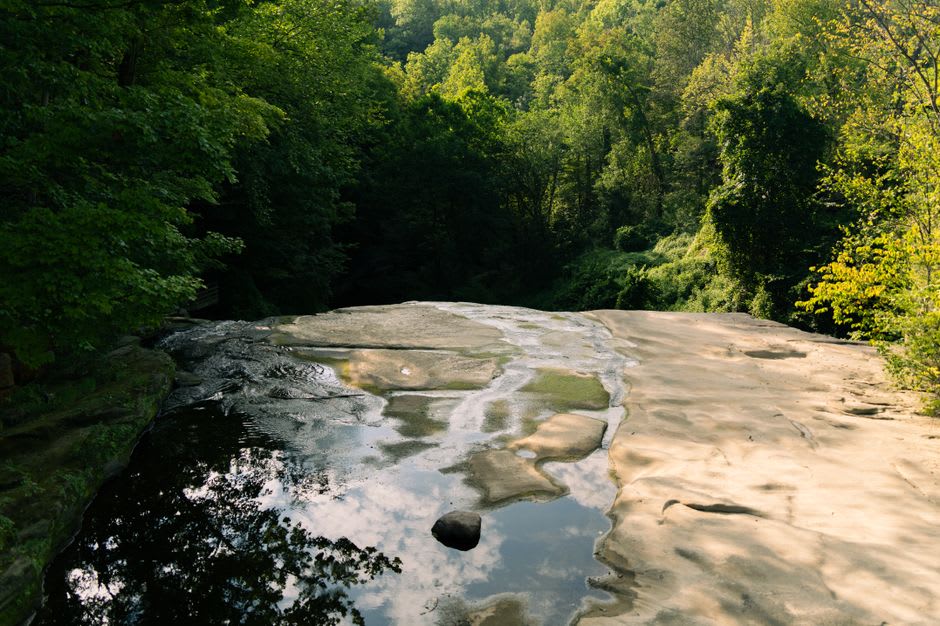
Cuyahoga Valley sits squarely between Cleveland and Akron in northeast Ohio, making it one of the most accessible national parks in the country. Cleveland Hopkins airport is about half an hour away, and the park is threaded by I-77 and I-271. Uniquely, you can arrive by rail: the Cuyahoga Valley Scenic Railroad runs the length of the valley with several stops, and its bike-aboard program lets cyclists ride one way and train back. Entry is free — there is no gate — so simply pick a trailhead. Peninsula and Boston Mill both make good starting points with visitor facilities.
Keep exploring
More of Ohio