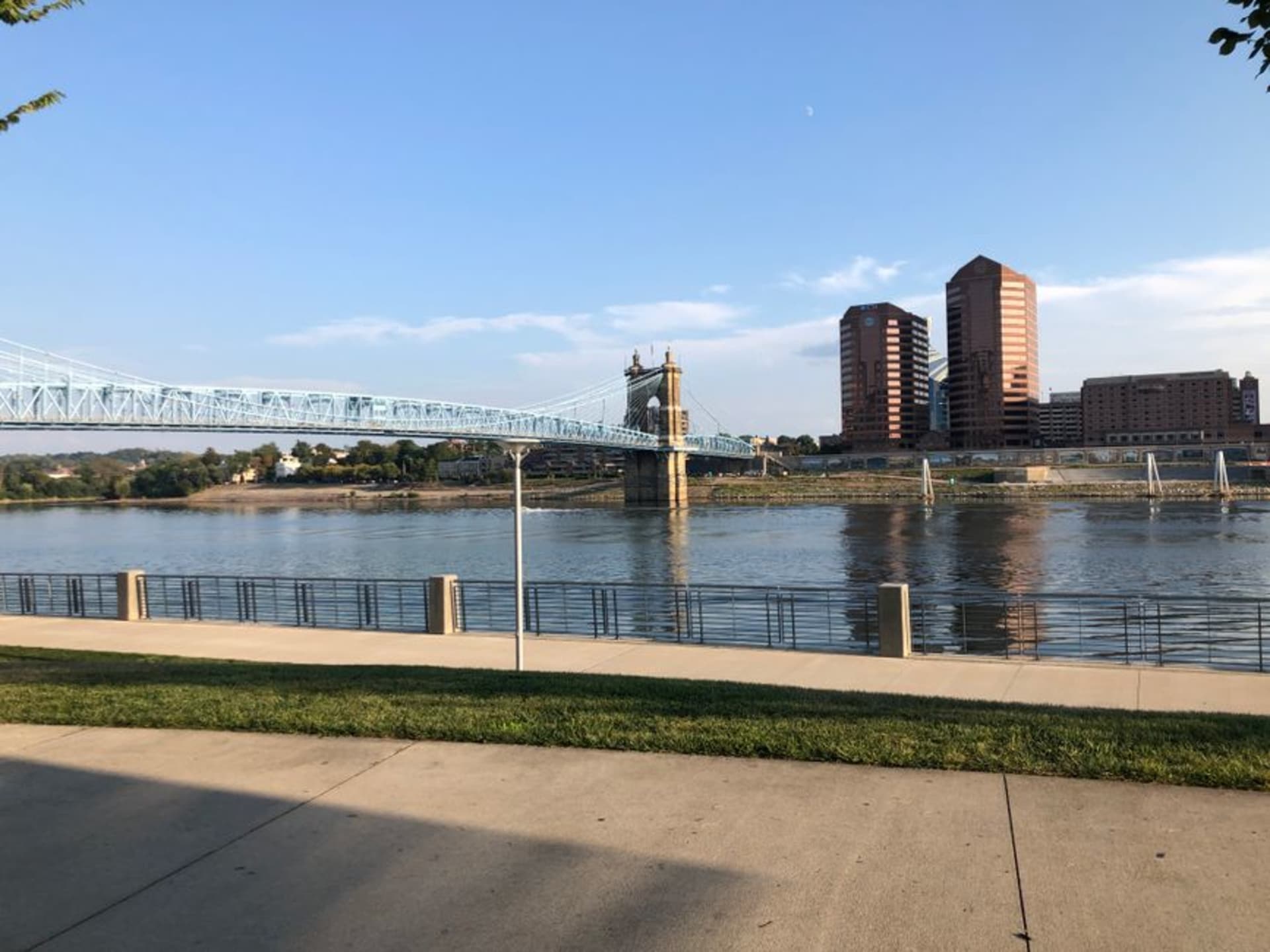
Cincinnati
"The river was brown and slow and the whole city seemed to lean over it, watching."
An Ohio river city built on seven hills, where cast-iron staircases climb between brick tenements and grand suspension bridges leap the water to Kentucky. Cincinnati feels older and stranger than its size suggests, a place of chili on spaghetti and porches hung over ravines. We arrived skeptical and left quietly charmed.
We hadn’t planned to stop in Cincinnati at all — it was meant to be a night’s rest between somewhere and somewhere else — but by the second morning Lia was suggesting we stay another day. The city surprised us. It rose out of the Ohio River in tiers of red brick, its hillsides so steep that public staircases climbed where streets couldn’t, and its downtown held onto grand old buildings that bigger cities would have torn down. Our host, a retired teacher, handed us a hand-drawn map and said, “Walk Over-the-Rhine before you decide anything.” So we did.
Over-the-Rhine and its ghosts
Over-the-Rhine is one of the largest districts of Italianate architecture in America, a neighborhood built by German immigrants and then left to sleep for most of a century. Walking it now is to move between the restored and the ruined block by block — a gleaming coffee roaster beside a shuttered tenement with trees growing from its cornice. We found Findlay Market, the city’s old public market, and ate goetta, a fried oatmeal-and-pork patty that has no business being as good as it is. An old vendor slipped Lia an extra pickle and told us the neighborhood had nearly died and was only now, carefully, coming back.
The Roebling Bridge and the river
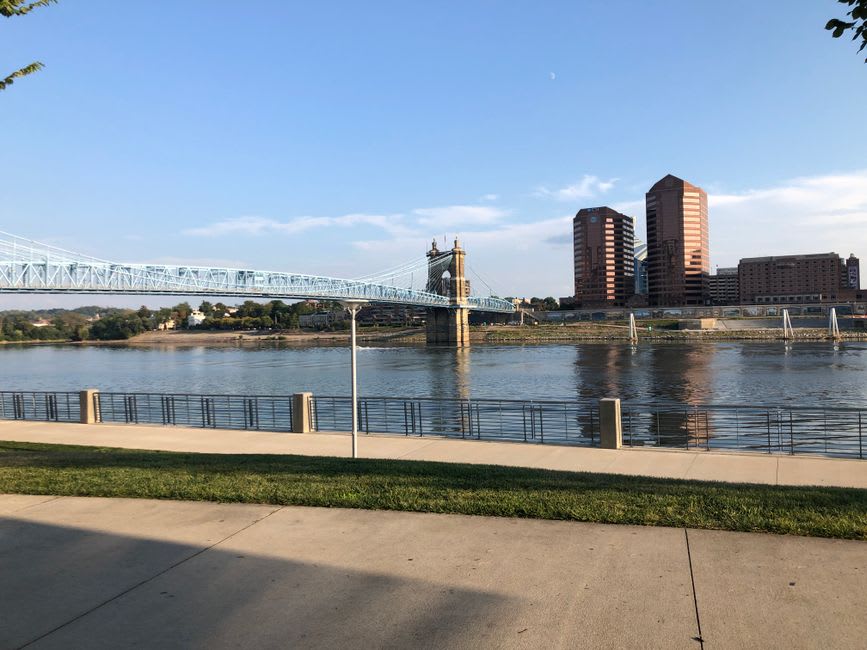
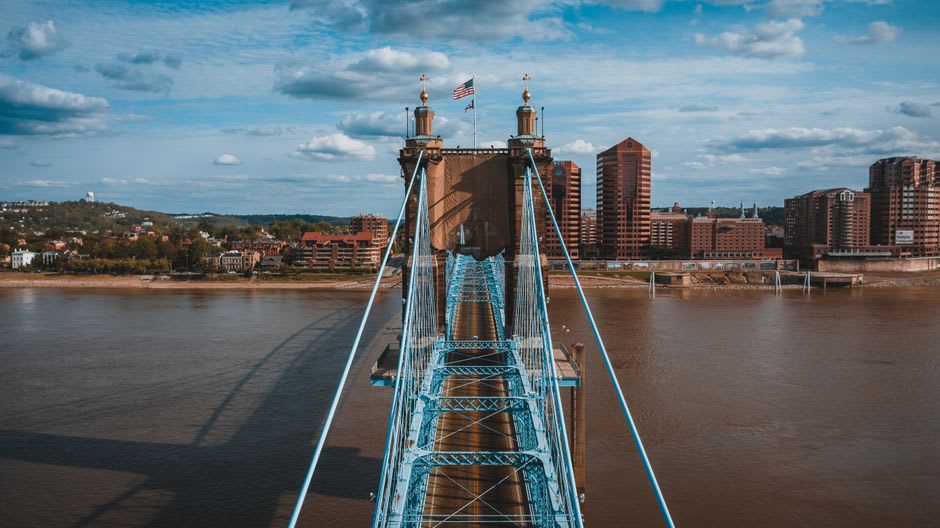
In the late afternoon we walked down to the river and out onto the John A. Roebling Suspension Bridge, the elegant blue span that was a prototype for the man’s later work in Brooklyn. Its deck hums and sways faintly under traffic, and halfway across, suspended between Ohio and Kentucky, we stopped to watch a coal barge push slowly upstream. Lia leaned on the rail and said the river looked like it had been flowing forever, indifferent to all of us, and she was right. On the Kentucky side we found a riverside park and turned back to look at Cincinnati stacked on its hills, gold in the low sun.
Chili, and a city’s odd appetites
On our last night we surrendered to Cincinnati chili, which locals had described with a defensiveness that told us it must be strange. It is: a thin, cinnamon-spiced meat sauce ladled over spaghetti and buried under a mountain of shredded cheddar. Lia raised an eyebrow at the first forkful and then quietly finished the whole plate. The diner was bright and loud and full of families, and a waitress who’d worked there thirty years told us the recipe came from Macedonian immigrants and that no one outside Cincinnati would ever understand it. We didn’t fully, either. But we understood loving a place enough to defend its oddest habit.
Getting There
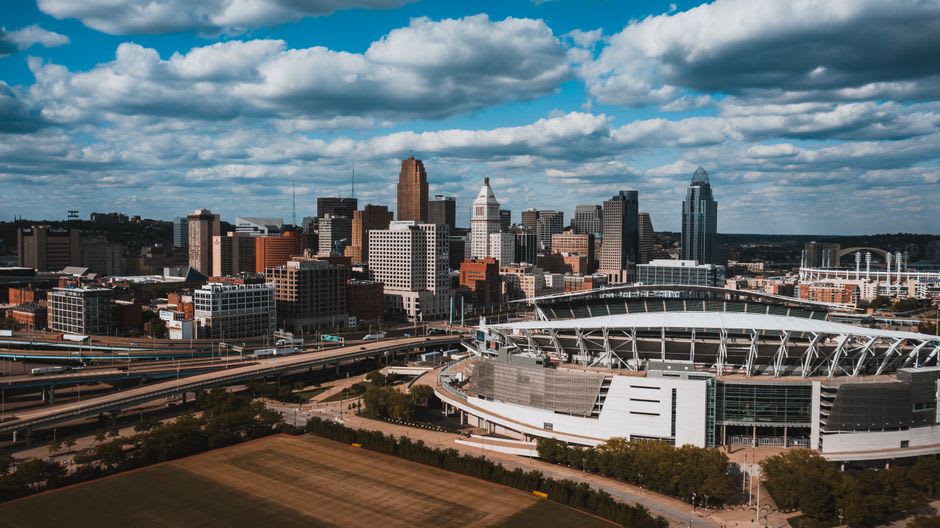
Cincinnati’s airport sits confusingly across the river in Kentucky, a twenty-minute drive from downtown, and most visitors arrive by car — the city is a natural stop on the long interstate runs between the Midwest and the South. Downtown, Over-the-Rhine, and the riverfront link together on foot or via the free-to-ride Bell Connector streetcar, which loops between them all day. The hills, though, are real, and we were grateful more than once for a rideshare up their steepest faces. Spring and autumn are loveliest; summer here is as humid as the river it sits beside.
Keep exploring
More of Ohio