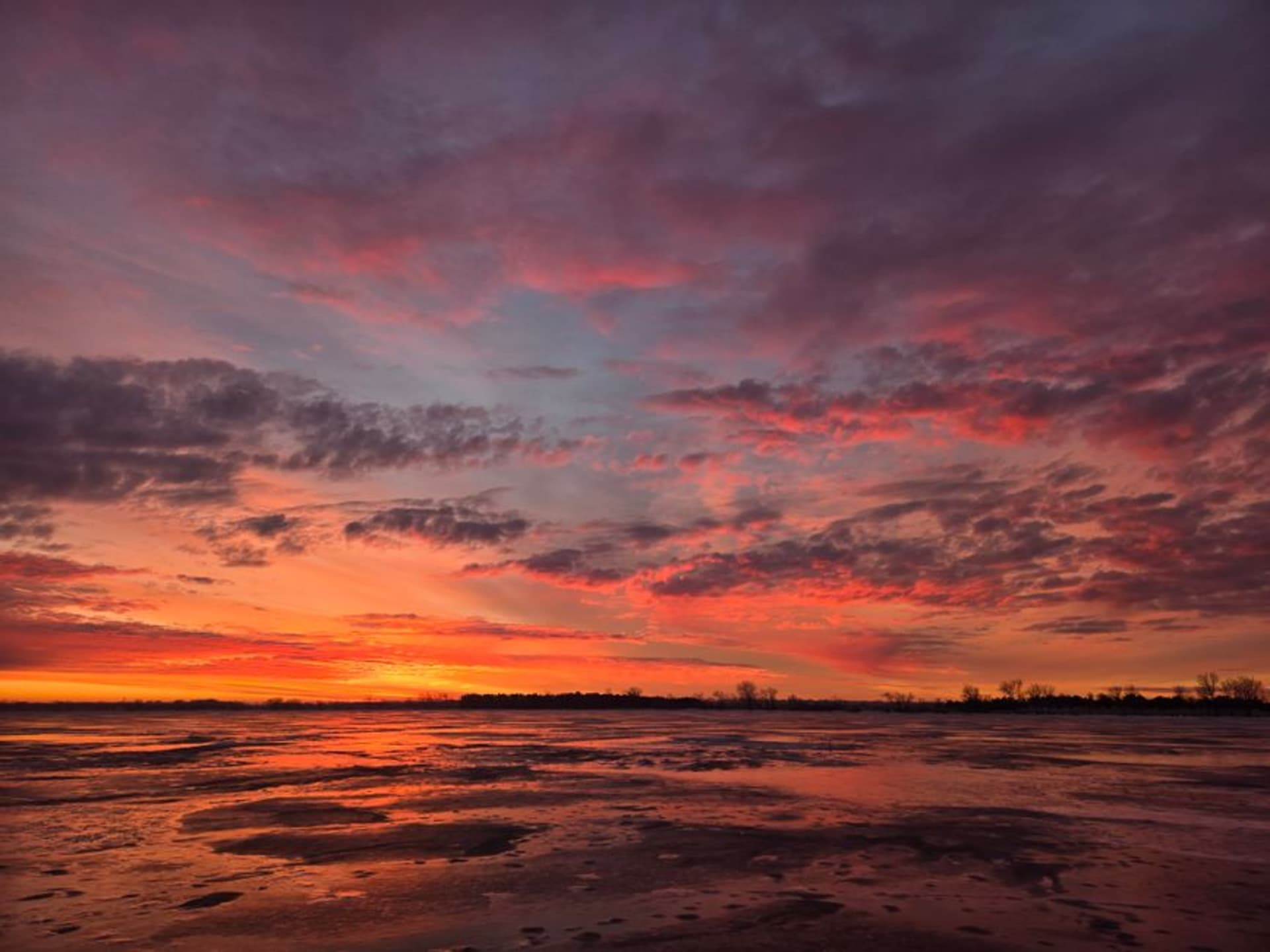
A boomtown at the confluence of the Missouri and Yellowstone rivers where oil money built glossy new hotels next to century-old grain elevators. Lia and I came for the fur-trade history at Fort Union and stayed to watch the sun set twice — once over the rivers, once over a horizon of flare stacks.
Williston announces itself long before you arrive — flare stacks burning orange against the dusk, a skyline of grain elevators and new hotel towers that didn’t exist fifteen years ago. This is Bakken country, ground zero for the shale oil boom that turned a sleepy railroad town of twelve thousand into a chaotic, overbuilt boomtown and then, slowly, into something more settled. Lia and I checked into a hotel that still smelled faintly of fresh drywall and spent our first evening just driving the edges of town, trying to square the strip malls and man-camps with the quieter, older river town underneath.
Fort Union Trading Post
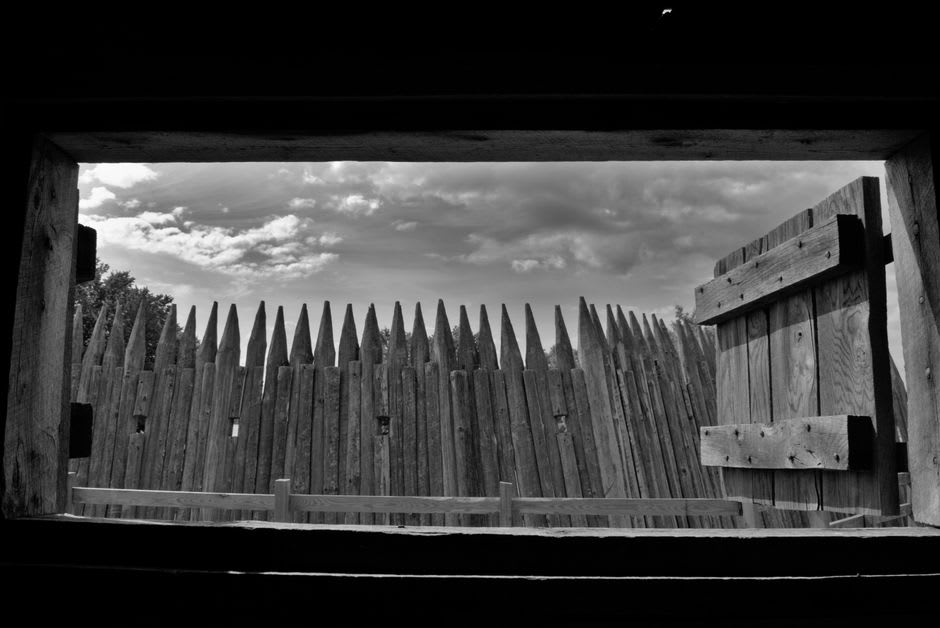
Twenty-five minutes west of town, right where North Dakota gives way to Montana, sits the reconstructed Fort Union Trading Post, once the busiest fur-trading post on the Upper Missouri, where Assiniboine, Crow, and Blackfeet traders exchanged buffalo robes for beads, blankets, and guns through most of the nineteenth century. The whitewashed palisade and bastions have been rebuilt on the original foundations, and a ranger walked us through the trade house where the actual ledger books once recorded transactions in beaver pelts. Standing on the bluff above the river, it wasn’t hard to imagine keelboats working their way upstream from St. Louis, a four-month journey for goods that Lia and I could now drive to in half an hour.
Where two rivers meet
Just east of the fort, the Missouri and Yellowstone rivers join at a spot Lewis and Clark camped near in 1805, now preserved as the Fort Buford State Historic Site and confluence overlook. We climbed a short trail to a viewpoint where the two rivers’ currents run visibly side by side before merging, one slightly muddier than the other, and had the whole overlook to ourselves except for a pair of pelicans working the shallows. It’s a quiet, underrated spot — no crowds, no gift shop pressure, just two centuries of American expansion converging in one unglamorous stretch of water.
Getting There
Williston Basin International Airport (XWA) has direct flights from Denver and Minneapolis, making it the easiest way in. By car, it’s about two and a half hours northwest of Dickinson on US-85, or roughly six hours from Billings, Montana. A car is essential for reaching Fort Union and the confluence sites, both well outside town limits.
Keep exploring
More of North Dakota