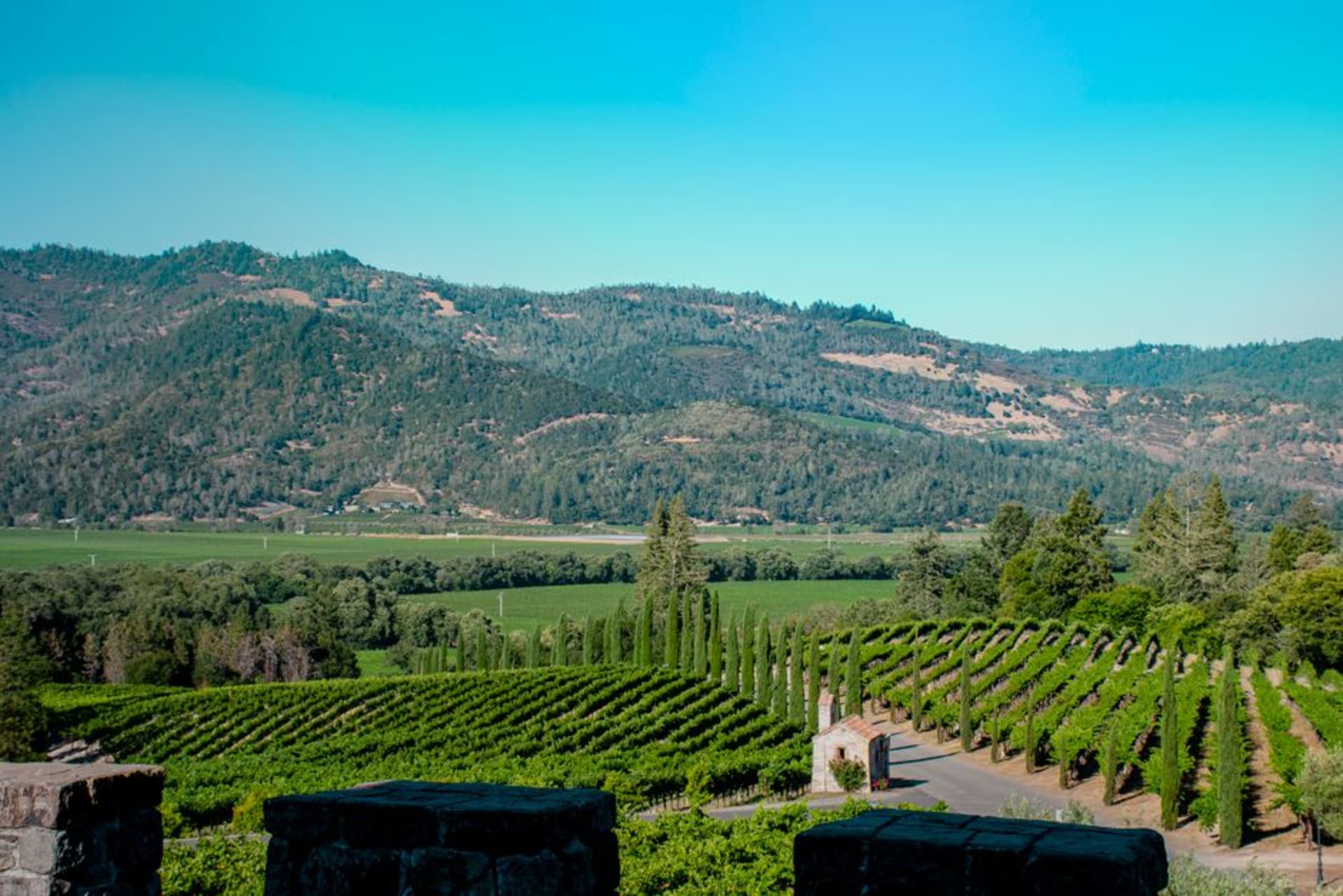
California's most famous wine valley, a long green trough of vineyards, stone cellars and golden hills that turn amber in the dry season. The rows of vines run to the base of the mountains, and the whole place smells of warm earth and crushed grape. Come hungry, come thirsty, and come without a schedule.
After weeks on the foggy coast, Napa hit us like a warm hand on the back. We came over the hills from the west and the valley opened below — vineyards stitched in neat green rows from one range to the other, the light thick and golden, the air suddenly hot and dry and smelling of dust and grape. As a Frenchman I’ll admit I arrived with my arms crossed, ready to find it all a bit theatrical. Lia knew it and teased me for it. But by the second glass, sitting on a terrace with the vines running away toward Mount St. Helena, I had unfolded my arms. Napa isn’t Burgundy and doesn’t pretend to be. It’s its own confident thing.
Down the Silverado Trail Among the Vines
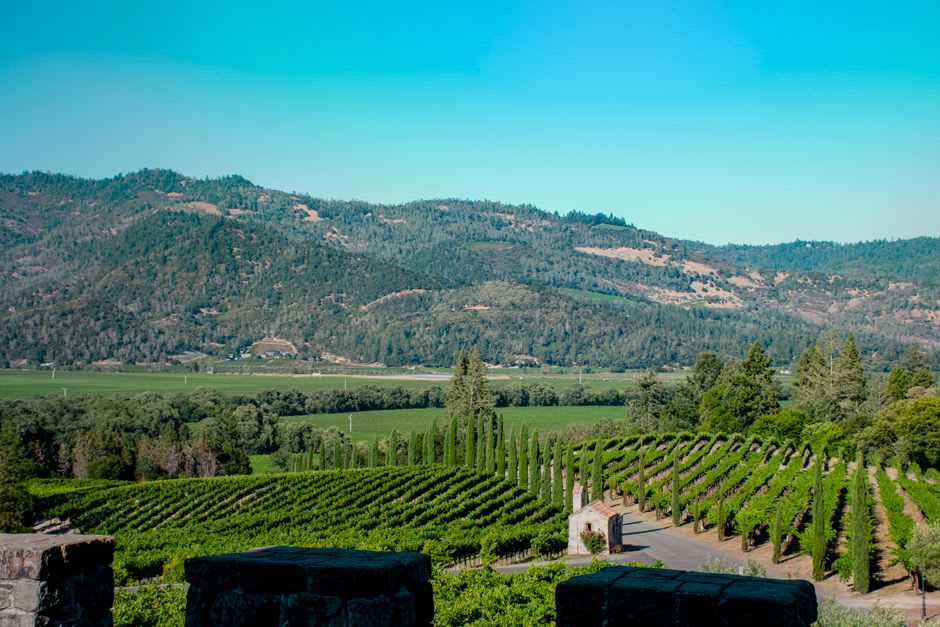
We skipped the crowded main highway and drove the Silverado Trail instead, the quieter road up the valley’s eastern edge, where the tasting rooms are smaller and the traffic thins. The vineyards here run right to the shoulder of the road, and in the late-summer heat the fruit hung heavy and dark on the vines. We stopped at a family-run winery where a man with dirt under his nails poured us his own cabernet and talked about the soil — volcanic, gravelly, the reason the wines taste the way they do. Lia asked good questions; I mostly listened. There’s a real seriousness under Napa’s polish, a genuine craft, and you find it in the small places where the person pouring also drove the tractor.
The Town of Napa and Its Riverfront
The town itself surprised us — we’d expected only vineyards and found an actual city with a life of its own. The Oxbow Public Market became our anchor: a covered hall of butchers, oyster bars, cheese counters and a coffee roaster, where we grazed our way through a long lunch and talked to everyone. Afterward we walked the riverfront downtown, past restored brick buildings and the old mill, the Napa River sliding by brown and slow. Lia bought a wedge of local cheese and a bar of chocolate and we ate them on a bench in the shade. I liked that Napa the town works for a living beyond the wine — that there are dentists and hardware stores and kids on bikes, a real place under the reputation.
Golden Hills and the End of the Day
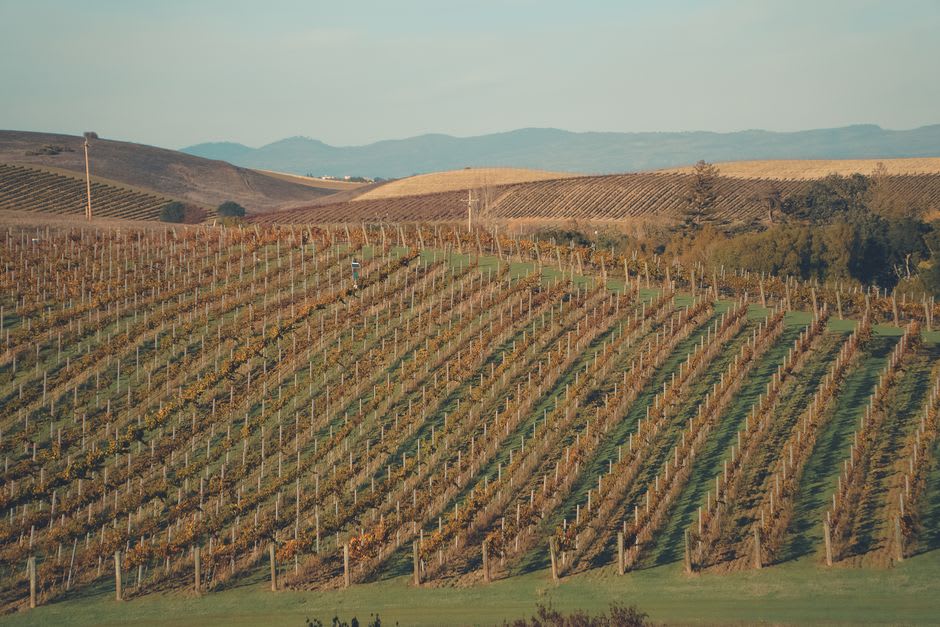
Our last evening we drove up into the hills as the sun went down, following a narrow road until the whole valley lay below us in the amber light. The dry-grass hills that give California its summer color — everyone calls them golden and for once the cliché is exact — rolled away in every direction, dotted with dark oaks. The heat of the day was finally breaking. Lia found a pullout and we sat on the warm hood of the car with a bottle we’d bought that afternoon and no glasses, passing it back and forth like teenagers. Below us the vineyard rows caught the last light and glowed. I’ve had grander views. I’m not sure I’ve had a happier hour.
Getting There
Napa sits about an hour and a half northeast of San Francisco, an easy drive across the bay and up through the town of Napa into the valley. Most visitors fly into San Francisco or Oakland and rent a car, though if you plan to taste seriously you’ll want a designated driver or one of the many valley car services — the roads are patrolled and the pours are generous. The Napa Valley Wine Train offers a slower, boozier way up the valley if driving feels like a chore. Come in late summer or fall for the harvest, but expect real heat; spring brings green hills and mustard flowers between the vines and far thinner crowds.
Keep exploring
More of California