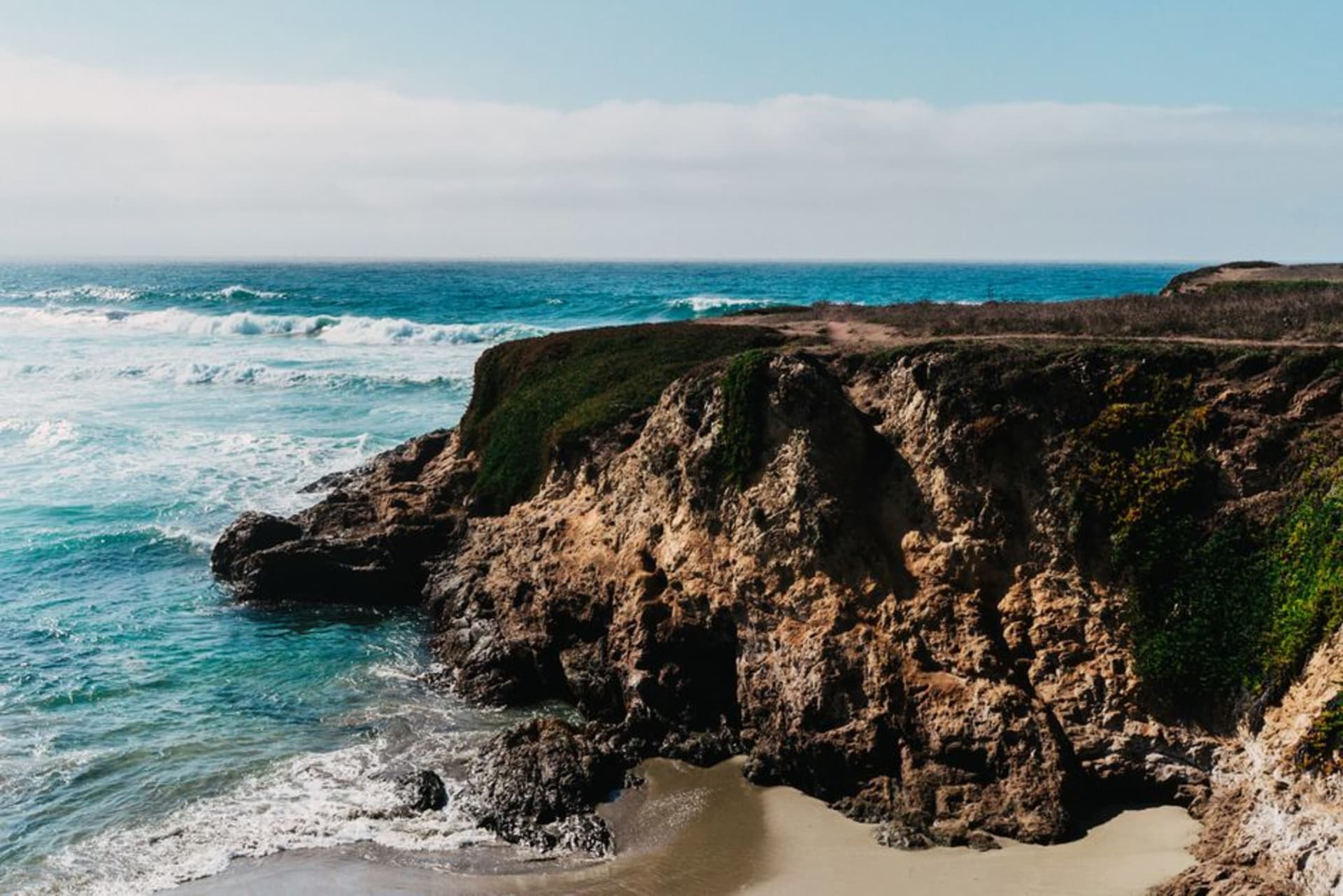
A Victorian village perched on a headland high above the wild Northern California coast, where wooden water towers stand against the fog and the Pacific pounds the sea caves below. It looks like a New England town that drifted west and never left. Come for the salt wind, the wildflowers, and the long grey light.
We reached Mendocino at the end of a long day driving up the coast, and the town appeared out of the fog like something half-remembered — white Victorian houses on a grassy bluff, wooden water towers standing sentinel, and beyond them nothing but the grey Pacific rolling on forever. Lia said it looked like a village that had gotten lost on its way to Maine. She wasn’t wrong; the town was founded by New England lumbermen in the 1850s, and they built the coast they knew. We parked and walked out onto the headland just as the fog thickened, and within minutes the whole village behind us had vanished into white. It was one of the most beautiful things I’ve seen.
The Headland Where the Land Ends
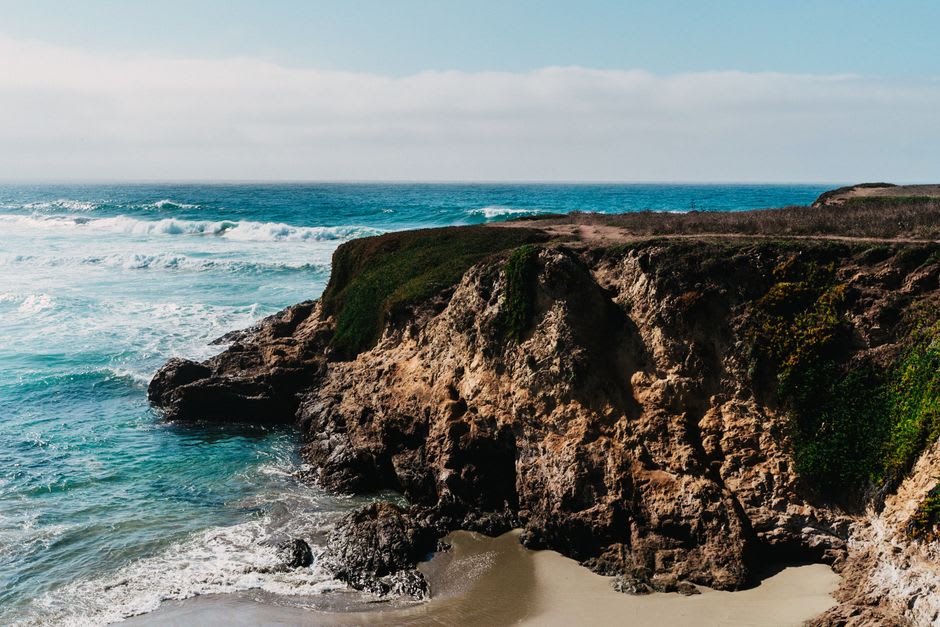
Mendocino Headlands State Park wraps the entire village in wild bluff-top trails, and we spent the first evening simply walking them. The path runs along the very edge, where the ground drops away into churning sea caves and blowholes and the surf detonates against black rock far below. Wildflowers grew in the grass — poppies, sea thrift, things I couldn’t name — bent flat by the wind. Lia leaned into the gusts with her arms out like a kid. A pod of harbor seals hauled out on the rocks below, indifferent to us. There are no railings on most of it, no signs telling you where not to stand, just the honest edge of the continent and the good sense to respect it.
Water Towers and Weathered Wood
The village itself is tiny — you can walk every street in an afternoon — but it rewards slow attention. The wooden water towers are the signature: tall, functional structures that once held the town’s supply, now converted into everything from cottages to art studios. We wandered the false-fronted Main Street past bookshops and a general store, the Presbyterian church with its steeple sharp against the sky. Everything is weathered wood and salt-silvered shingle, honest and unfussy. Lia found a secondhand bookshop and disappeared into it for half an hour while I stood outside watching the fog roll and unroll over the rooftops. The whole place has the feel of somewhere that decided long ago not to hurry.
Down the Coast to Russian Gulch
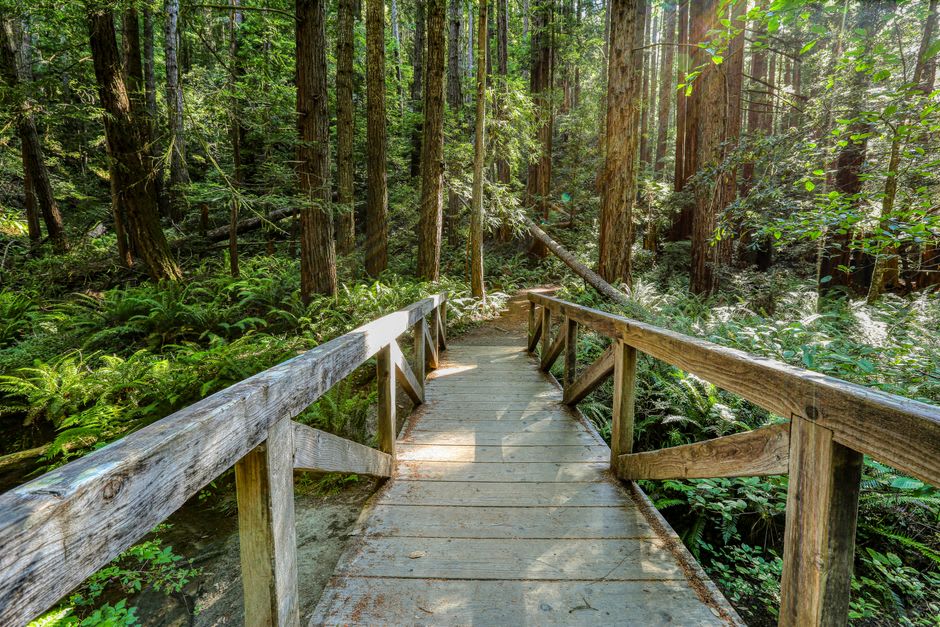
The next morning we drove a few minutes north to Russian Gulch State Park, where a creek meets the sea beneath a graceful old highway bridge. We hiked the fern-lined canyon trail inland to a small waterfall, the forest suddenly dense and green and dripping, redwoods and second-growth closing over the path. Then back out to the coast, where the gulch opens into a cove and there’s a collapsed sea cave — a great round hole in the headland where the roof fell in and the tide surges through. Lia stood at the rim watching the water heave up and drain away. This stretch of coast keeps its drama close to the surface; you don’t have to look hard to feel how young and violent the land still is.
Getting There
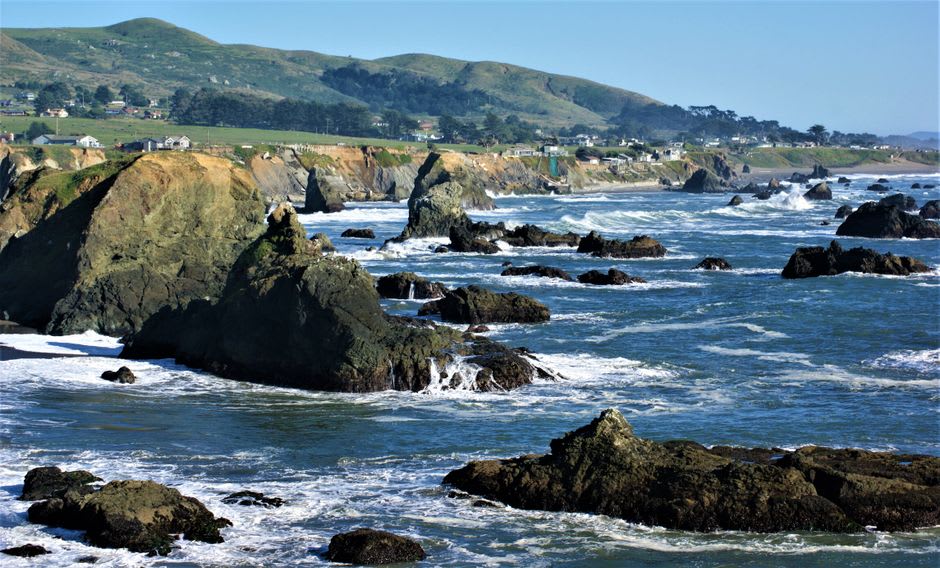
Mendocino is about three and a half hours north of San Francisco, and there’s no fast way to do it — that’s part of the point. The most direct route follows Highway 101 to Highway 128, which winds through the redwoods of Anderson Valley before spilling out onto the coast at Highway 1. From there it’s a slow, spectacular drive up the shore. There’s no airport nearby to speak of, so you’ll be driving; a car is essential once you arrive too. Come prepared for fog and cool temperatures year-round, and don’t plan your days too tightly — this coast rewards the traveler who lets the weather set the pace.
Keep exploring
More of California