Louvre Abu Dhabi
"I've stood under a lot of famous domes. This is the first one that felt like weather."
Jean Nouvel's perforated dome on Saadiyat Island filters sunlight into a slow-moving 'rain of light' over a collection that hangs civilizations side by side on purpose.
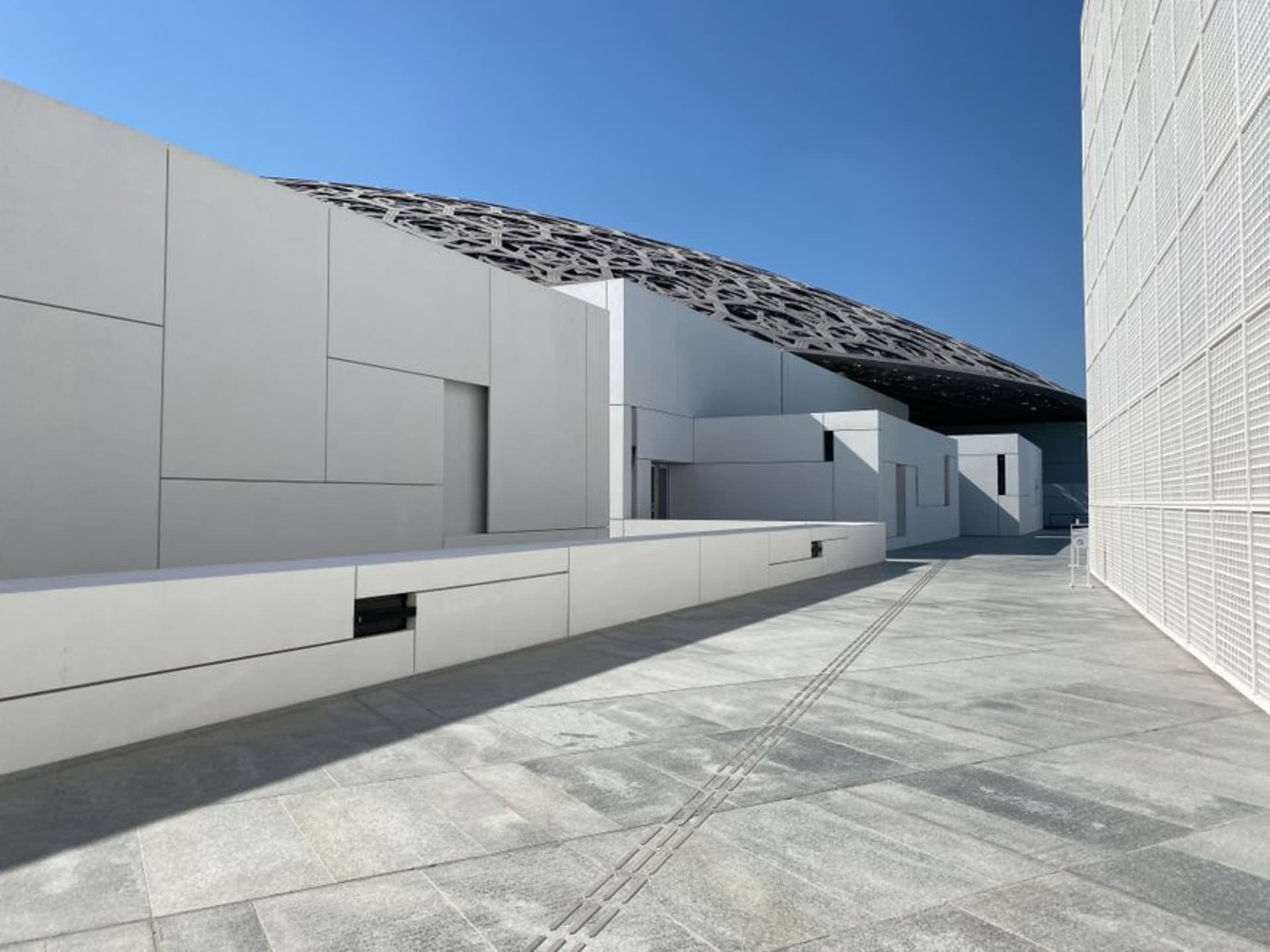
I timed my visit to the Louvre Abu Dhabi deliberately for midday, on the advice of an Emirati architecture student I’d met the week before, who told me flatly that going any other time was “missing the point of the whole building.” She was right. I arrived under a flat, punishing desert sun, walked beneath Jean Nouvel’s dome, and stopped almost immediately, because the light hitting the plaza floor wasn’t sunlight anymore. It had been broken into thousands of shifting points and pools, drifting slowly across the stone like something closer to weather than architecture.
A dome that behaves like a forest canopy
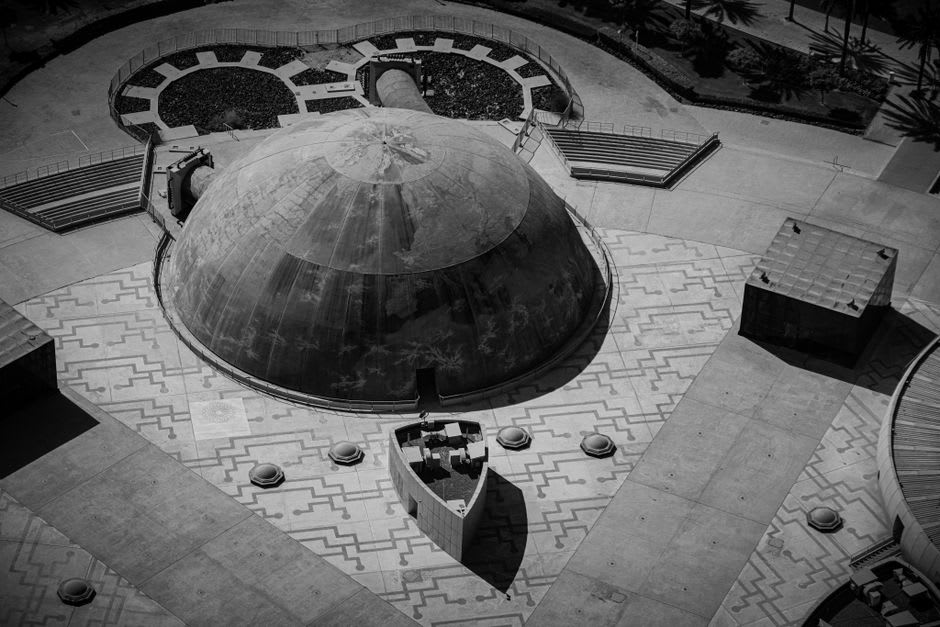
The dome is built from eight layers of interlaced metal, geometric star and octagon patterns stacked at different angles so that as the sun moves, the pattern of light and shadow beneath it moves too, mimicking the dappled effect of sunlight through a palm frond canopy — what Nouvel calls the “rain of light.” It spans 180 meters, floating above the museum’s white cube galleries without touching most of them directly, so you experience it primarily from underneath, in the open plazas between buildings, where the Gulf breeze moves through even in summer heat. I sat on a bench in one of these outdoor pockets for nearly twenty minutes just watching the light patterns crawl across the ground, which is not something I expected to do at a museum.
A collection that argues for connection
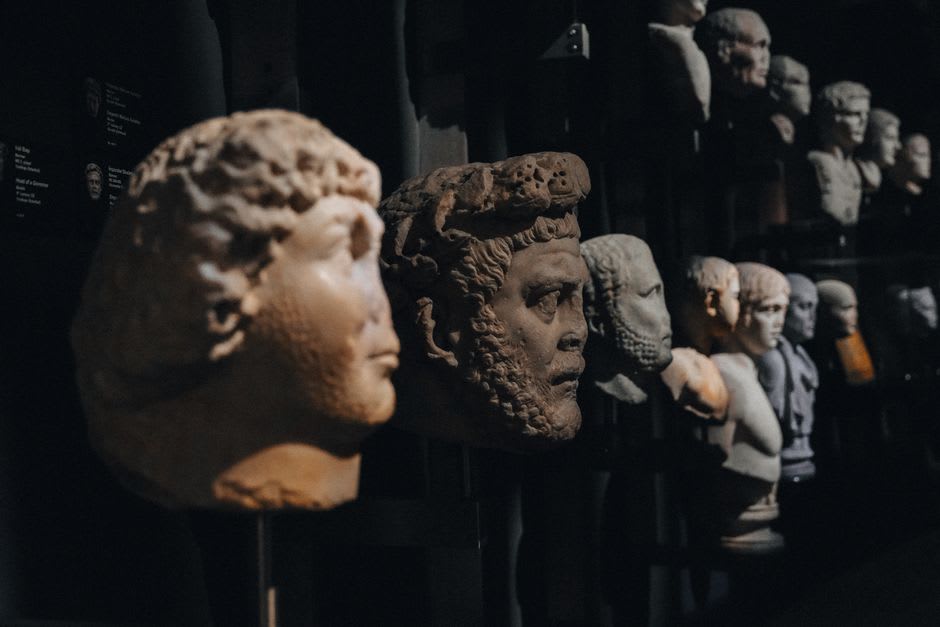
Inside, the museum makes its second, quieter argument. The galleries are organized chronologically but deliberately cross-cultural, so a gallery on early civilizations places a Mesopotamian statue near an Egyptian sarcophagus fragment near a Chinese ritual vessel, forcing you to notice how many separate human societies were solving the same problems — burial, kingship, the depiction of gods — at roughly the same moments in history. Later galleries hang a Byzantine mosaic near an early Islamic Quran page near a Christian icon, and further on, a Mondrian sits close enough to a Japanese ink painting that you start to see a shared abstraction across a century and a continent that supposedly had nothing to do with each other.
I spent close to five hours inside, which surprised me, since I usually tap out of museums after two. Part of it was genuine curiosity about the juxtapositions. Part of it was the building itself pulling me back outside every hour or so, into the shifting light under the dome, before pulling me back in again. A museum guard I chatted with near the exit, an Emirati man who’d worked there since the opening in 2017, told me he still walks the plaza on his lunch break just to watch the light move. After a few hours there myself, I understood exactly what he meant.
When to go: Late morning through early afternoon on a clear day, when the sun is high enough to produce the dome’s full “rain of light” effect on the plaza floor; the museum is closed on Mondays.
Keep exploring
More from UAE
 uae
uae Mleiha, Sharjah
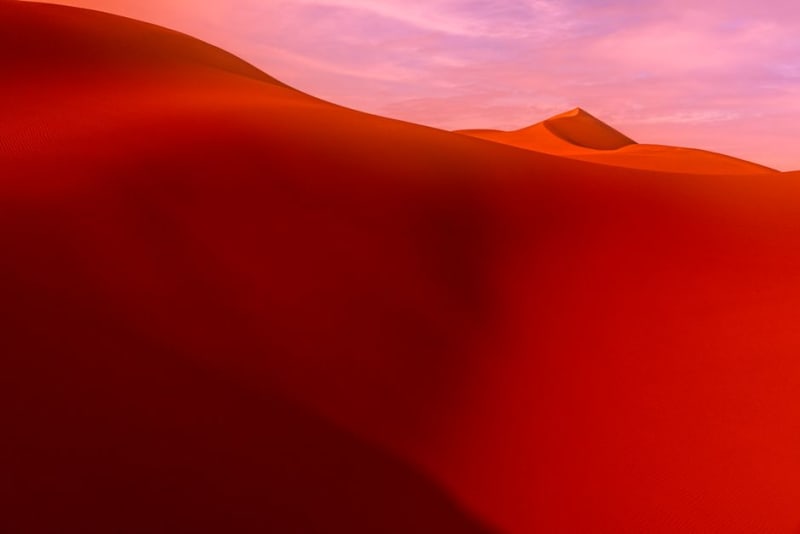
A red-dune desert an hour from Sharjah's coast, hiding Bronze Age tombs and fossil beds beneath landscape now shared with skydivers and dune buggies.
Explore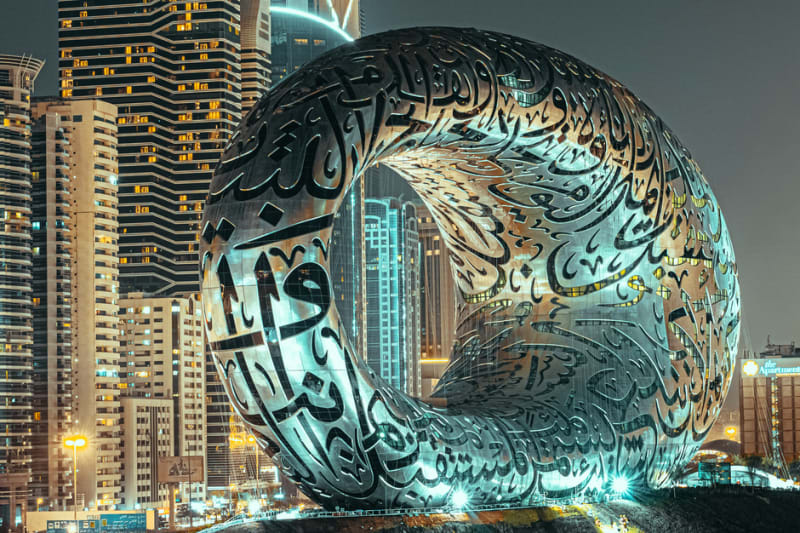 uae
uae Museum of the Future
A torus-shaped building wrapped in swirling Arabic calligraphy, hovering over Downtown Dubai like a monument to whatever comes next — and one of the most photographed buildings on earth.
Explore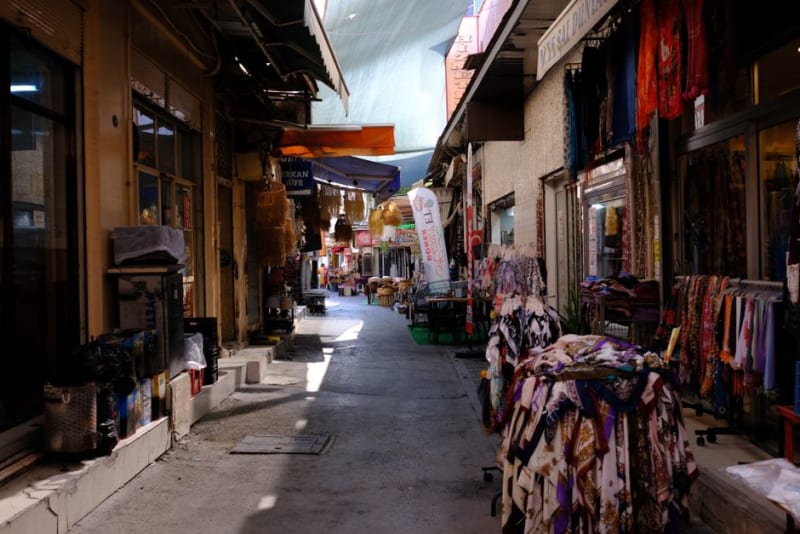 uae
uae Old Dubai (Deira)
The historic trading-port half of the city, where the Gold and Spice Souks still operate on the Creek's north bank and wooden abras carry passengers across for one dirham.
Explore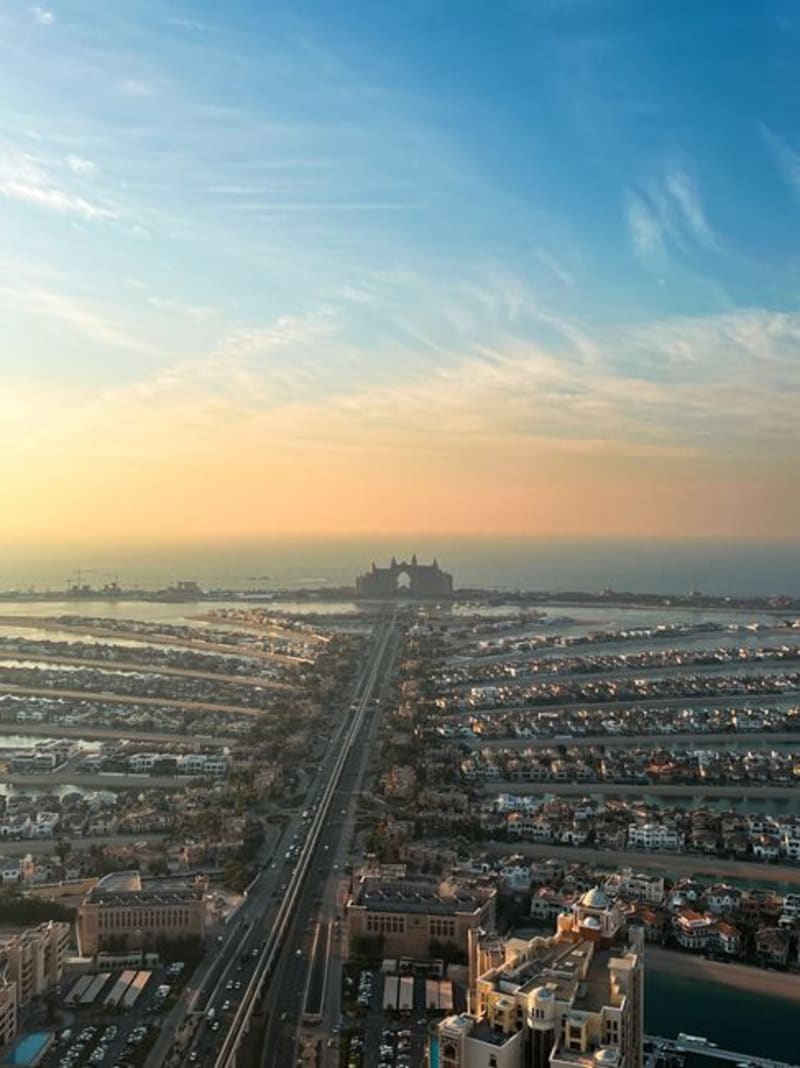 uae
uae Palm Jumeirah
A palm-tree-shaped island built entirely from dredged sand, visible from space and impossible to fully grasp from the ground, with a monorail stitching its fronds together.
Explore uae
uae Ras Al Khaimah
The UAE's adventure emirate, where the Hajar Mountains meet desert dunes and the world's longest zipline launches from a 1,680-meter peak.
Explore uae
uae Sharjah
The UAE's cultural capital, a UNESCO-recognized emirate where Islamic art museums and heritage districts preserve the Gulf's intellectual traditions.
Explore