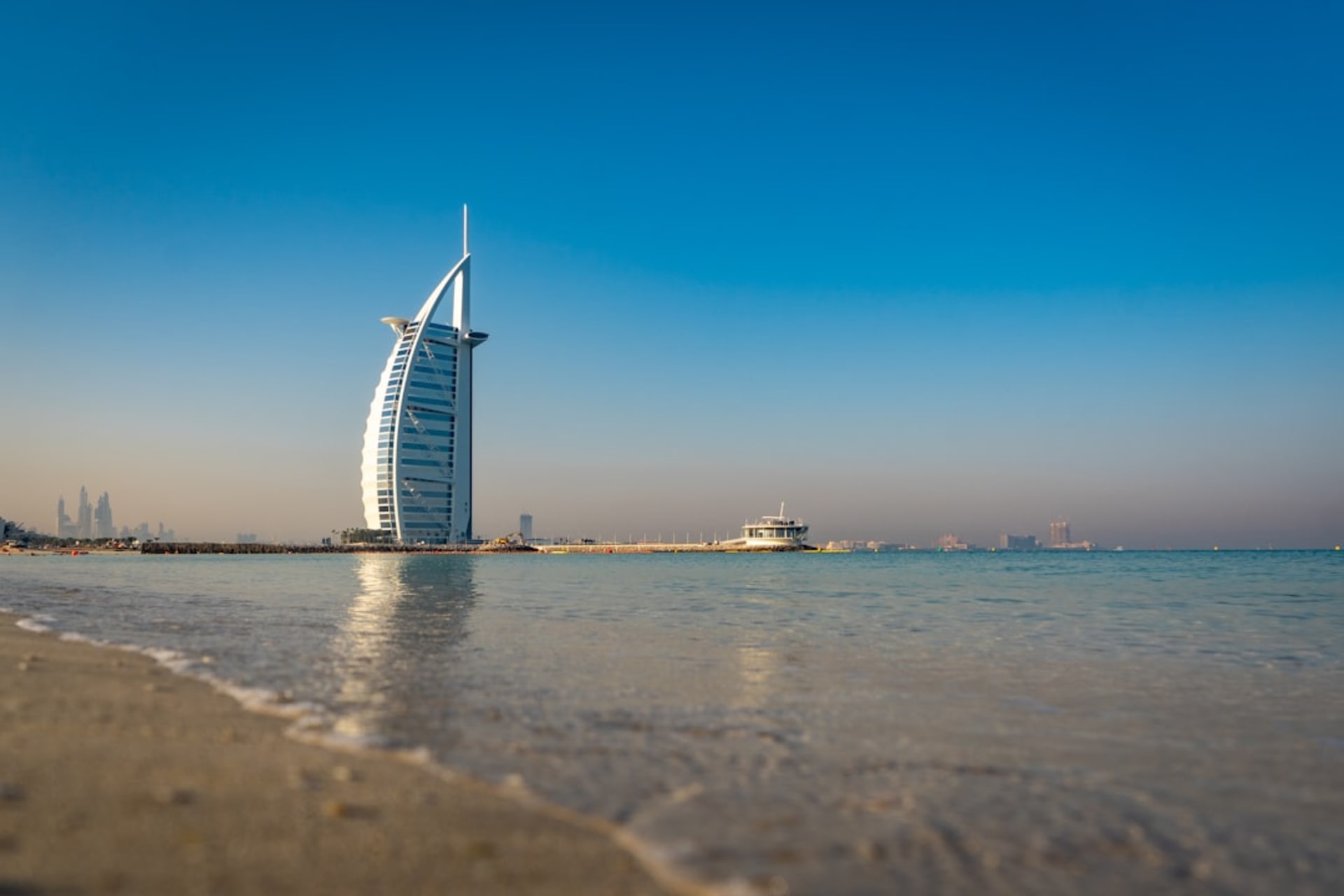
Jumeirah Beach
"Everyone comes for the view of the Burj Al Arab. I kept coming back for the joggers at sunset."
Dubai's classic public beach strip, sail-shaped Burj Al Arab hovering offshore, where old fishing-village Jumeirah and today's luxury hotel row sit uneasily side by side.
Jumeirah Beach is the version of Dubai that photographs the most and explains the least. Every visitor ends up here at some point, phone out, framing the sail-shaped silhouette of the Burj Al Arab floating just offshore against the evening light — and it is, admittedly, a genuinely striking shape, white and taut against the water like something that shouldn’t be able to stand up on its own artificial island. But I found myself more interested in the beach itself than the hotel everyone was photographing, because the public stretch of sand tells a more honest story about who actually uses this coastline.
By late afternoon the boardwalk fills with a cross-section of the city you don’t get elsewhere: joggers doing laps before the evening heat sets back in, Filipino and Indian families setting up elaborate picnic spreads on the sand, teenagers on rented bikes weaving through the crowd, a few Emirati families in a roped-off VIP section closer to the five-star hotels. Jumeirah, the wider district this beach belongs to, was a fishing village before any of the hotel towers existed, and there are still a handful of older low-rise streets a few blocks back from the sand where that earlier identity hasn’t been entirely paved over.
The gap between old Jumeirah and new Jumeirah
Walking inland from the beach, away from the five-star strip, the transition is fast and a little jarring. Within ten minutes you go from infinity pools and valet stands to modest villas, corner grocery shops, and a mosque with a call to prayer that carries out over the beach at sunset, cutting straight through the noise of beach bars a few hundred metres away. I sat on the sand one evening long enough to watch that exact contrast play out in real time — a beach club’s music fading as the adhan started, then rising again once it finished, nobody around me treating the overlap as anything unusual.
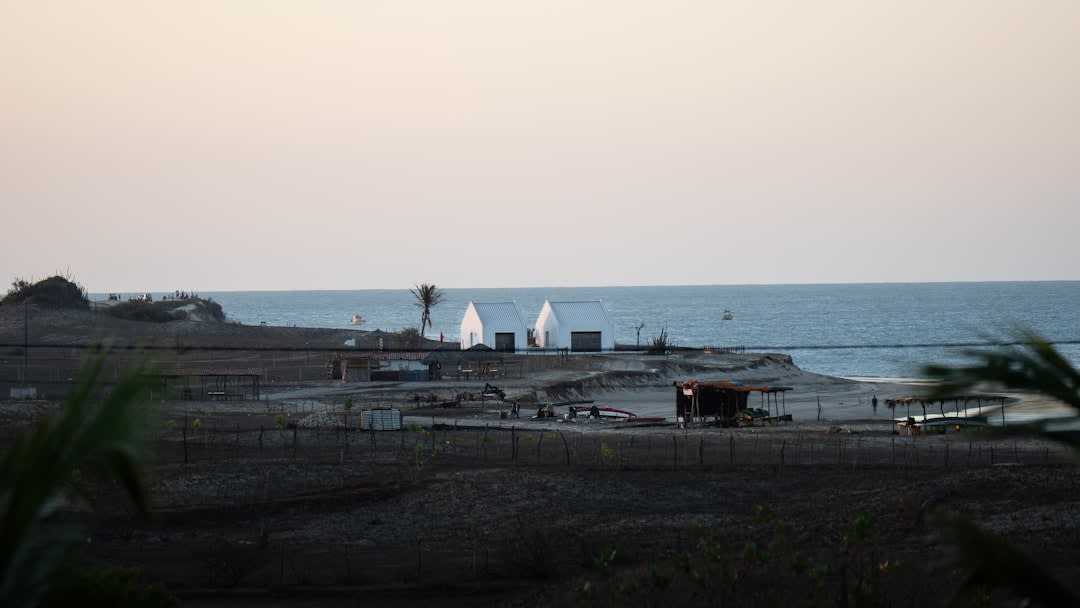
The boardwalk itself, known locally as La Mer in one stretch and simply “the Beach” in another, has been steadily built up with cafes and low-rise retail, but the sand in front of it remains genuinely public and genuinely used — no membership required, no minimum spend, just towels laid out shoulder to shoulder on a Friday. I came back three evenings in a row just to watch the joggers, the same faces most nights, doing the same loop as the Burj Al Arab’s lights came on across the water.
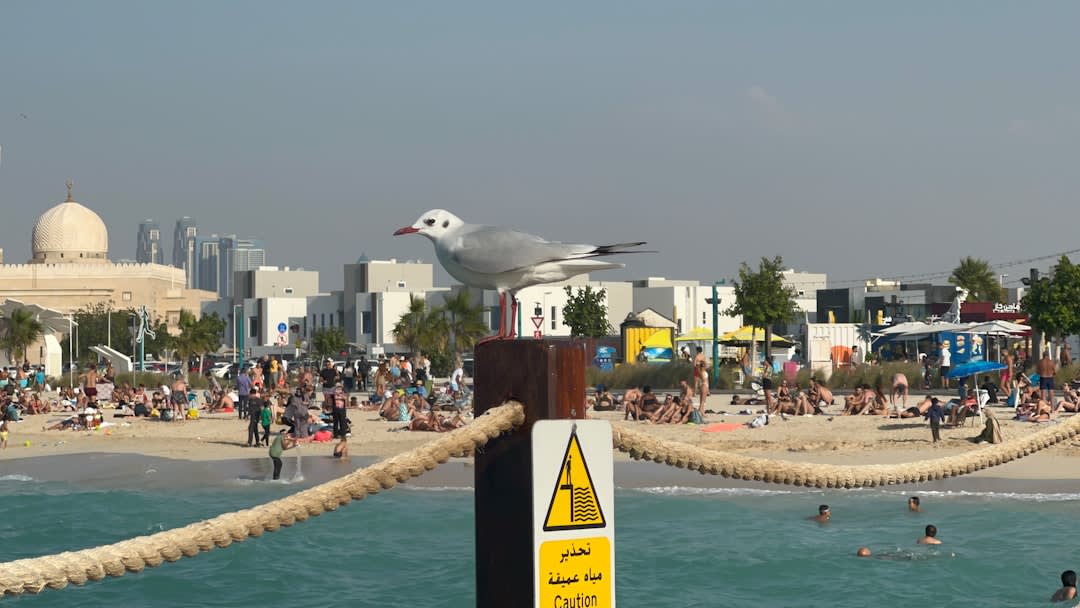
It’s the one place in Dubai where luxury and ordinary daily life share a single strip of sand without either one pretending the other doesn’t exist.
When to go: Year-round for the view, but October to April for actually swimming or sitting on the sand comfortably; sunset is when the boardwalk is busiest and the Burj Al Arab lights up best.