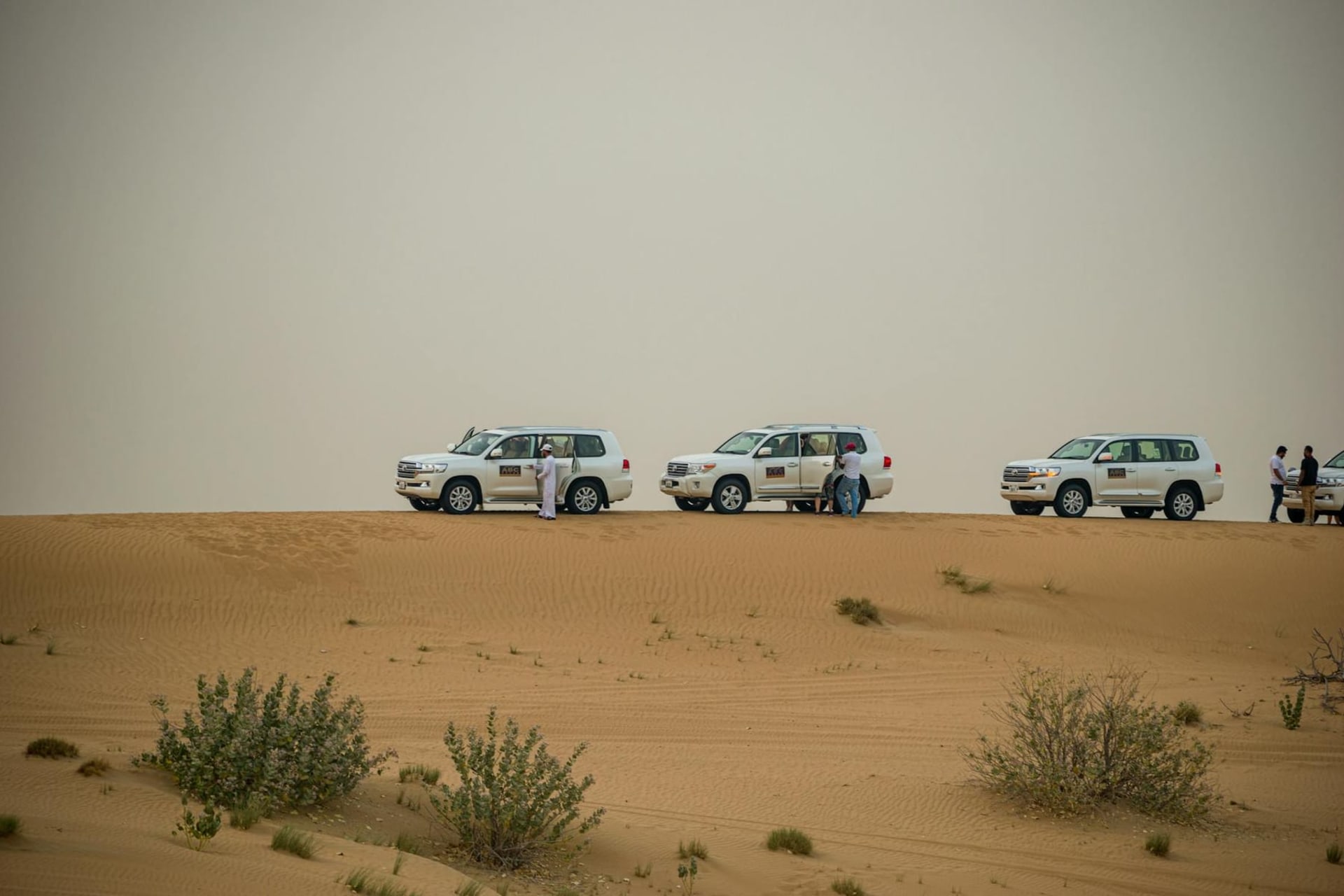
We drove southeast out of Dubai on the E44, the Burj Khalifa shrinking in the side mirror until it dissolved entirely behind a curtain of haze. Forty minutes later, the SUV crested a ridge and the desert opened without warning — no gradual fade, no transitional scrubland, just a hard threshold between pavement and the Rub’ al Khali’s edge. I stepped out and the heat settled on my shoulders like a physical weight. The sand was a deeper red than I expected. Almost burnt sienna. Almost edible.
The Hour Before Sunset
The dunes south of Al Marmoom move. Not metaphorically — they genuinely migrate a few meters each year, so the landscape you photograph today will be subtly different by your next visit. I didn’t know this until our Bedouin guide, Khalid, pointed to a buried fence post with only six inches still visible above the surface. “Two years,” he said, meaning that’s how long it took for the sand to climb that high. Lia crouched down and ran her fingers along the post’s rusted edge, then looked at me with that expression she gets when a place exceeds the version of it she’d carried in her head.
We watched a falconer release a saker falcon just before the sun touched the dune line. The bird banked hard into the wind and the whole desert seemed to reorganize itself around that single moving point. At golden hour, the shadows in the dune hollows turn a shade of purple I don’t have a proper name for — somewhere between mauve and the inside of a mussel shell.
Around the Fire
The camp at dusk smelled of cardamom and woodsmoke and the faintly mineral scent of cooling sand. Dinner was slow-roasted lamb from an underground pit — a harees stew on the side, wheat ground to a paste with the meat, the kind of dish that tastes like something your body recognizes before your brain does. I ate too much of it. The flatbread was blistered from an open flame and we tore it apart without ceremony.
What surprised me was the silence once the last tour group’s generator cut off. In a city that never stops producing noise, the desert’s quiet felt almost aggressive, like a held breath. The stars came out in numbers that felt implausible this close to one of the most light-polluted skylines on earth.
Getting There
Most operators depart from the parking lot behind the Mall of the Emirates or pick up directly from JBR hotels along Jumeirah Beach Road. Morning dune bashing feels different from the sunset safari — more athletic, less meditative. I preferred the slower hours.
When to go: October through March, when daytime temperatures drop to a manageable 20–28°C and the nights actually require a light jacket. Summer safaris exist, but the heat above 45°C turns the experience into an endurance test rather than a pleasure.