Antalya
"Every city claims an old town. Few have one where the Romans actually poured the concrete."
I arrived in Antalya expecting to spend one night and leave for somewhere quieter. I stayed four. That tends to happen when a place turns out to have more layers than the travel logic you brought with you.
Kaleiçi at Its Own Pace
The old quarter — Kaleiçi, meaning “inside the castle” — is a tangle of Ottoman mansions turned boutique hotels, narrow cobbled lanes that drop without warning, and Roman-era walls that now serve as the backs of restaurants. Hadrian’s Gate stands at the western entrance, three arches of creamy marble that the city of Antalya built in 130 AD to honor a visiting emperor. Tourists photograph it from both sides while locals wheel scooters past without looking up. That contrast, the ancient and the indifferent, is what makes Kaleiçi feel alive rather than preserved.
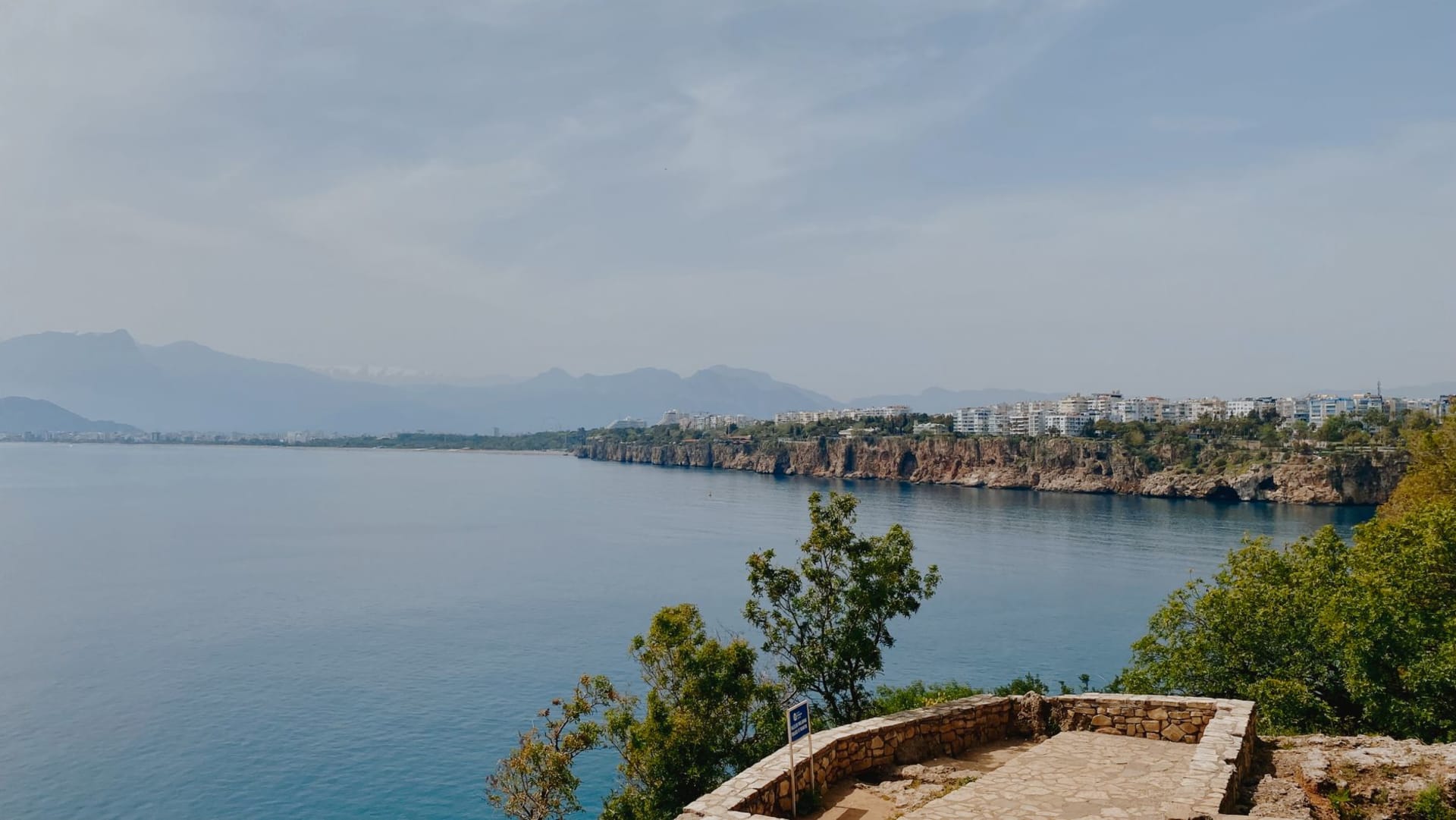
The harbor below is small, studded with wooden gulets and fishing dinghies. In the morning, before the tour boats load up, it smells of diesel and salt and the sesame-heavy simit that vendors sell from wheeled carts. I ate two with a glass of strong çay and watched the Taurus Mountains across the bay take shape in the haze — a wall of rock rising straight out of the water that you never quite stop noticing.
The Museum Worth the Detour
Antalya Archaeological Museum sits about two kilometers west of Kaleiçi along a coastal promenade, and it holds one of the best collections of Lycian and Roman artifacts in the country. The Hall of the Gods alone — a room of colossal marble statues from the nearby site of Perge — makes the walk worth it. A Zeus the size of a doorway. A Hadrian so detailed you can read the ideological agenda in the posture. These weren’t decorations. They were power made visible.
I spent most of an afternoon there and left with the particular fatigue that comes from taking in too much beauty too fast.
Food That Doesn’t Perform
Kaleiçi has plenty of tourist-trap restaurants with English menus and aggressive hosts. Step two streets back and the calculus changes. I found a lokanta, the Turkish workhorse lunch spot, that served nothing but piyaz — a white bean salad with hard-boiled egg, onion, and a sharp lemon-tahini dressing — and a rotating pot dish. The piyaz is an Antalya specialty, denser and more complex than anything you’d get in Istanbul. The owner watched me eat with the satisfied expression of someone who knows they don’t need to explain what they do.
The Coastal Road West
Renting a scooter and heading west along the coast toward Konyaaltı beach is not glamorous, but it works. The beach itself is a long strip of grey pebbles — not sand — and the water is the particular Mediterranean blue that photographs as turquoise. In June, before the August crush, you can find a patch of shore with enough space to think.
The mountains stay in view the whole time. That’s Antalya’s best feature, maybe: the constant reminder that the sea and the rock are the same landscape, and you’re small in it.
When to go: April to June for warm days without the summer density — Antalya fills fast in July and August, and the heat becomes serious. October is excellent: the crowds thin, water stays warm from a summer of sun, and the light goes golden and low by mid-afternoon.