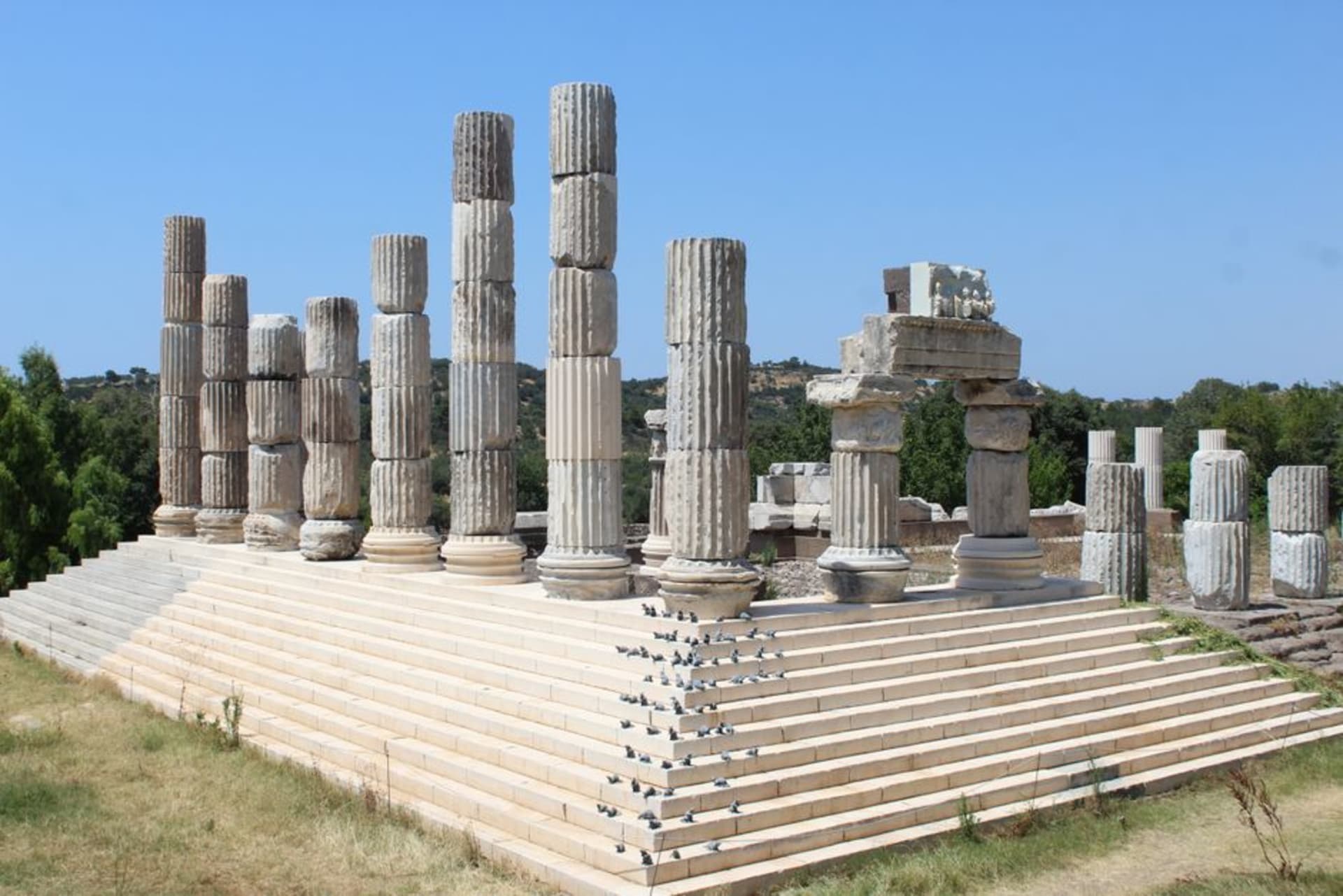
Troy
"Everyone comes for the horse and leaves thinking about the walls underneath it instead."
The legendary city of Homer's epic, its excavated layers spanning four thousand years beneath a modern replica of the wooden horse.
Every visitor to Troy takes the same photo first, and I was no exception: a wooden horse, roughly two stories tall, standing near the site entrance, built for tourists and climbable via an interior staircase up into its belly. Kids were leaning out of little cutout windows in its flank taking selfies. It’s a little absurd, and I loved it a little more for being absurd — there’s something honest about a monument to a myth that leans fully into being a monument to a myth, rather than pretending at gravity it can’t claim.
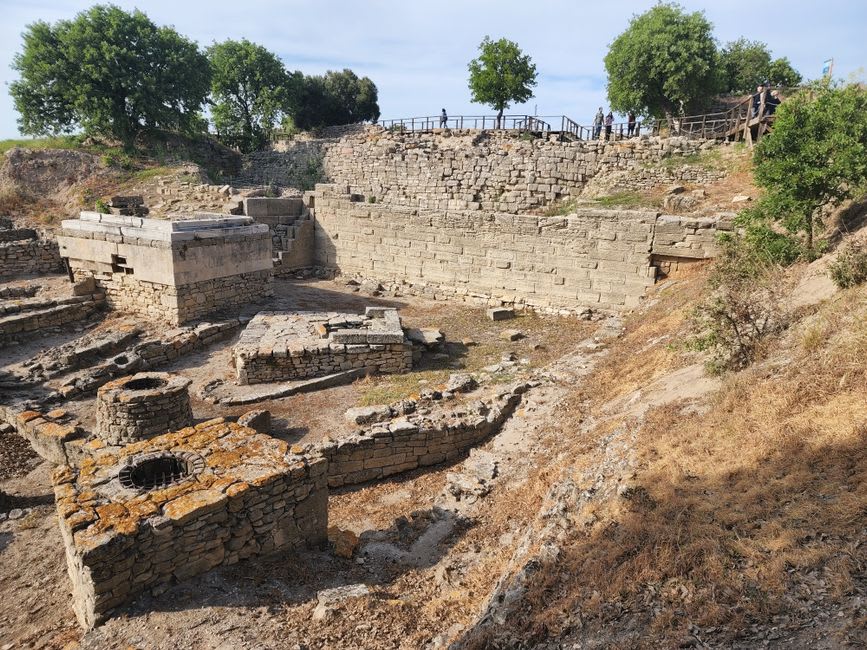
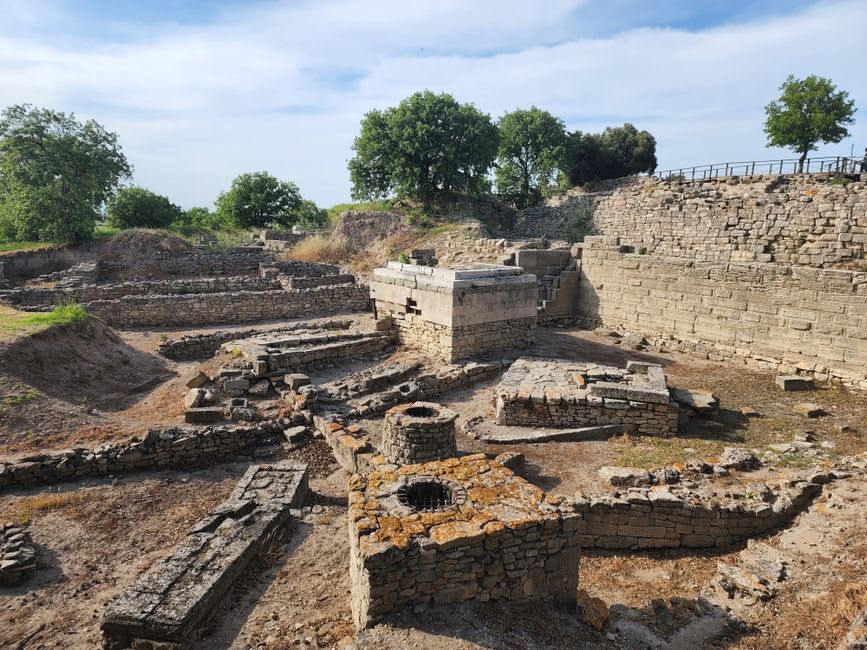
But the horse is not why Troy deserves the detour, and once you walk past it into the actual excavation, the site earns its UNESCO World Heritage status on completely different terms. Troy isn’t one city. It’s at least nine, stacked on top of each other across roughly four thousand years, from an early Bronze Age settlement through the Hellenistic and Roman periods — a layer cake of destruction and rebuilding that archaeologists have been carefully peeling apart since Heinrich Schliemann’s controversial excavations in the 1870s. Walking the raised wooden walkways that wind through the site, you can actually see the strata: a stretch of megalithic Bronze Age wall in one spot, a Roman odeon a few dozen meters away, each layer a different city that happened to occupy the exact same strategically valuable hill above the Dardanelles.
Homer, History, and the Argument That Never Quite Ends
Whether the Trojan War described in the Iliad happened as Homer told it is a question nobody will ever fully settle, and I found that ambiguity more interesting than a firm answer would have been. What’s not in dispute is that this hill, called Hisarlık, controlled the entrance to the Dardanelles and the trade routes between the Aegean and the Black Sea, which is reason enough for cities to have risen and fallen here repeatedly regardless of any single war. Standing on the ramparts of what’s labeled Troy VI — the layer most archaeologists associate with the Homeric era, destroyed by fire or earthquake around 1180 BC — looking out over the plain toward the strait, I didn’t need the myth to be literally true to feel the weight of the place. Four thousand years of continuous human ambition sitting on one hilltop does that on its own.
A small on-site museum, opened relatively recently in a striking rusted-steel cube visible from the highway, does a better job than most site museums I’ve seen at explaining the layers without dumbing them down — worth the extra hour if you have it.
When to go: Spring or autumn, when the plain isn’t baking and the site’s minimal shade is bearable. It’s an easy day trip from Çanakkale, roughly 40 minutes by car or dolmuş.