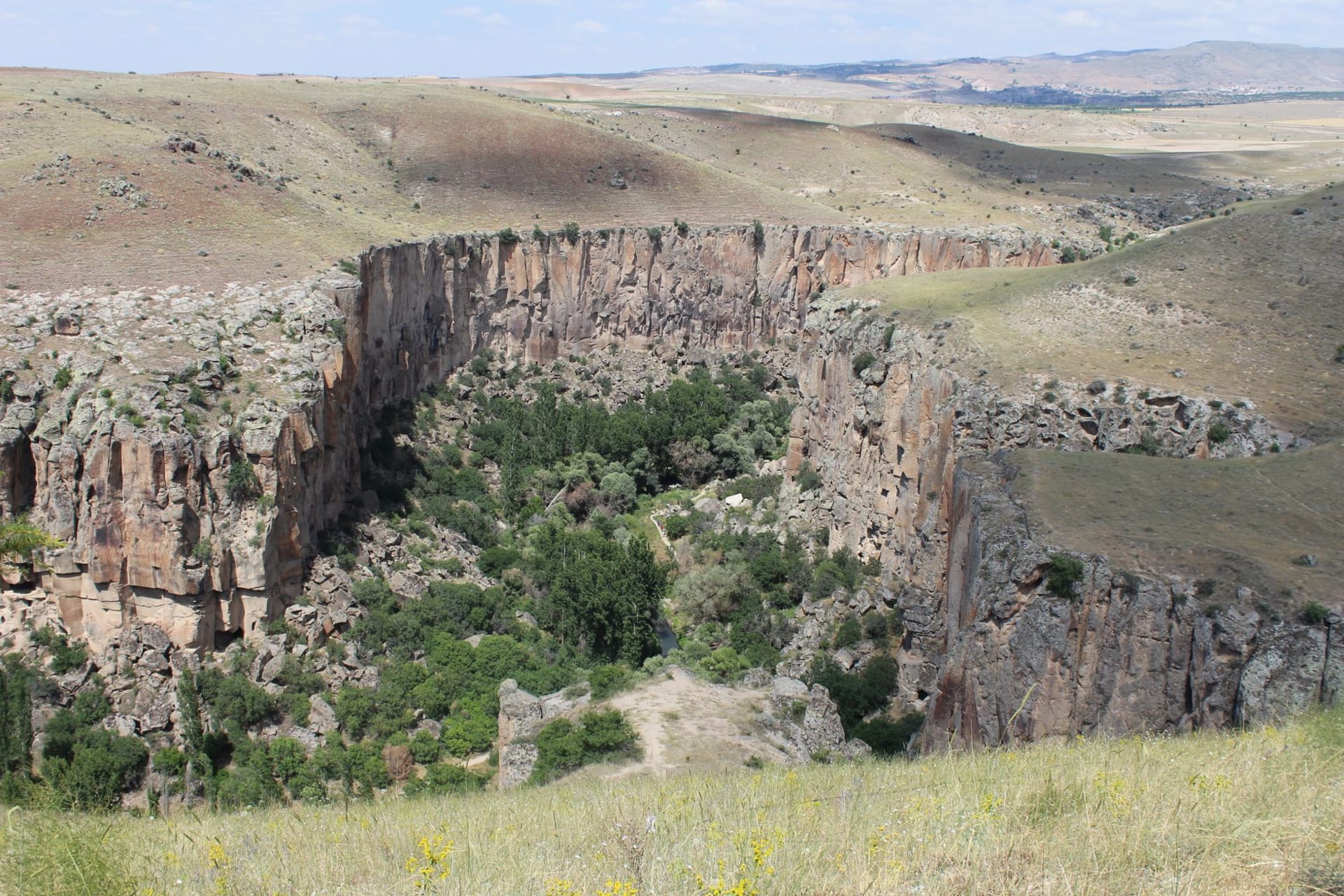
A 14km canyon cut through volcanic rock in Cappadocia, lined with Byzantine cave churches carved into cliffs above the river.
We arrived at the canyon rim before the tourist buses, and for a few minutes I stood above the valley watching the Melendiz River catch the early light below — a green thread stitched through the bottom of the gorge, 100 meters of volcanic cliff on either side. The descent into Ihlara is 382 steps carved into the rock face. By the bottom, the noise of the plateau disappears entirely, replaced by birdsong, running water, and the dry creak of poplar leaves.
The River Walk
The canyon path runs 14 kilometers between the villages of Ihlara and Selime, and we walked perhaps half of it before stopping to eat. Wooden footbridges cross the Melendiz at intervals, and the river is cold enough that when Lia dangled her feet in, she pulled them out immediately and laughed. The light inside the canyon is particular — filtered, amber-tinged, blocked for much of the day by the cliffs — and it gives the walk the quality of moving through something preserved rather than simply visited.
Families from Aksaray have picnic lunches on the riverbanks. Old men fish in the shallows. The canyon keeps the heat out, or keeps it in, depending on the season, and on the October day we walked it there was a bite in the shadow that made the sunlit stretches feel earned.
The Cave Churches
This is where Ihlara surprised me. I had expected ruins: rubble and closed gates. Instead we ducked through low stone doorways into intact Byzantine frescoes, painted in the 10th and 11th centuries and protected for a thousand years by nothing but the darkness of the rock. Agacalti Kilise — the Ağaçaltı church — has a ceiling covered in a Nativity scene in deep burgundy and ochre, the pigment still vivid enough to stop a person mid-step. Yilanli Kilise, the Snake Church, shows sinners being devoured by serpents in a composition that manages to be both terrifying and oddly charming. Most of the churches have no attendant, no ticket booth. You simply walk in.
What I did not expect was how many there are. More than a dozen in the accessible stretch of canyon alone, each with its own iconography, its own damage, its own stubborn survival. We had budgeted two hours for the valley and stayed five.
Getting There
Ihlara sits 45 kilometers southwest of Göreme, and the most practical approach is a hired car or a day tour that also includes Derinkuyu underground city. The village of Ihlara at the canyon entrance has a handful of restaurants serving lamb stew and fresh gözleme beside the river — basic, unhurried, exactly right after a long walk. The Selime end of the canyon holds Selime Monastery, a vast complex carved into a volcanic outcrop that functions as a natural punctuation mark to the whole day.
When to go: April through June for green canyon walls and cool walking temperatures, or September through October for the autumn light and thinner crowds. Avoid the midday summer heat — the canyon traps warmth in July and August, and the walk becomes punishing by noon.