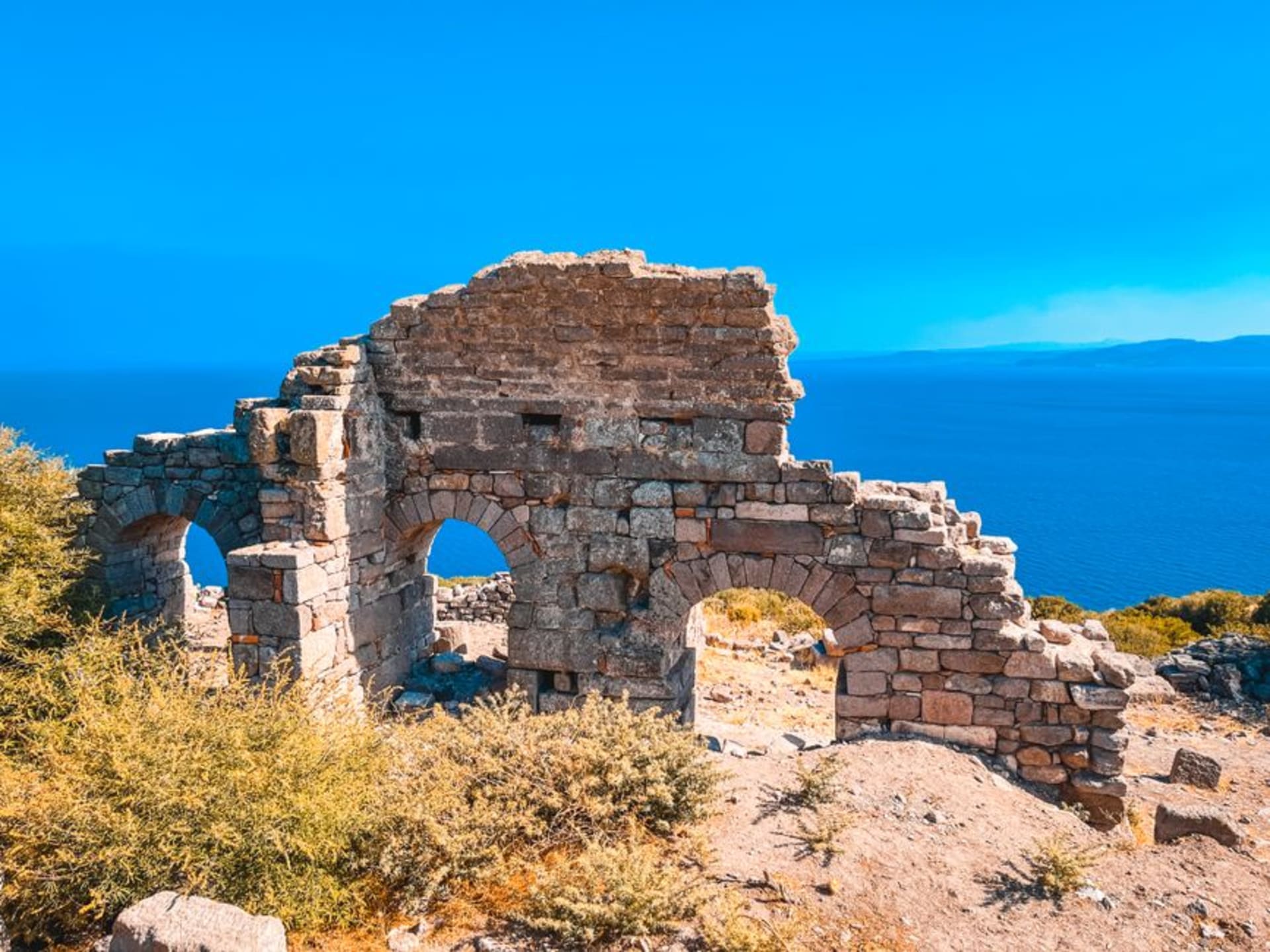
Assos
"Aristotle picked this cliff to think from, and one sunset here tells you exactly why."
A clifftop ancient city where Aristotle once taught philosophy, its temple staring out across the Aegean toward the Greek island of Lesbos.
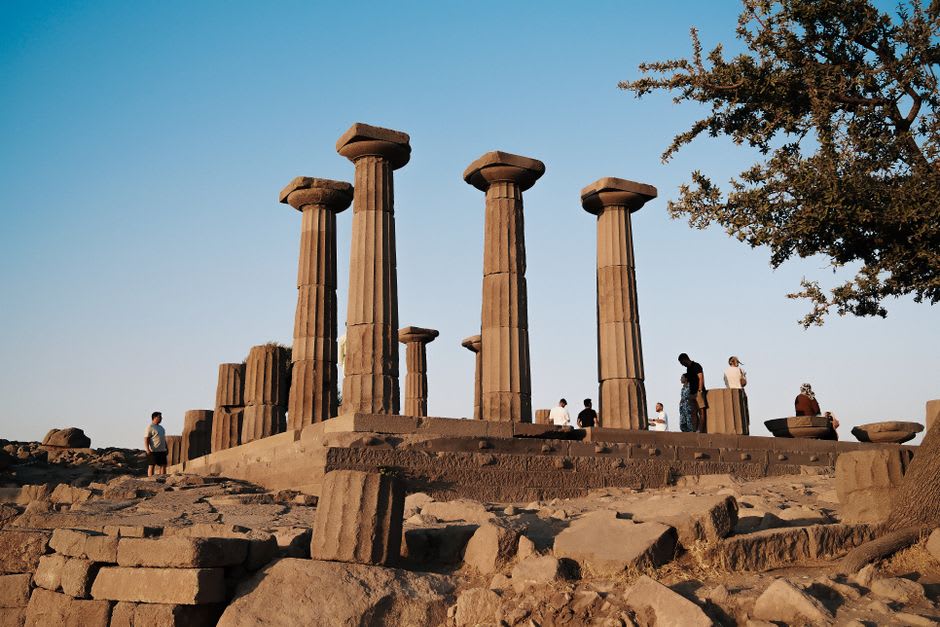
I climbed up to Assos in the late afternoon, which turned out to be an accident of good timing rather than planning — I’d gotten lost on the back roads from Ayvacık and arrived later than intended, just as the light was turning gold and low over the water. The Temple of Athena sits at the very top of the ancient acropolis, a scatter of Doric columns on a cliff edge so dramatic that for a moment I forgot to look at the temple at all and just looked at the view: the Aegean spread out below, and across the strait, close enough to feel almost touchable, the low blue silhouette of the Greek island of Lesbos. Two countries, one sea, one sunset. I stood there long enough that the site guard had to come find me to say they were closing.
Aristotle came here in 347 BC, after Plato died and he left Athens, and spent three years teaching and studying — some historians think this is where he began the biological observations that would shape his later work, wandering the coastline below collecting specimens from the sea. Standing at the temple, looking down at that same coastline, it’s easy to see the appeal. This isn’t a place that inspires abstract theorizing. It’s a place that makes you want to actually look at things.
The Descent to the Harbor
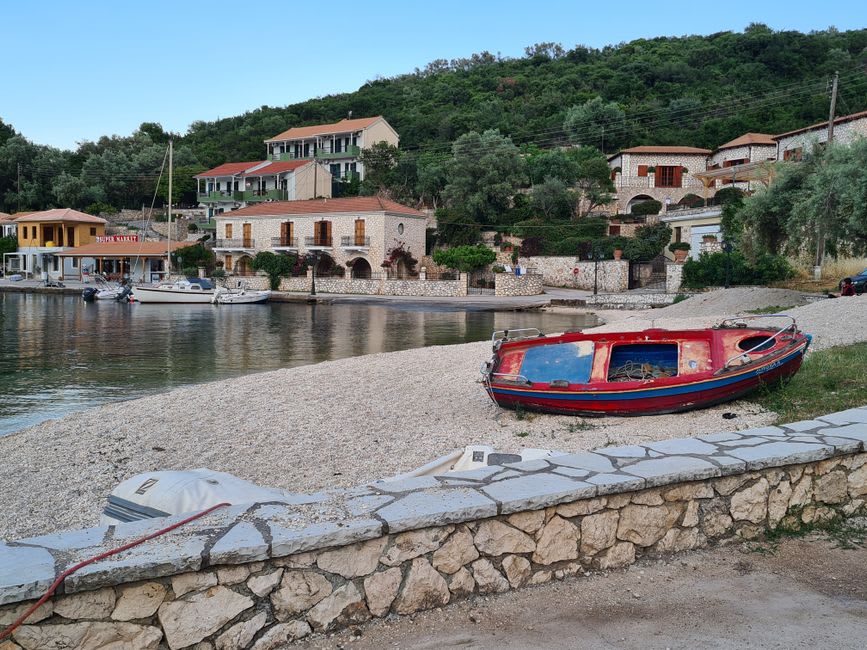
What makes Assos genuinely rare among Turkey’s ancient sites is the vertical drop between the ruins and modern life: from the clifftop acropolis, a winding road descends nearly 240 meters to a small, working fishing harbor, where stone Ottoman-era buildings now house guesthouses and fish restaurants along a short quay. I walked down — steep enough that my knees complained the next day — and had grilled sea bream at a table so close to the water I could hear it against the harbor wall. A fisherman two tables over was mending nets, not performing for tourists, just doing his actual job while the ruins of a 2,400-year-old temple sat directly above his head. That juxtaposition, ancient philosophy school stacked on top of an entirely unpretentious fishing village, is what stayed with me longer than the columns did.
Getting There Matters
Assos sits far enough off the main tourist circuit — a couple hours south of Çanakkale, reached by narrow roads through olive groves — that it never feels overrun, even in summer. Most visitors are Turkish families on weekend trips or the occasional traveler making the loop between Troy and the Aegean coast. Nobody rushes you at the temple. Nobody rushes you at the harbor either.
When to go: Sunset, without question — the temple faces west over the water and the light is the entire event. Late spring through early autumn for warm enough water to swim off the harbor rocks afterward.