Amasya
"Amasya is the town Turkey forgot to put on the postcards, and I'm almost glad, because I got to feel like I'd found it myself."
Ottoman timber houses lean over a river gorge while Pontic kings' tombs watch from cliffs above, and apple orchards perfume the whole valley.
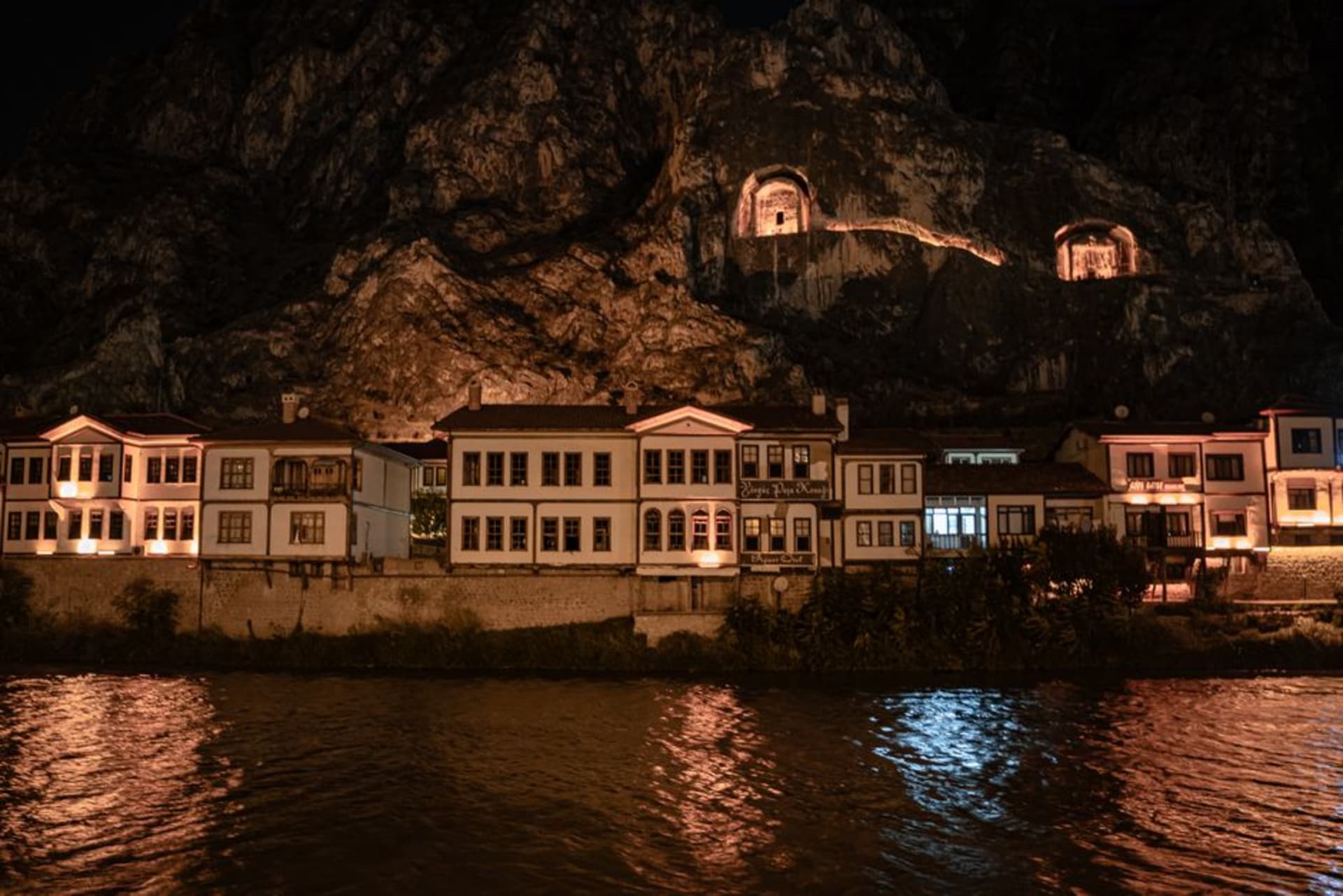
I arrived in Amasya at dusk, when the light was doing something unfair to the town — turning the timber facades along the Yesilirmak river the color of dark honey, while behind them, cut straight into the cliff face, the rock tombs of the Pontic kings sat lit up like the town’s own private monument to permanence. I stood on the bridge for a long time before I did anything else. You come around a corner in Amasya and the whole valley composes itself into a single photograph without you asking it to, and this was that corner.
Houses on the River, Kings in the Rock
The Ottoman-era houses lining both banks of the river are still lived in, still hung with laundry and pots of geraniums on upper balconies that lean out just slightly over the water, timber frames the color of strong tea. Walking the riverside path at night, lit by strings of bulbs reflecting on the water, I passed families sitting out on their front steps, a couple fishing for nothing in particular, a group of teenagers arguing amiably about football. It felt like a town that had simply kept living inside its own history rather than converting it into a museum.
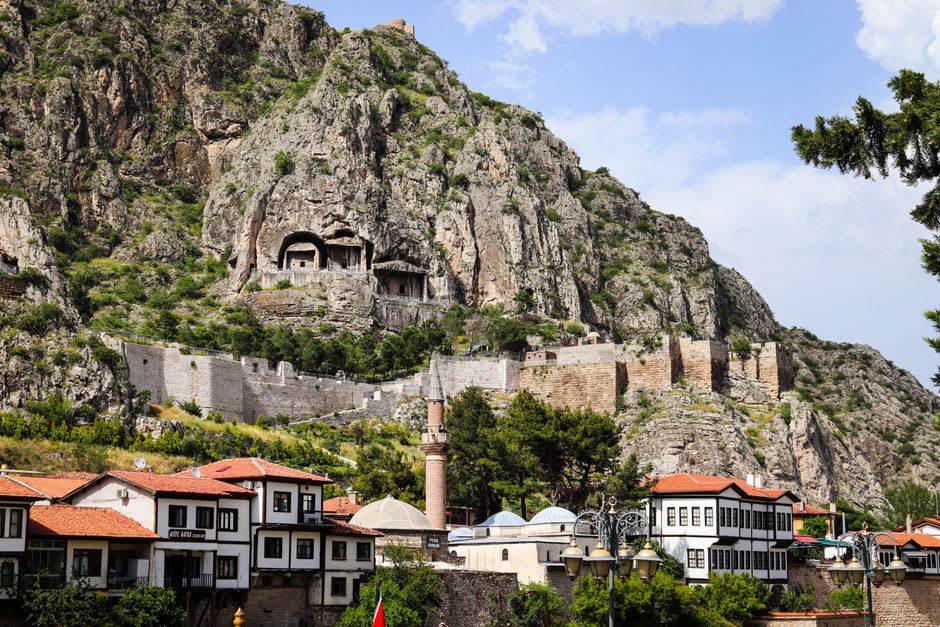
Above all of it — literally, carved forty meters up into a sheer cliff — are the tombs of the kings of Pontus, an ancient kingdom that made Amasya its capital more than two thousand years ago. I climbed the path up to them the next morning, breathing hard by the halfway point, and found chambers cut directly into the rock with an ambition that seemed almost defiant: burial as architecture, meant to be seen from the entire valley below for millennia.
Apples and the Valley Beyond
The scent that follows you around Amasya, especially in autumn, is apple — the region is one of Turkey’s major apple-growing centers, and the orchards spill down the hillsides on the edge of town in tidy rows, the fruit stacked in wooden crates at every roadside stall. I bought a bag from a farmer near the tombs, and they were tart and dense in a way that made the supermarket version I knew back home feel like a different fruit altogether. He told me, unprompted, that Amasya apples had been sent to Ottoman sultans as tribute, a detail I couldn’t verify but wanted very badly to believe.
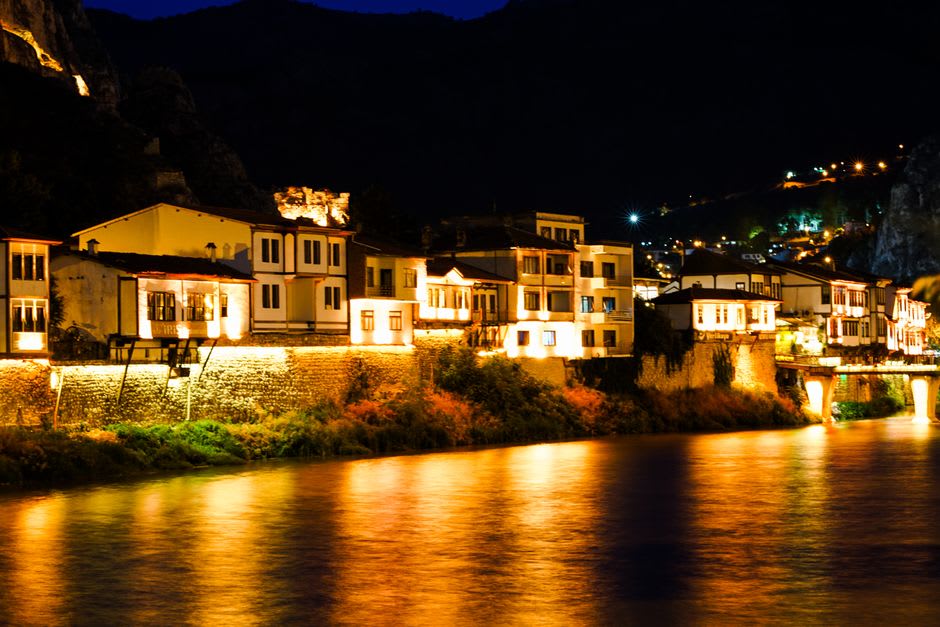
When to go: September and October, when the apple harvest is on and the light along the river turns everything gold; spring is also lovely if you want fewer crowds and blossoming orchards instead.