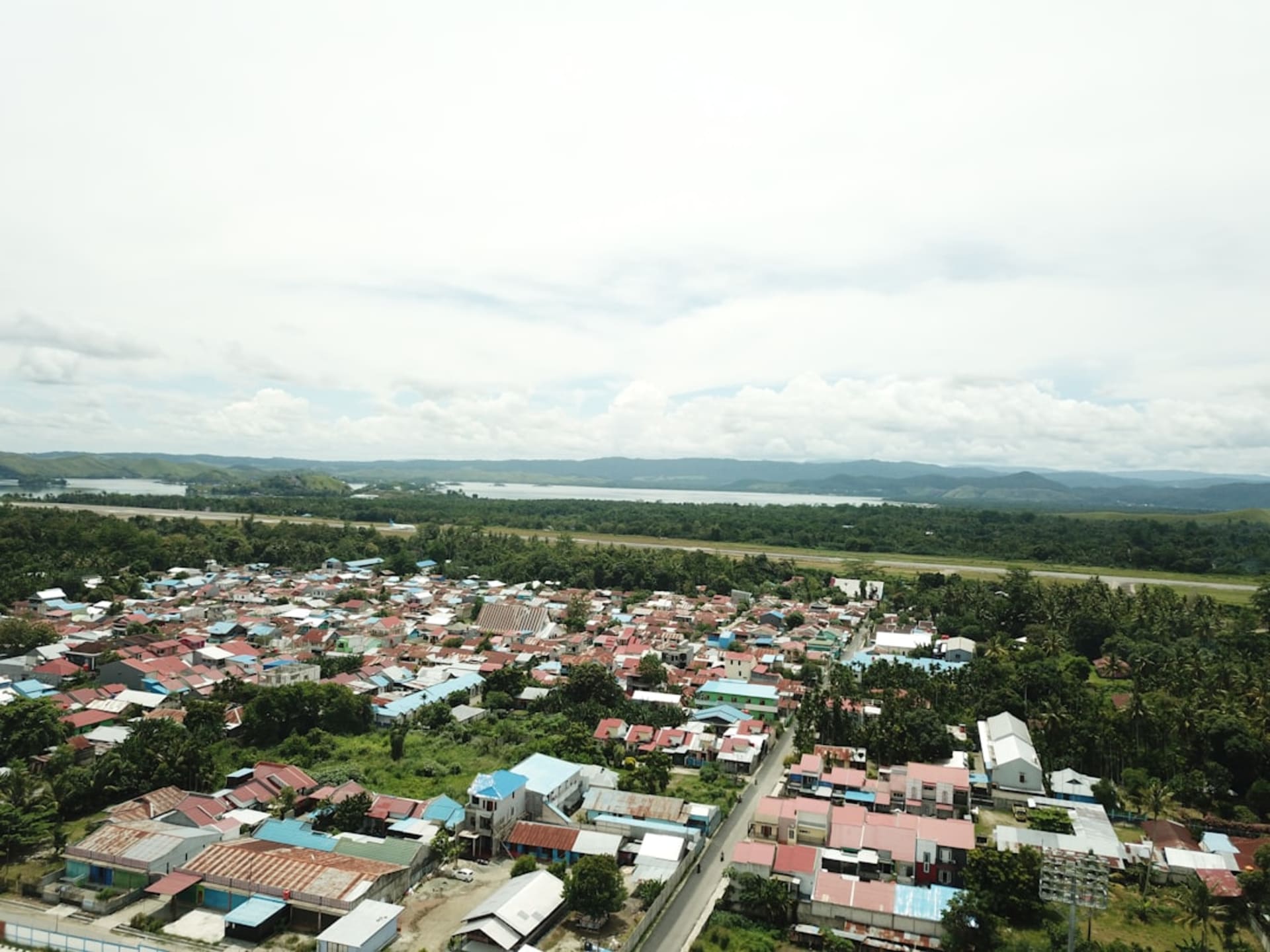
Ainaro
"The mountain was inside the cloud all morning. I waited. This seemed correct."
To understand Ainaro, you need to understand that Timor-Leste’s interior is not a backdrop — it is a place with its own logic, its own weather, its own density of meaning that operates independently of whatever is happening on the coast. The highlands around Ainaro district are where the island rises to its highest point: Tatamailau, known locally as Foho Ramelau, at 2986 meters. When it’s visible, which is not always, it dominates everything. When it’s in cloud, you know it’s there by the weight of the air.
I came to Ainaro specifically to attempt Tatamailau. I ended up doing more than that.
The Ascent of Tatamailau
The standard route departs from the village of Hatu Builico at around 2 a.m. to reach the summit for sunrise. This means organizing a guide the day before (essential — the upper route is unmarked and the cloud disorients), sleeping early, and being willing to climb in the dark with a headlamp through scrub forest that thins to sparse alpine meadow as you gain elevation.
I went with a guide named Paulino who walked faster than me, which is everyone, and who pointed out in passing the statue of the Virgin Mary at the summit, placed there by the Timorese resistance during the Indonesian occupation as a deliberate act of defiance. At 2986 meters, in a wind that had no interest in your comfort, looking out over the entire island in the first light, this history is not abstract.
The descent took about three hours and destroyed my knees in a way that was entirely worth it.
Hatu Builico Village
The village of Hatu Builico, at around 1700 meters, is the base for the Tatamailau climb and a destination in itself. It’s small, cold at night by any Timorese standard, and ringed by the kind of alpine landscape — low trees, yellow grass, pale boulders — that doesn’t fit any expectation you might have carried about tropical Timor.
There’s a small guesthouse or two, and local families take in trekkers. The food available is simple: rice, vegetables, sweet potatoes that are extraordinary when roasted over wood coals. I spent an extra night here after the summit attempt, wrapped in every layer I owned, watching the stars appear over the valley.
Coffee and Community
The Ainaro district is part of the highland coffee belt, and the cooperatives here work with international buyers under organic and fair-trade certifications. I visited a processing station near the district capital where the wet season’s harvest was being sorted and dried on raised beds in the sunlight.
The cooperative manager — a woman who had studied agronomy and come back to work with her community — walked me through the quality control protocols with genuine pride and also evident fatigue. I bought directly from the co-op and paid more than the market price because it seemed like the appropriate response to watching someone explain, with precision, how much care goes into each bag.
Resistance History
Ainaro was a stronghold of the resistance movement during the Indonesian occupation, partly due to its terrain — mountains and cloud forest that complicated military operations. Some of the most significant engagements between Falintil guerrillas and Indonesian forces took place in these highlands. The civilian population paid an enormous price.
Memorials and marked graves appear in villages throughout the district. They are not tourist infrastructure. They are communities marking their own dead.
When to go: June through September is prime — cold nights, clear mornings, and stable weather for the Tatamailau summit attempt. The cloud cover that makes the climb dangerous and the summit obscured is most persistent from November through March. If the summit is your goal, check the season carefully and still carry contingency plans.