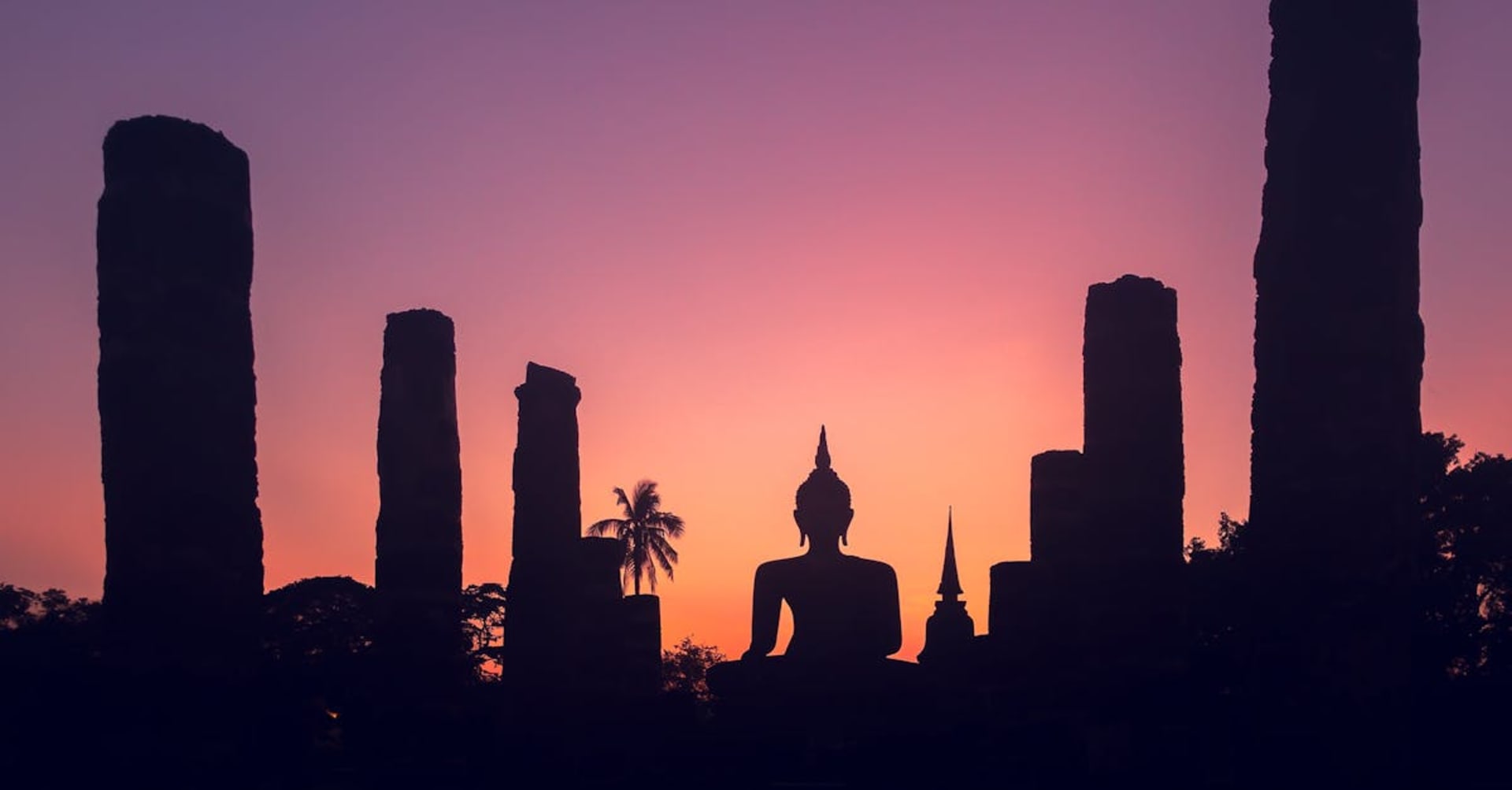
Sukhothai means “dawn of happiness,” and the name still fits. The historical park, a UNESCO World Heritage Site, spreads across a plain of manicured lawns, reflective ponds, and temple ruins that predate Ayutthaya by a century. Wat Mahathat, the largest and most important, is anchored by a seated Buddha surrounded by columns and chedis that catch the early morning light with a grace that feels choreographed. I arrived at dawn on a rented bicycle, the mist still clinging to the lotus ponds, and the park was mine — not another visitor in sight, just the ruins and the birds and the sound of my own wheels on the gravel paths.
The park is best explored by bicycle — the distances are gentle, the paths are flat, and the quiet between temples is part of the experience. Unlike the compressed chaos of Bangkok’s temple circuit, Sukhothai gives each ruin room to breathe. You pedal through open parkland from one cluster of stupas to the next, and the spaces between are as beautiful as the architecture itself — water buffalo grazing in the ponds, egrets standing motionless in the shallows, the kind of pastoral scene that Sukhothai’s thirteenth-century rulers must have seen and that has survived, improbably, into the present.
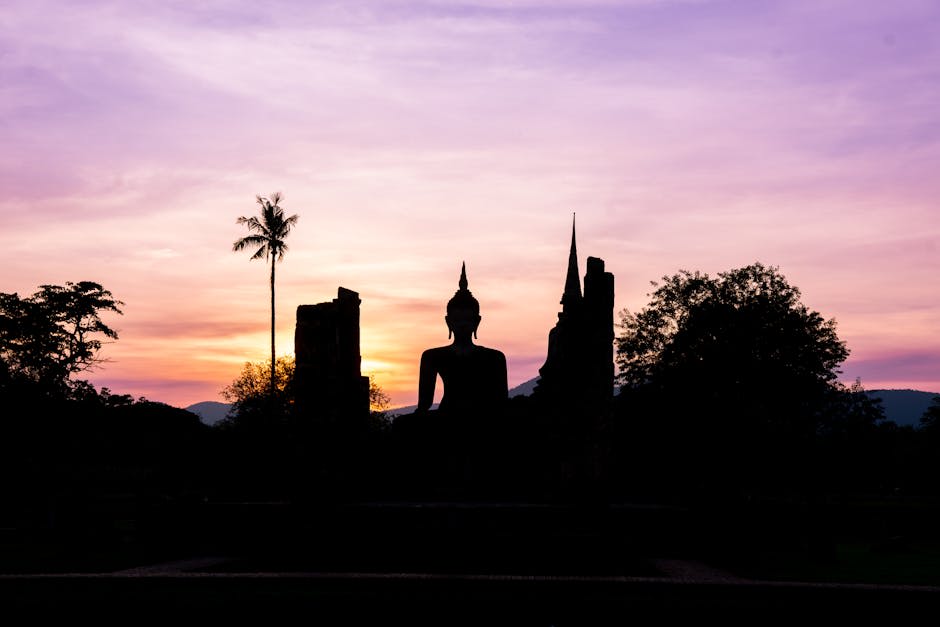
Unlike Ayutthaya, Sukhothai rarely feels crowded. The central zone gets modest visitor numbers, but the northern and western zones are often nearly empty, their ruins half-hidden in the trees. I spent a full morning in the western zone alone, walking among temples that most guidebooks mention only in passing — Wat Saphan Hin, perched on a hill with a standing Buddha overlooking the entire plain, required a short climb that rewarded with a view so expansive I could trace the park’s layout from above, the ponds and paths and scattered ruins forming a pattern that only makes sense from elevation.
Wat Si Chum, with its massive Buddha peering through a narrow slit in the walls, is one of the most striking images in all of Thailand. The Buddha is over eleven metres tall, its right hand draped in the earth-touching gesture, and the confined space of the mondop creates an intimacy with the image that larger, more open temples cannot achieve. I stood in front of it for a long time, and the only sound was the dripping of water somewhere behind the walls and the distant call of a bird I could not identify.
The modern town nearby is small and friendly, with a night market that serves excellent Sukhothai noodles — the local specialty, thinner than pad thai, served in a sweet-sour broth with green beans, pork, and crushed peanuts. The version at the market stall near the bus station, run by a family who has been making them for three generations, is the standard against which I now measure all Thai noodle soups. The town has the unhurried warmth of a place that knows its importance but feels no need to advertise it.
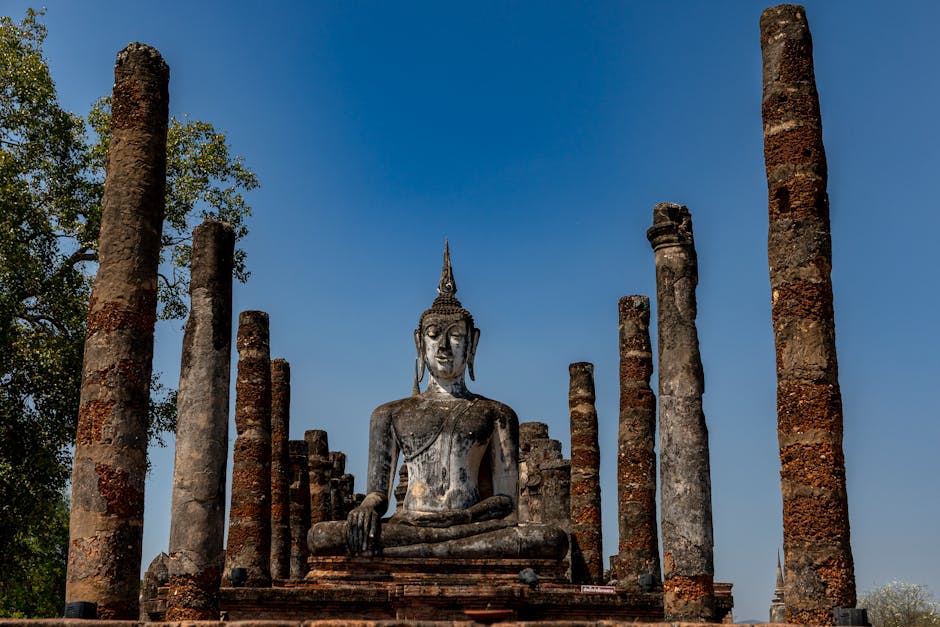
When to go: November to February for cooler weather. The Loy Krathong festival, held here with particular beauty in November, is worth planning your entire Thailand trip around — the ruins are illuminated, thousands of floating lanterns drift across the ponds, and the park becomes a setting for one of the most visually stunning festivals in Southeast Asia.