
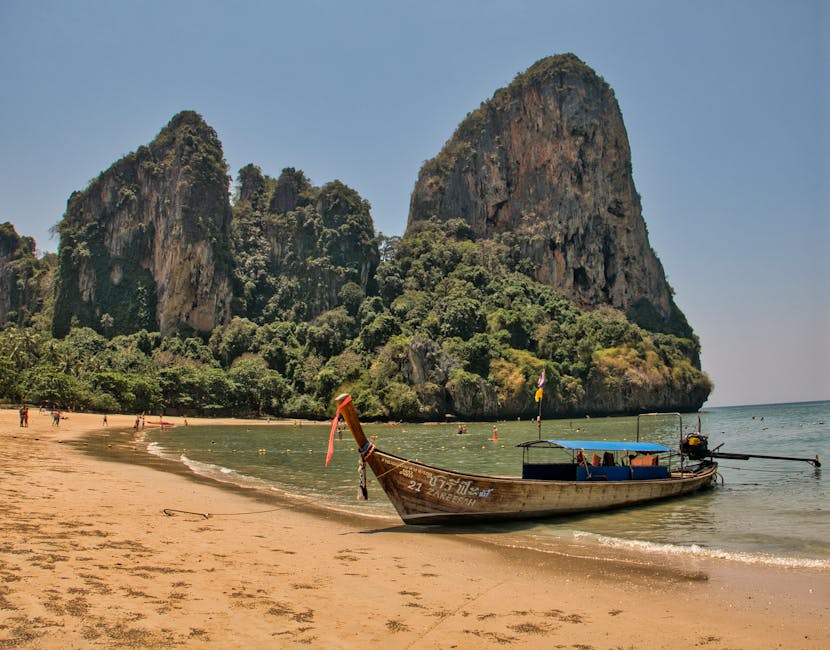
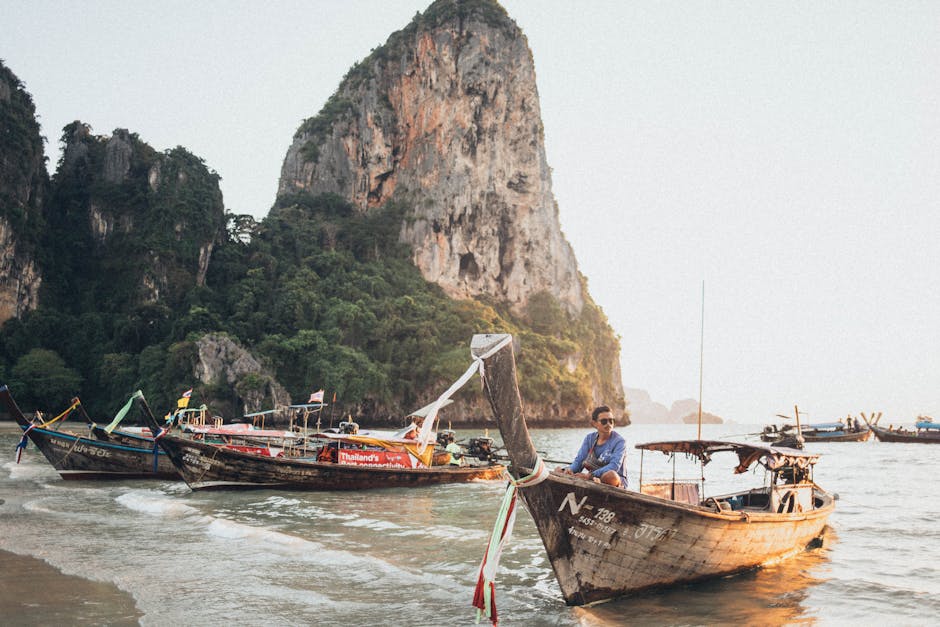
Krabi’s coastline looks like someone took a chisel to the earth and decided that subtlety was overrated. Limestone karsts rise vertically from water so clear you can count the fish from a longtail boat. Railay Beach, accessible only by sea, is the crown jewel — a horseshoe of white sand backed by cliffs that rock climbers travel the world to scale. I arrived by longtail from Ao Nang, the boat threading between the karsts in water that shifted from deep blue to pale jade in the space of a hundred metres, and the first thing I thought was that no photograph I had ever seen had prepared me for this. The geology here is violent — these cliffs were pushed from the seabed by tectonic forces millions of years ago — but the result is something so beautiful it borders on the absurd.
The climbing scene at Railay is world-class. The limestone walls offer over seven hundred routes, and you can watch climbers scaling the overhangs from your beach towel while you drink a coconut that someone hacked open with a machete. Tonsai Beach, just around the headland, is where the climbing community lives — more bohemian, rougher around the edges, with reggae bars and rope-swing bungalows that make Railay feel like a five-star resort by comparison. I spent an afternoon at Phra Nang Cave Beach, the most stunning of the three Railay beaches, where a shrine filled with wooden phalluses sits at the base of a cliff and the water is warm enough to stay in for hours.
The province extends well beyond its beaches. The Emerald Pool and Blue Pool in the Khao Phra Bang Khram Nature Reserve offer jungle swimming in water that is genuinely, impossibly turquoise — the colour comes from minerals dissolved in the thermal spring water, and the effect is surreal, like swimming in a gemstone. Tiger Cave Temple demands a climb of 1,237 steps to reach a summit with views that stretch to the horizon — I counted every step, soaked through with sweat, legs shaking, and the panorama at the top made all of it worth it. The limestone peaks of Krabi spread below like a topographic map made real, and the monks who live at the summit walked past me with the calm indifference of people who climb those stairs every day.
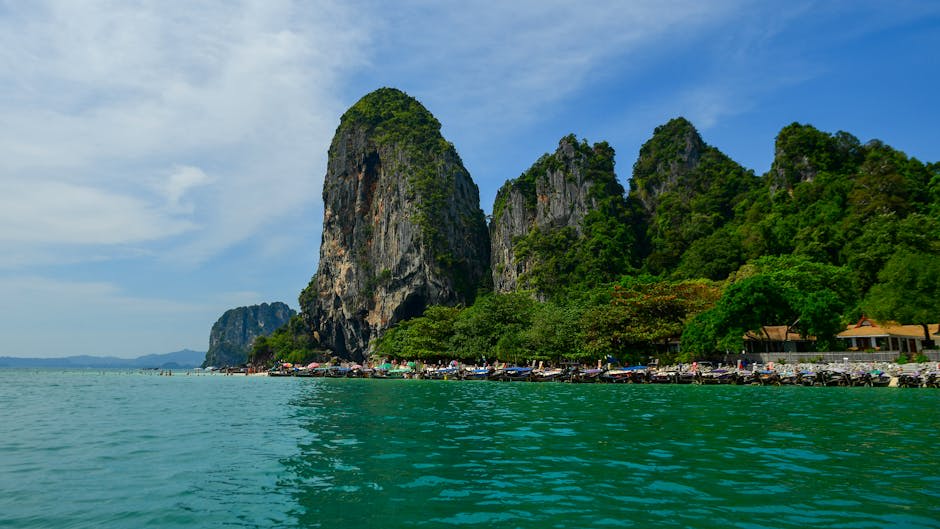
The Four Islands tour — Chicken Island, Tup Island, Poda Island, and Phra Nang Cave Beach — is the kind of day trip that ruins all future day trips. At low tide, a sandbar connects Chicken Island and Tup Island, and you can walk between them with the Andaman Sea on both sides and nothing above you but sky. I snorkelled off Poda Island and watched a school of needlefish scatter through water so transparent that the sand patterns on the seabed twelve metres below were as sharp as if I were looking through glass.
When to go: November to March for the driest weather and calmest seas. The wet season closes some island-hopping routes but opens up empty beaches and lower prices. Rock climbing is best from November to February when the humidity drops.