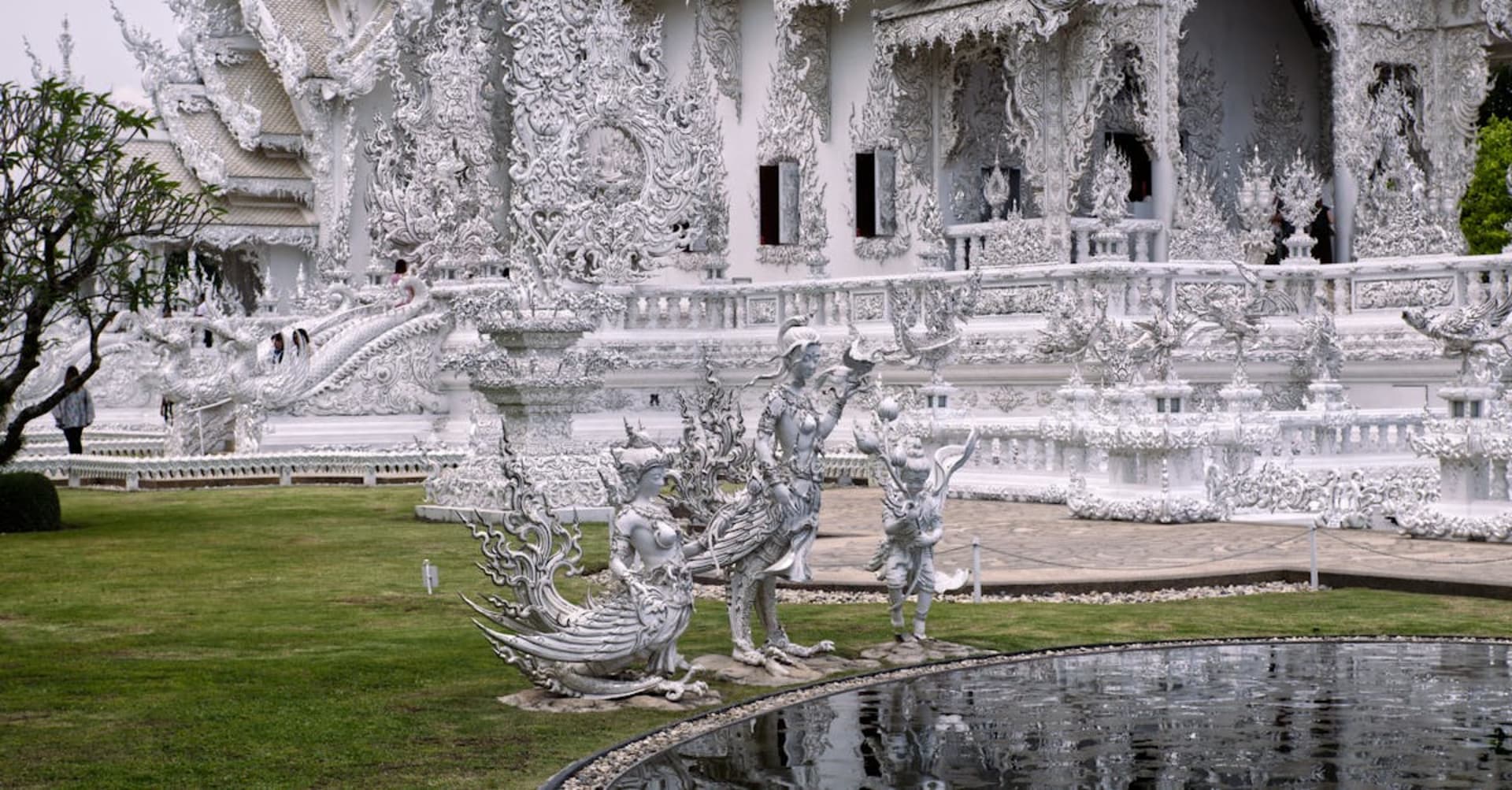
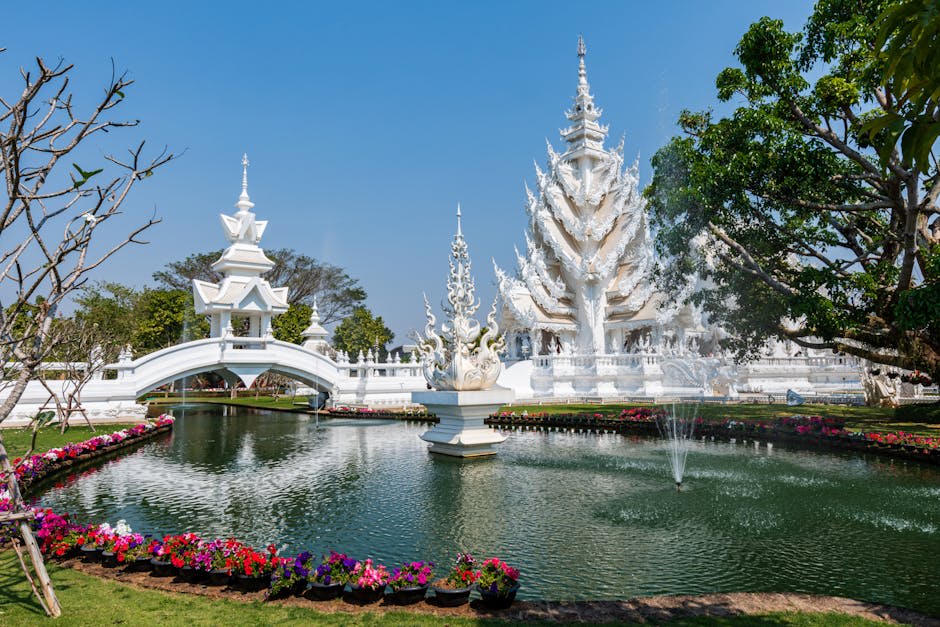
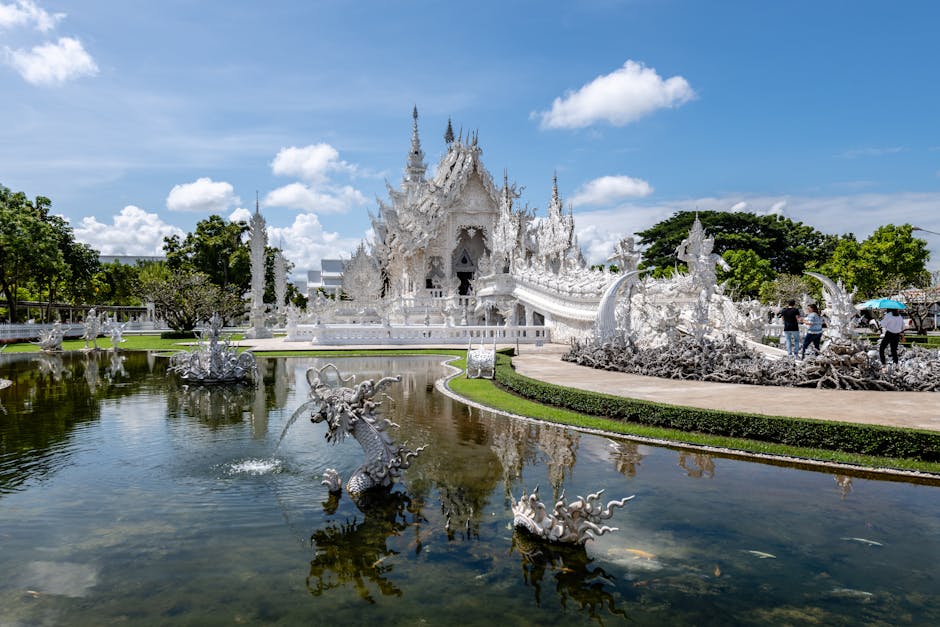
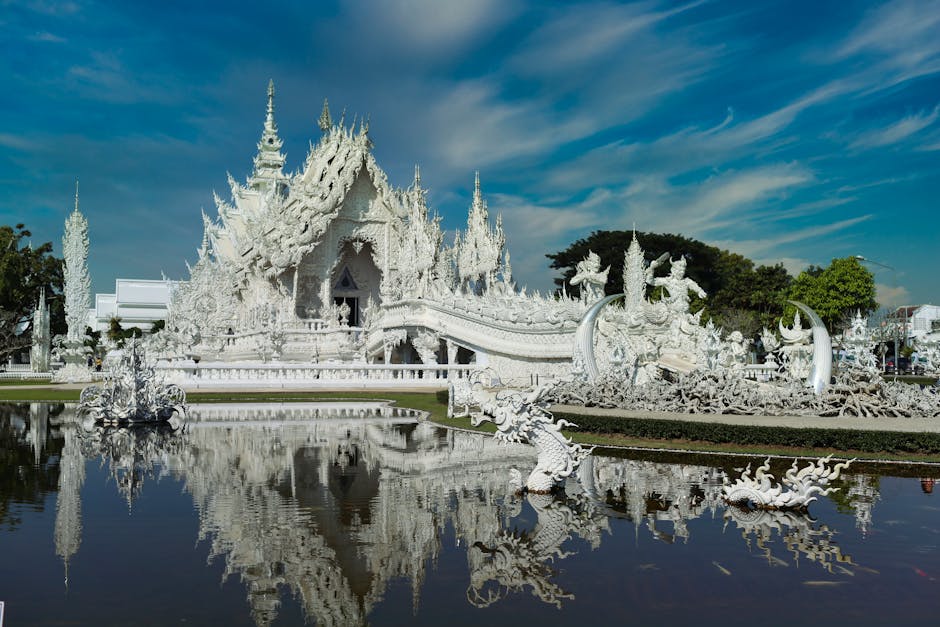
Chiang Rai lives in the shadow of its more famous neighbour to the south, and that is its greatest advantage. The city is smaller, quieter, and cooler than Chiang Mai, with a creative energy that manifests in some of the most extraordinary temples in the country. Wat Rong Khun — the White Temple — is a fever dream of mirror glass and contemporary Buddhist art that looks like a palace made of ice. I visited at opening time, when the morning sun hit the facade and the entire structure erupted into light, thousands of tiny mirror fragments throwing reflections across the courtyard like something from a dream you cannot quite describe when you wake up. Inside, the murals are not what you expect — alongside traditional Buddhist iconography, you will find Superman, Neo from The Matrix, and Kung Fu Panda, all painted by the artist Chalermchai Kositpipat as commentary on the distractions of the modern world.
The Blue Temple glows with sapphire interiors, its seated white Buddha seeming to float in the coloured light. The Black House — Baan Dam — is not a temple at all but the life’s work of the late artist Thawan Duchanee, a compound of over forty dark teak buildings filled with animal skulls, crocodile skins, and surrealist furniture that unsettles in the best possible way. Between these three sites, Chiang Rai makes a case for being the most artistically ambitious city in Thailand.
Beyond the city, the province stretches north to the Golden Triangle, where Thailand meets Laos and Myanmar at the banks of the Mekong. I rented a motorbike and spent two days riding through the mountains north of Mae Salong, where the Kuomintang soldiers who fled China after the revolution settled and planted the oolong tea that now grows on terraced hillsides that could be mistaken for Fujian province. The Akha and Lahu hill tribe villages along the road offered coffee that was roasted that morning and hospitality that required no shared language — just a smile and a willingness to sit.
The night bazaar is excellent and unhurried — a fraction of the size of Chiang Mai’s, which is precisely its charm. The hill tribe textiles here are among the finest I have found anywhere in Southeast Asia, and the vendors know their craft because in most cases they made it themselves. The Singha Park estate outside the city offers cycling routes through fields of cosmos flowers with mountain backdrops that belong in a tourism poster, except they are real and you are there and the air smells like earth and tea.
When to go: November to February for cool, clear weather and the best mountain views. December and January nights can be genuinely cold by Thai standards — bring warm layers. The flower fields are at their peak from November to January.