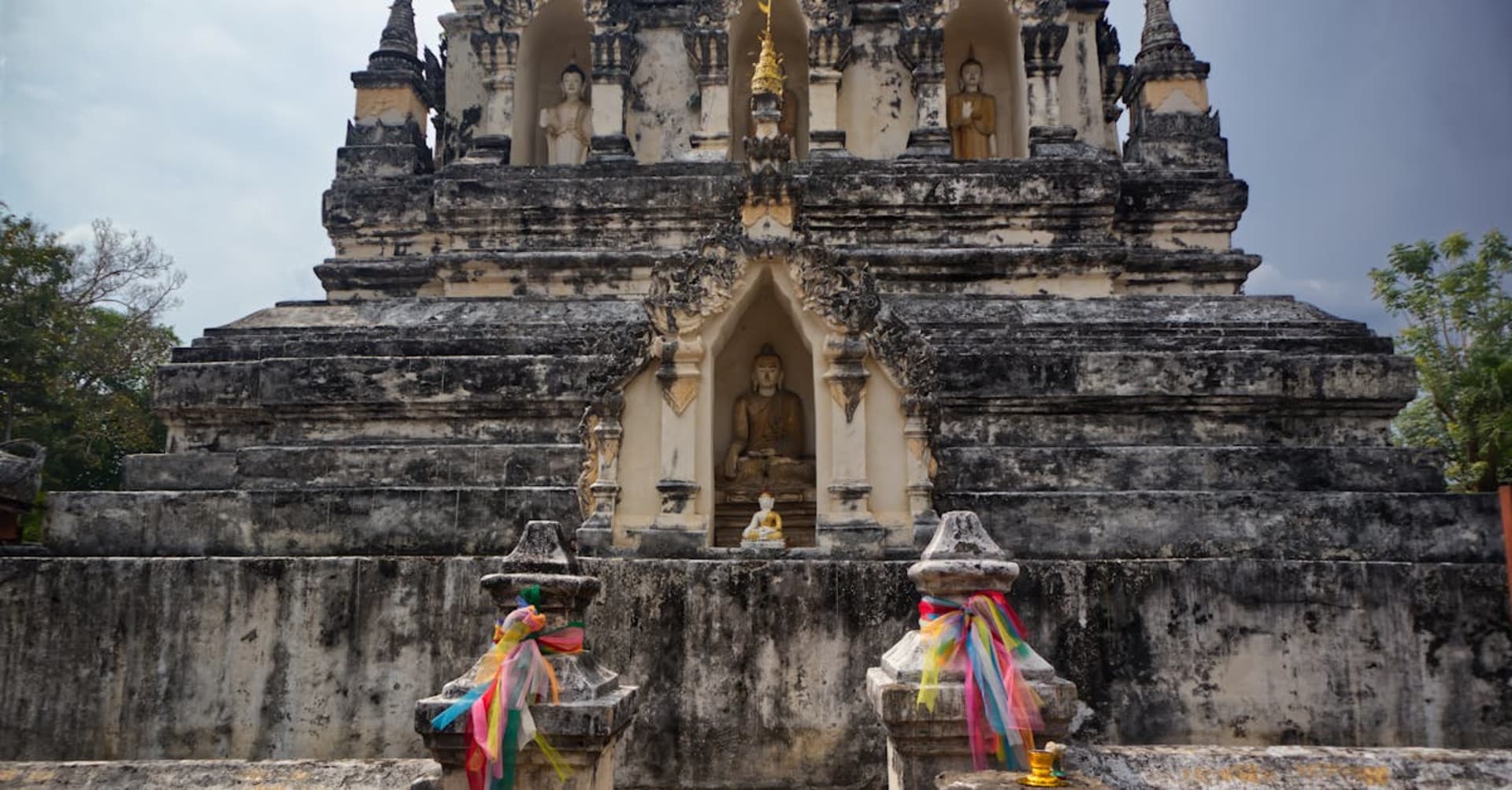
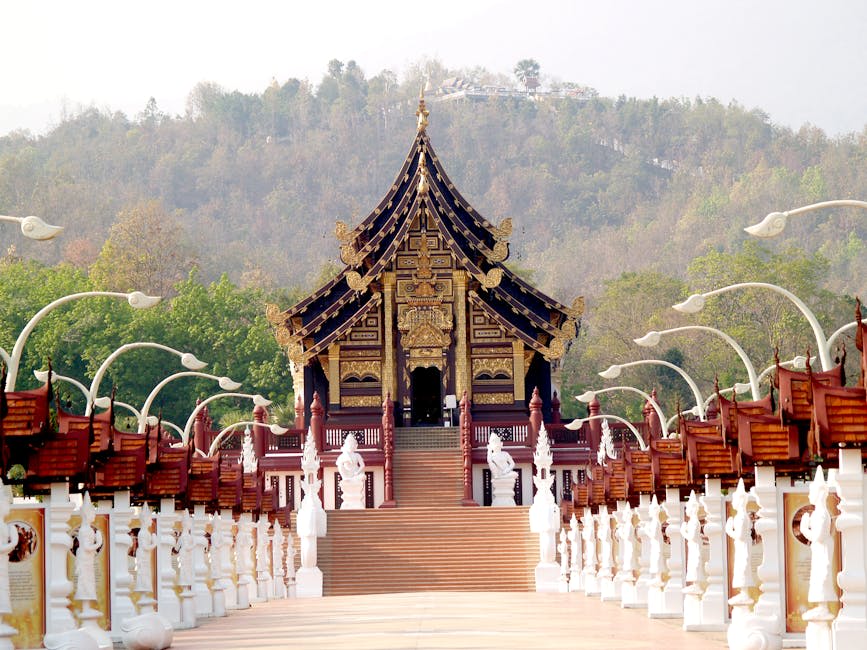
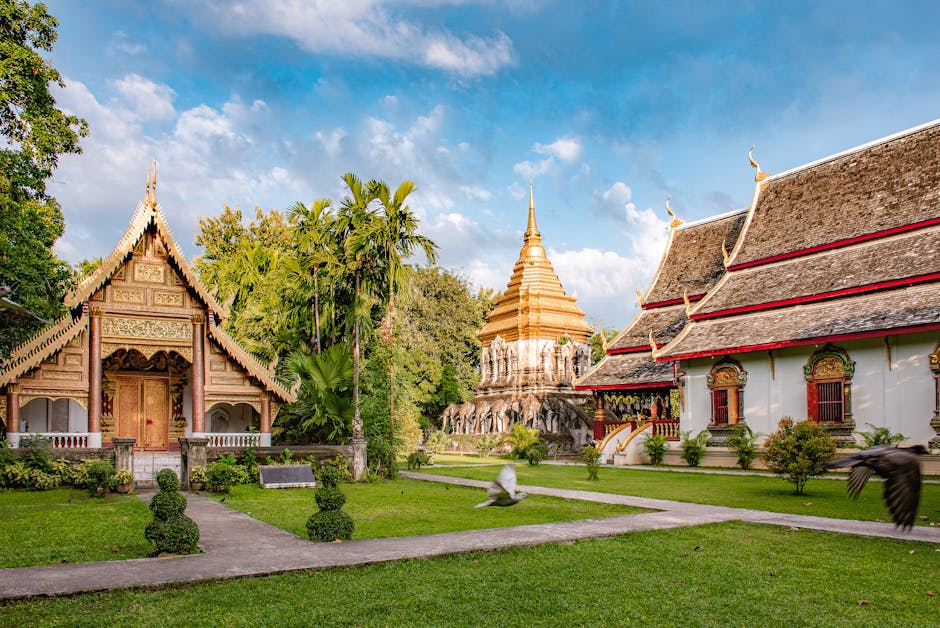
Chiang Mai sits in a valley ringed by mountains that turn purple at dusk, and the city carries that same quality of gentle elevation. The old town, still bounded by its medieval moat, contains more temples per square kilometre than seems reasonable — over three hundred, each one a different shade of gold and teak, each one quiet enough to hear the wind chimes. Doi Suthep watches over everything from its forested ridge, its spire catching the last light of the day. I spent ten days here and it was not enough. It is never enough. Chiang Mai is the kind of city that recalibrates your idea of what daily life should feel like.
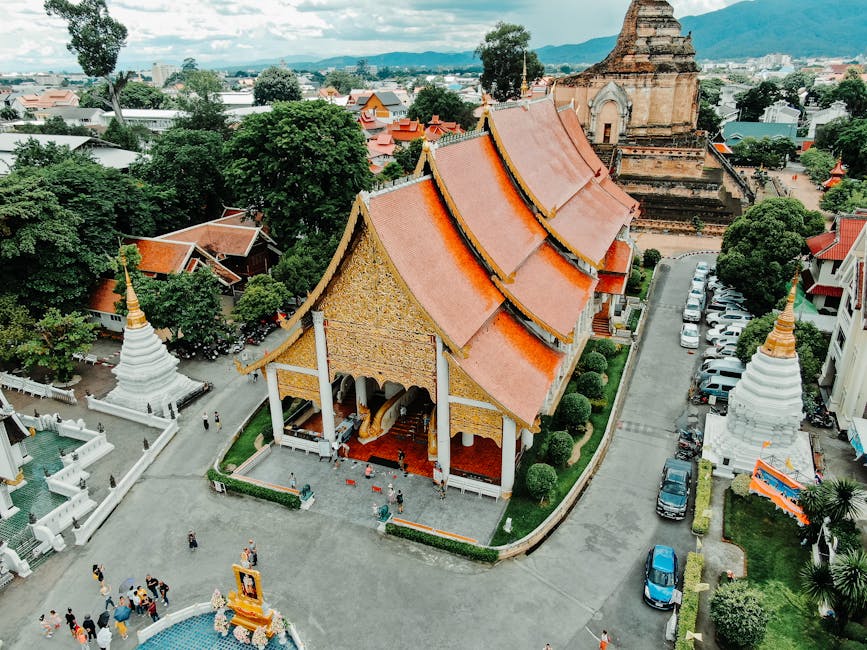
The temple circuit alone could fill a week. Wat Chedi Luang, the massive ruined stupa in the centre of the old town, has a presence that stops you mid-step — it was damaged by an earthquake in 1545 and never fully repaired, and that incompleteness gives it a gravity that the shinier temples lack. Wat Phra Singh houses the city’s most revered Buddha image in a chapel decorated with murals depicting nineteenth-century Lanna life — market scenes, courtship rituals, and the kind of everyday detail that official history rarely preserves. And Wat Umong, in the forest at the base of Doi Suthep, has tunnels beneath its stupa that you can walk through in the dark, the walls covered in faded frescoes that emerge slowly as your eyes adjust.
But Chiang Mai is more than temples. The Sunday Walking Street market transforms the old town into a river of lanterns, handmade textiles, and street food that rivals Bangkok’s best. I ate khao soi — the northern Thai coconut curry noodle soup that is the region’s signature dish — every single day, and the best version came from Khao Soi Khun Yai on Charoen Rat Road, where a woman in her seventies ladles the broth from a pot that seems to have been simmering since the Lanna Kingdom. The coffee scene is exceptional — Ristr8to on Nimmanhaemin Road won the World Latte Art Championship, and the beans come from hill tribe cooperatives in the surrounding mountains, roasted with the same obsessive attention that you find in Melbourne or Tokyo.
The surrounding countryside offers elephant sanctuaries where the animals roam free and are not ridden — Elephant Nature Park, founded by Lek Chailert, has set the standard for ethical tourism in the region. Waterfall hikes through Doi Inthanon National Park lead to the highest point in Thailand, where the air is cool and the cloud forest feels like another country entirely. And the hill tribe villages of the Mae Sa valley — Hmong, Karen, Lisu — offer a window into cultures that predate modern Thailand by centuries and continue to resist its homogenising pull.
When to go: November to February is ideal — cool nights, clear skies, and the famous Yi Peng lantern festival in November, when thousands of paper lanterns rise into the sky above the Ping River and the city feels like it is breathing light. Avoid March and April when agricultural burning creates a persistent haze that obscures the mountains and stings the eyes.