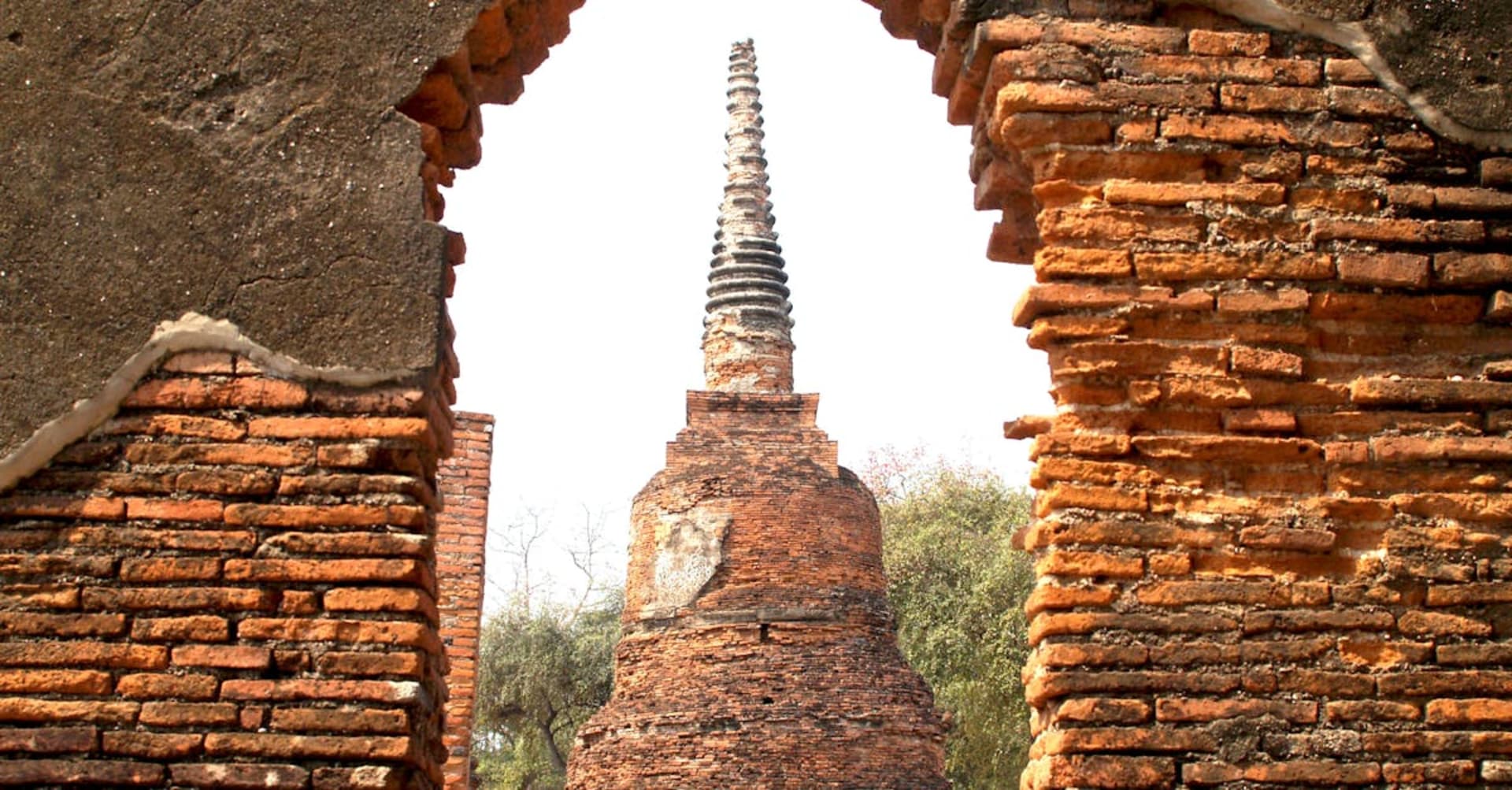
Ayutthaya was the capital of Siam for over four centuries before the Burmese burned it in 1767, and the ruins they left behind are among the most atmospheric in Southeast Asia. The city sits on an island at the confluence of three rivers, and the temples rise from flat, green parkland like the bones of something enormous. Wat Mahathat is the most photographed — its Buddha head wrapped in the roots of a banyan tree is an image that has come to symbolise the beautiful impermanence of all human ambition. I arrived on the early train from Bangkok, the kind that costs almost nothing and stops at every platform between Hua Lamphong and the old capital, and by the time I stepped onto the platform the heat was already serious.
The scale of what was lost here is hard to overstate. At its peak in the seventeenth century, Ayutthaya had a population of over a million — larger than London or Paris at the time. Traders from China, Japan, Portugal, and the Netherlands maintained quarters along the river. The court was one of the most sophisticated in Asia. And then, in 1767, it was over. The Burmese siege left the city in flames, the gold stripped from the temples, the Buddha heads hacked from their bodies. What remains is not a museum — it is the aftermath of a catastrophe, and the beauty of the ruins carries that weight.
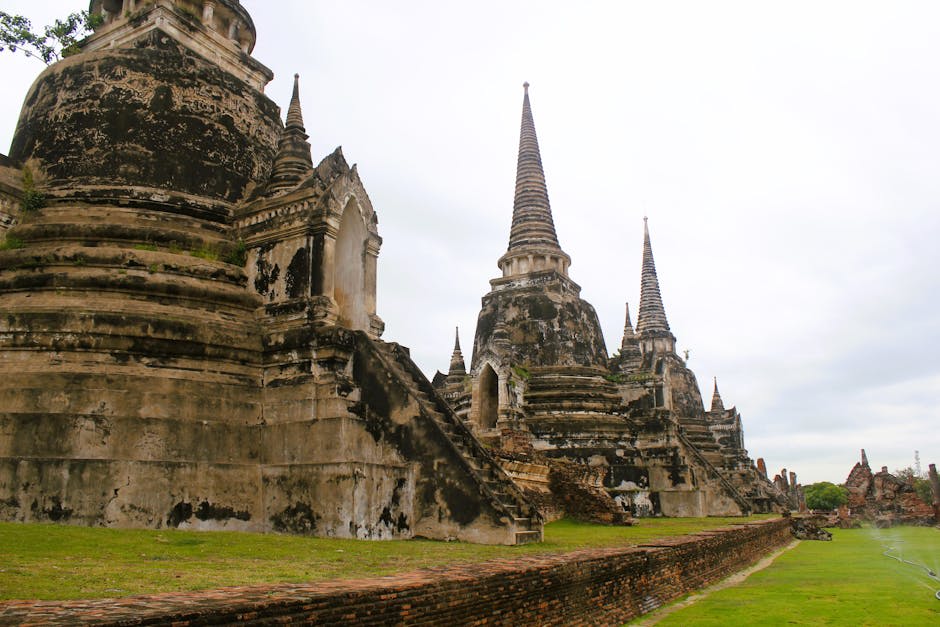
Rent a bicycle and spend a morning circling the island, stopping at Wat Phra Si Sanphet with its three iconic chedis, the reclining Buddha at Wat Lokayasutharam, and the excellent boat noodles at the riverside stalls near the central market. The boat noodles are served in tiny bowls — almost comically small — and the tradition is to stack them as you eat, ten or twelve bowls deep, the rich dark broth thick with pork blood and cinnamon. A woman at the stall I chose had been serving since her mother ran the place, and she watched with visible approval as I ordered my eighth bowl.
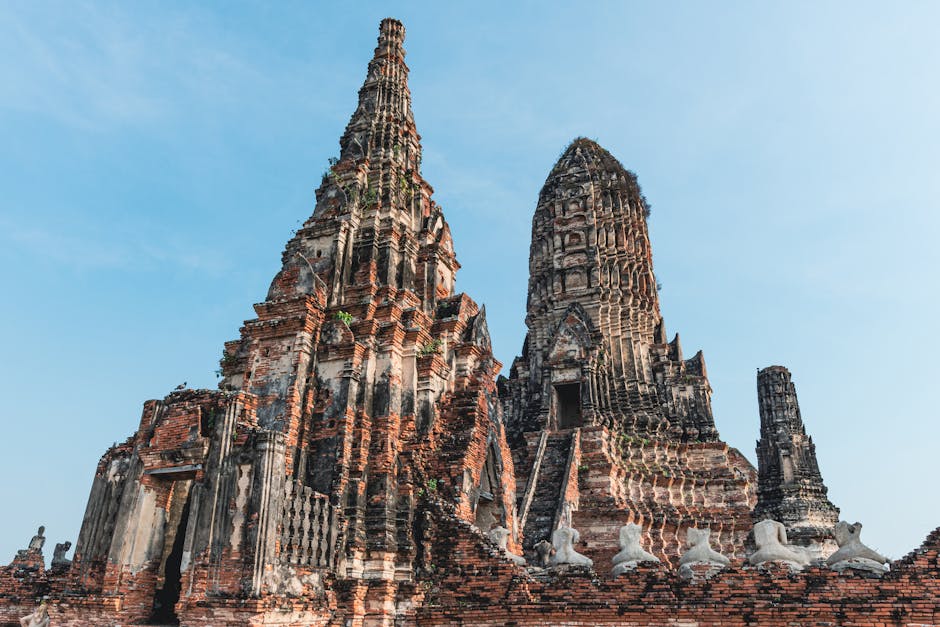
The light in the late afternoon turns the red brick gold, and for a moment the ruins feel less like history and more like a living thing, still breathing. Wat Chaiwatthanaram, the most photogenic of the riverside temples, catches the sunset in a way that has kept me scrolling through my own photographs for months. The central prang rises against a sky that goes from orange to violet, and the symmetry of the surrounding chedis creates a silhouette that belongs on the cover of every book about Southeast Asian architecture.
When to go: November to February for comfortable temperatures. Ayutthaya floods periodically during the monsoon season — check conditions if visiting between August and October. The ruins are best appreciated in the early morning or late afternoon, when the light is warm and the tour groups have thinned.